
Building Your First Monthly Spending Plan from Scratch
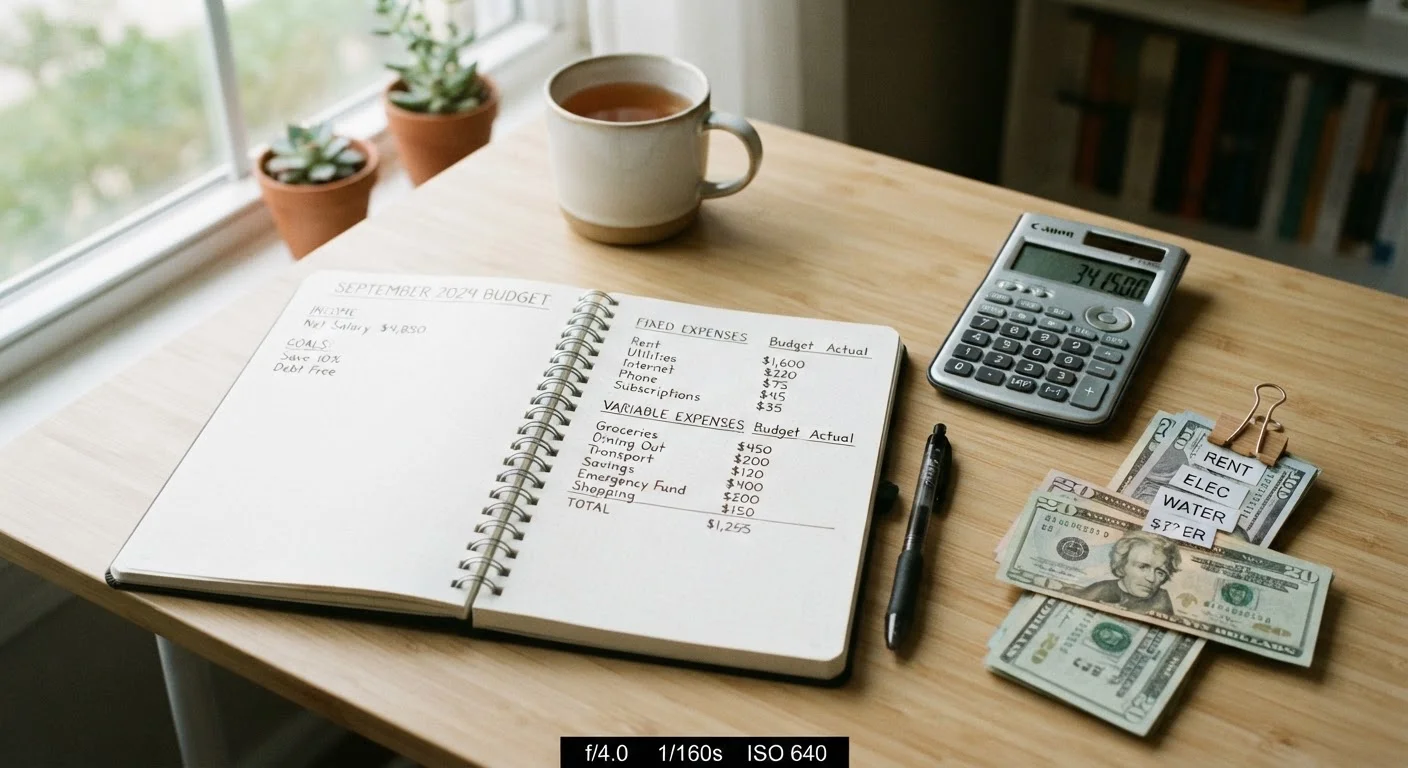
Photo credit: AdvisorHQ.net | Informative Website
In this article
A clear, step-by-step walkthrough for creating a realistic monthly budget when you've never tracked your money before.
Key Takeaways
- A monthly spending plan starts with knowing your exact take-home income, not your gross salary.
- Fixed expenses must be listed before discretionary spending - not the other way around.
- Categorizing past spending reveals patterns that a blank budget cannot anticipate.
- A realistic first budget is imperfect by design; adjusting it monthly is part of the process.
- Even a simple spreadsheet or notebook is enough to run an effective monthly budget.
Why Starting From Scratch Is Actually an Advantage
If you have never tracked your spending before, you are not starting from behind - you are starting without bad habits baked in. A first budget built on honest data is more accurate than one built on years of wishful thinking. For a broader grounding in what budgeting is and why it matters, Personal Finance Foundations is a useful starting point before you dive into the steps below.
The core idea of a monthly spending plan is simple: know what comes in, decide where it goes, and track whether reality matched the plan. The mechanics take less than an hour to set up. What makes it work is the discipline of coming back to it each month - not perfection on the first try.
This Is Education, Not Financial Advice
The information in this article is general in nature and intended for educational purposes only. It does not constitute personalized financial, tax, or legal advice. Every person's financial situation is different. For guidance tailored to your circumstances, consult a qualified financial professional.
What You Need Before You Begin
Gathering the right inputs upfront prevents you from having to stop mid-process to hunt down numbers. Work through the checklist below before opening your notebook or spreadsheet.
What you will need
Bank or credit card statements
Used to review actual past spending so your budget categories reflect real habits.
Spreadsheet software or notebook
Used to organize income, expense categories, and monthly targets in one place.
Calculator
Used to total income and expense columns and verify your budget balances.
Budgeting app
An alternative to a spreadsheet for tracking and categorizing transactions automatically.
Choosing Your Budgeting Tool
There is no single correct tool for tracking a budget. A simple notebook works. So does a spreadsheet - see our beginner's guide to spreadsheets if you want help getting started. Dedicated budgeting apps are another option. For a direct comparison, spreadsheet budgeting vs. budgeting apps lays out the practical trade-offs.
How to Build Your Spending Plan: Step by Step
Follow these steps in order. Each one builds directly on the previous, so skipping ahead tends to produce a budget that looks complete but doesn't hold up once the month begins.
Calculate your true monthly take-home income
Write down every source of income you reliably receive each month - your paycheck after taxes and deductions, any consistent side income, alimony, or other recurring deposits. Use the after-tax, after-deduction amount that actually lands in your bank account. Gross salary is irrelevant here because you cannot spend money that never reaches you.
If your income varies month to month, use a conservative estimate - such as an average of your three lowest recent months. For more on handling unpredictable paychecks, see budgeting on an irregular income.
List all fixed, non-negotiable expenses
Fixed expenses are amounts that stay the same (or nearly the same) every month and that you are contractually or practically obligated to pay. Common examples include rent or mortgage, car payments, minimum loan payments, and insurance premiums. List each one with its exact monthly amount and due date.
Add these up. Subtract the total from your take-home income. The result is your discretionary margin - the money available for everything else.
Review past spending to identify your variable categories
Pull your bank and credit card statements for the past one to three months. Go line by line and assign each transaction to a category: groceries, utilities, dining out, transportation, subscriptions, clothing, personal care, entertainment, and so on. This is the step most first-time budgeters skip - and it's the most revealing.
Total each category. These real numbers become the starting benchmarks for your budget, grounded in how you actually spend rather than how you intend to.
Assign a spending target to each category
Using your discretionary margin and your real spending data, set a monthly dollar target for each variable category. Your targets do not need to match your past spending exactly - this is where you make conscious choices. If you spent $400 dining out last month and want to redirect $100 of that toward savings, set the dining category at $300.
The goal is that every dollar of income is assigned a purpose. One well-known framework for this is zero-based budgeting, which requires income minus all assigned categories to equal zero.
Include a savings line before you finalize
Savings should appear in your budget as a named category, not as whatever happens to be left over at month's end. Decide on a realistic monthly savings target - even a small, consistent amount builds the habit. Assign it a line just like rent or groceries.
Two philosophies exist here: saving first (often called paying yourself first) or allocating savings from what remains after expenses. Both can work; the right approach depends on your situation. Paying yourself first vs. budgeting what's left examines the genuine trade-offs of each.
Review and adjust at month's end
At the close of your first month, compare actual spending in each category against your targets. Expect mismatches - they are normal and instructive, not signs that budgeting doesn't work. Identify which categories ran over and which had room to spare, then adjust your targets for next month accordingly.
Building this review habit is what turns a one-time exercise into a working financial system. For a structured monthly reset process, the monthly budget setup checklist can guide you through each review step.
Don't Budget From Memory Alone
Most people significantly underestimate how much they spend in variable categories like dining out, subscriptions, and personal care. Before building your plan, pull at least one full month of bank or credit card statements to ground your estimates in real numbers rather than optimistic guesses.
What Comes After Your First Budget
A monthly spending plan is a living document. Your first version is a starting hypothesis about how you will spend money - the following months reveal whether that hypothesis was accurate. Most people need two to three months of adjustments before their budget feels realistic and sustainable.
Once your plan is running smoothly, the natural next step is tightening your tracking habits so small overages don't go unnoticed until month-end. Tracking expenses daily is the habit that makes everything else in budgeting easier, and it pairs directly with the plan you've just built.
For those who want a more comprehensive view of how budgeting fits into long-term financial health, The Complete Guide to Building and Maintaining a Personal Budget covers the full picture from income analysis to plan reviews over time.
This article is for general informational and educational purposes only and does not constitute personalized financial, tax, or legal advice. Consult a qualified financial professional for guidance specific to your situation.

Author
Finance Editorial Team
Finance Editorial Team is the collective byline for our editorial team and contributor network. Articles published under this byline or an editorial pen name are researched, written, and reviewed according to our editorial standards for clarity, consistency, and independence before publication.
View all articles →