
Deck Materials Compared: Pressure-Treated Lumber, Composite, and More
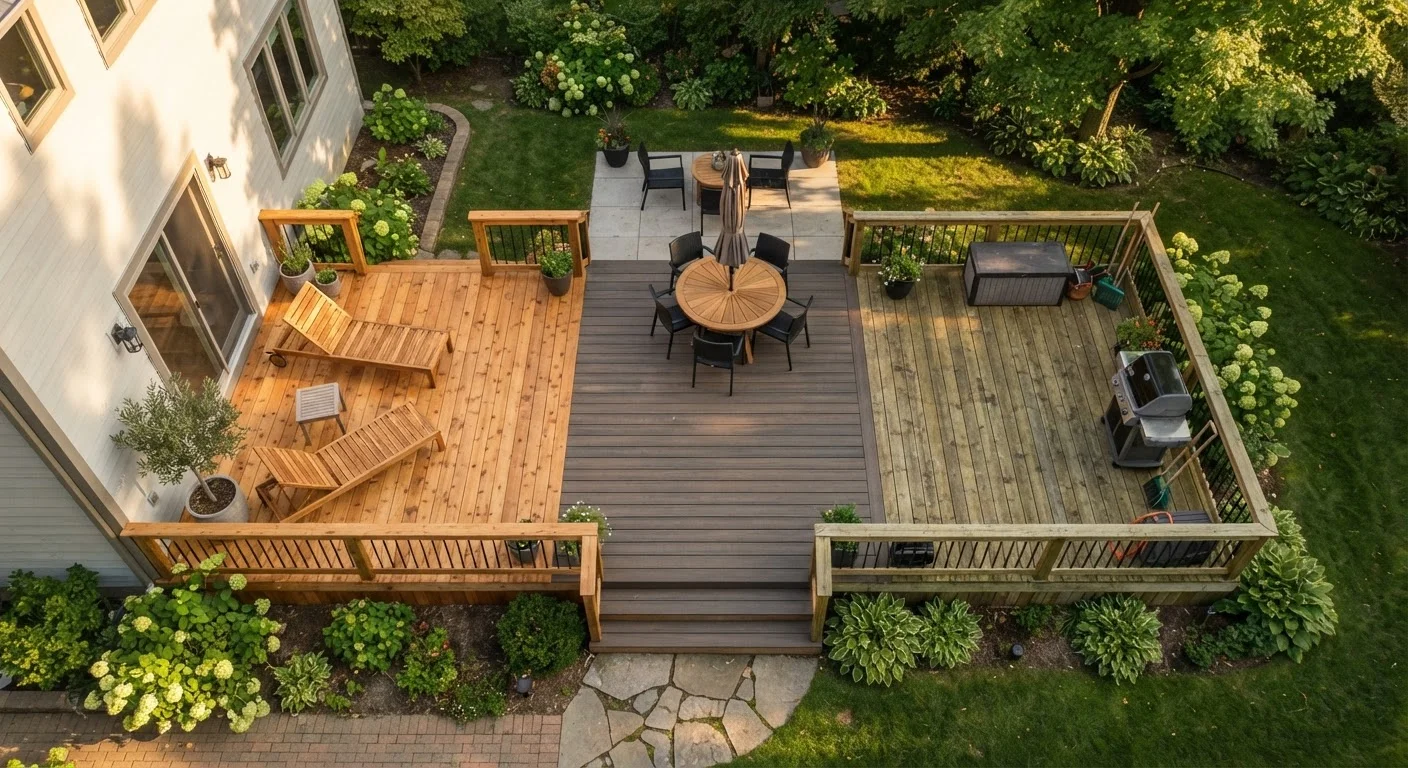
Photo credit: AdvisorHQ.net | Informative Website
In this article
Choosing deck material affects maintenance demands, longevity, and appearance. This comparison lays out how the main options behave over time and in weather.
Key Takeaways
- Pressure-treated lumber costs the least upfront but requires regular sealing and staining to prevent rot and warping.
- Composite decking resists moisture and insects with minimal upkeep but carries a higher initial price.
- Hardwood options like ipe offer impressive natural durability but demand specialized care and significant investment.
- PVC decking eliminates organic material entirely, making it highly resistant to moisture but prone to heat retention.
- The right choice depends on your climate, budget, and how much time you want to spend on maintenance.
Why Decking Material Is One of the Most Consequential Choices You'll Make
A deck is a major investment in your home - not just financially, but in how you use your outdoor space. The material you select will determine how much work you put in each spring, how the surface looks after a decade of sun and rain, and what your long-term repair costs look like. Four materials dominate the residential market: pressure-treated lumber, composite, natural hardwood, and PVC (polyvinyl chloride). Each has real advantages and genuine limitations, and none is universally correct for every homeowner.
Much like choosing between flooring types indoors - see our room-by-room flooring comparison for a parallel look at wood trade-offs - the best deck material depends heavily on where you live, how you use the space, and how involved you want to be in its upkeep.
| Pressure-Treated Lumber | Composite | Hardwood (Ipe) | PVC | |
|---|---|---|---|---|
| Upfront Cost | Low | Moderate to High | High | Highest |
| Maintenance Level | High (annual sealing/staining) | Low (cleaning only) | Moderate (annual oiling) | Very Low |
| Typical Lifespan | 10-20 years | 25-30+ years | 25-40 years | 25-30+ years |
| Moisture Resistance | Moderate | High | High | Excellent |
| Splinter Risk | Moderate to High | Low | Low to Moderate | None |
| DIY Friendliness | High | Moderate | Low (hard to cut) | Moderate |
| Natural Appearance | Natural wood look | Wood-like (varies) | Rich natural grain | Synthetic appearance |
Pressure-Treated Lumber: The Accessible Workhorse
Pressure-treated (PT) lumber is wood that has been infused with chemical preservatives - most commonly copper-based compounds - to resist rot, fungal growth, and insect damage. It remains the most widely used decking material in the United States, primarily because it's inexpensive, available at virtually every lumberyard, and easy to cut and fasten with standard tools.
The trade-off is maintenance. PT lumber is still wood, which means it expands and contracts with humidity and temperature shifts. Without regular cleaning, sealing, and staining - generally every one to three years - boards can warp, crack, splinter, or develop gray discoloration. New PT lumber also needs time to dry before staining; applying a sealer too early can trap moisture. In consistently damp climates, even well-maintained PT decks may show signs of wear within ten to fifteen years.
Let New Pressure-Treated Wood Dry First
Freshly milled PT lumber typically ships with high moisture content. Wait at least four to eight weeks after installation before applying any stain or sealer - applying products too early prevents proper penetration and adhesion. You can test readiness by sprinkling a few drops of water on the surface; if the wood absorbs them rather than beading them up, it's ready for treatment.
Composite Decking: Low Maintenance, Higher Entry Cost
Composite decking blends wood fibers with plastic resins to create boards that mimic the look of natural wood without most of its vulnerabilities. Quality composite products are highly resistant to moisture, insects, and UV fading, and they won't splinter underfoot. Most manufacturers design composite boards to require only occasional soap-and-water cleaning.
The significant drawback is upfront cost, which can run two to three times higher than PT lumber per linear foot, though total project costs vary widely by region, supplier, and board thickness. Composite can also get noticeably hotter than wood in direct summer sun, and cheaper products may still show fading, staining, or mold growth over time if not installed with proper drainage gaps. Warranties range considerably, so reading them carefully matters.
Hardwood and PVC: Specialty Options Worth Knowing
Natural hardwoods such as ipe, tigerwood, and mahogany are exceptionally dense, which makes them naturally resistant to rot and insects without chemical treatment. A well-maintained ipe deck can last 25 to 40 years. The downsides are considerable, however: hardwoods are expensive, heavy, and harder to work with than softwoods. They also require annual oiling to prevent graying and surface checking (shallow surface cracks). Sustainability sourcing is a legitimate concern; look for certification from a recognized forestry standards body if environmental impact matters to you.
PVC decking contains no wood fibers at all, making it impervious to rot and insects. It's an option worth considering for docks, pool surrounds, or very humid climates. The material can feel hollow underfoot compared to wood, and it expands and contracts significantly with temperature swings, requiring careful fastener spacing during installation. It also tends to be the most expensive category overall.
How to Weigh Your Decision
Start with your climate. If you're in a region with harsh winters and freeze-thaw cycles, or persistent summer humidity, composite or PVC will hold up better than PT lumber without intensive maintenance. In drier climates, PT lumber can perform well for many years with a disciplined care routine.
Next, think honestly about maintenance commitment. Composite and PVC essentially take annual upkeep off the table, while PT lumber demands it. Hardwood falls in between - manageable if you're diligent, but neglect shows quickly.
Finally, consider total cost over time rather than purchase price alone. PT lumber's lower upfront cost can be offset by years of stain, sealant, and eventual board replacement. Composite's higher starting price may look more reasonable when you factor in reduced labor and material costs across a fifteen-year lifespan. As with any home improvement project, getting multiple contractor estimates and checking local building codes before purchase is strongly recommended - permit requirements for deck construction vary by municipality.

Author
Home & Garden Editorial Team
Home & Garden Editorial Team is the collective byline for our editorial team and contributor network. Articles published under this byline or an editorial pen name are researched, written, and reviewed according to our editorial standards for clarity, consistency, and independence before publication.
View all articles →