
Coastal vs. Inland Italy: Two Very Different Travel Experiences
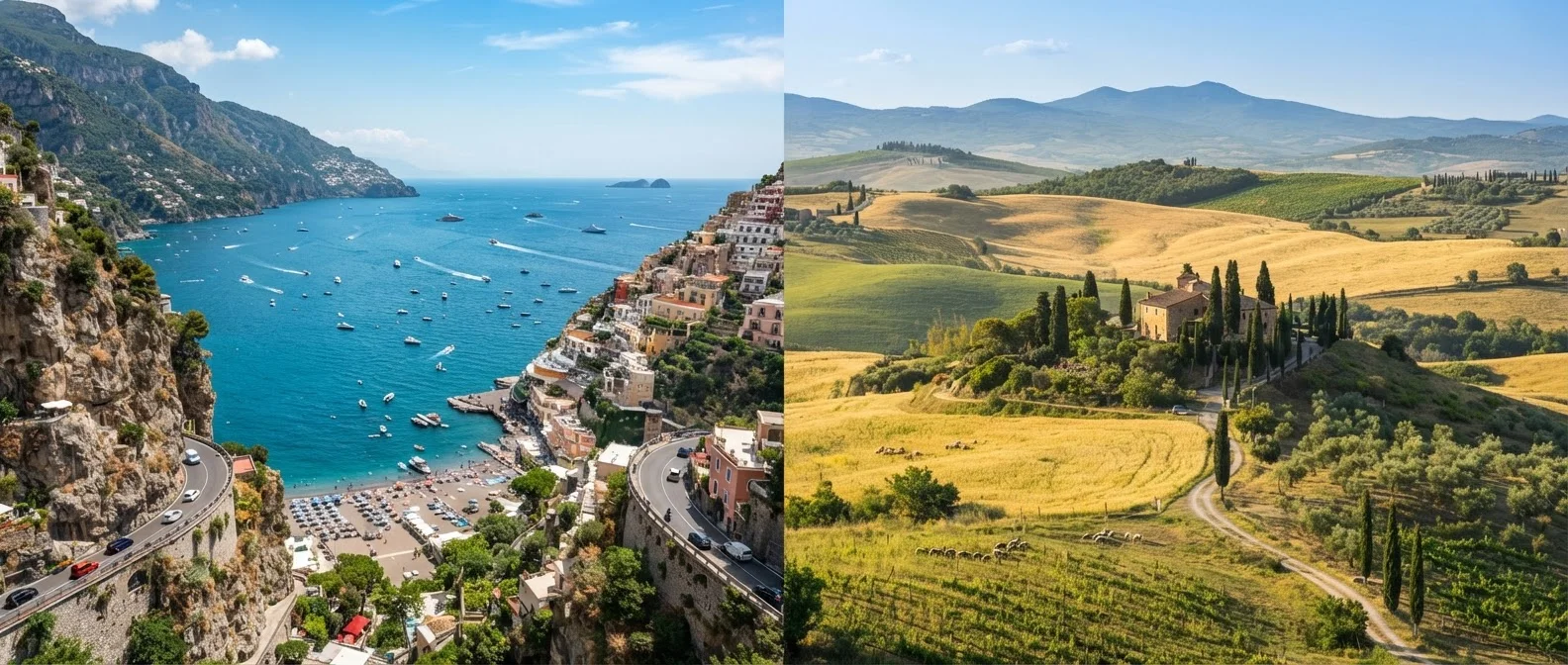
Photo credit: AdvisorHQ.net | Informative Website
In this article
The Amalfi Coast and Tuscany are both iconic — but they offer starkly different trips. Compare pace, access, cost, and character.
Key Takeaways
- Coastal Italy (especially the Amalfi Coast) is dramatic but crowded, expensive, and logistically challenging in peak season.
- Inland Tuscany offers slower-paced travel with more flexibility, easier driving, and a wider range of accommodation budgets.
- Both regions have distinct high seasons - timing your trip affects cost, crowds, and what's actually accessible.
- Neither experience is objectively better; the right choice depends on your travel style, budget, and priorities.
The Character of Each Region
Ask someone to picture Italy and they'll likely imagine one of two things: a sheer cliff dropping into deep blue water, or a vineyard-dotted hill town glowing at sunset. Both images are real, and both are worth chasing - but they represent genuinely different countries within a country.
The Amalfi Coast, stretching roughly 25 miles along the Sorrentine Peninsula in Campania, is one of the most photographed coastlines in the world. Towns like Positano, Ravello, and Amalfi cling to steep cliffs, connected by a winding two-lane road that becomes a daily drama of buses, scooters, and tour vans. It's spectacular, and it knows it.
Tuscany, by contrast, is a vast inland region covering over 8,800 square miles. The classic tourist circuit - Siena, San Gimignano, the Val d'Orcia, Florence - moves at a measured pace. The landscape is quieter, the roads (outside Florence) are generally manageable, and the pleasures are more likely to involve a long lunch than a boat ride.
Logistics and Getting Around
Getting around the Amalfi Coast is the trip's defining challenge. The SS163 coastal road is narrow, prone to delays, and legally restricted for large vehicles during peak months - which means renting a car can create more stress than it solves. Ferries between towns are genuinely useful, and many travelers find that basing themselves in Sorrento and day-tripping by boat is the most practical approach. Parking is scarce and expensive. Expect to walk steep stairways between sea level and your accommodation.
Tuscany is comparatively straightforward. A rental car unlocks the whole region, and driving between hill towns is genuinely pleasant outside of Florence's city center. Train connections link Florence, Siena, and Pisa reliably. The roads through the Val d'Orcia feel almost designed for leisurely exploration. For anyone uncomfortable with high-pressure coastal driving, Tuscany is a significantly lower-stress option.
Consider Basing in One Place
For the Amalfi Coast especially, picking a single base town and using ferries or buses for day trips tends to reduce stress significantly compared to moving accommodation frequently. On the coast, the daily logistics of checking in and out with luggage on a crowded narrow road can eat into your enjoyment. In Tuscany, moving between towns is easier, but a 3-4 night base in one area lets you explore at a more relaxed depth.
Cost and Accommodation
The Amalfi Coast sits at the upper end of the Italian travel cost spectrum. Hotels with sea views command premium pricing during the summer high season (roughly June through August), and even budget options in Positano or Amalfi can surprise first-time visitors. Restaurant prices in the most-visited towns reflect tourist demand. That said, staying in slightly less-famous towns - Praiano, Cetara - can bring costs down meaningfully.
Tuscany has a wider range. Florence's historic center is expensive, but agriturismo stays (working farms that host guests, offering a distinctly local experience) across the Chianti or Val d'Orcia countryside often cost a fraction of comparable coastal hotels. Food and wine here can range from simple local trattorias to high-end estate dining. The region rewards travelers who are willing to venture beyond the obvious itinerary.
| Amalfi Coast | Tuscany | |
|---|---|---|
| Scenic character | Dramatic cliffs, sea views, vertical towns | Rolling hills, vineyards, stone villages |
| Driving difficulty | High - narrow coastal road, restricted access | Moderate - rural roads generally manageable |
| Typical cost level | Higher, especially in peak towns | Wide range; agriturismo offers good value |
| Peak season crowds | Very heavy June-August | Heavy at major sights; countryside quieter |
| Best travel style | Base one town, explore by ferry or foot | Road-trip, town-hopping, self-paced |
| Food focus | Seafood, limoncello, coastal cuisine | Wine, truffles, cured meats, pasta |
Crowds, Seasons, and Timing
Both regions peak in summer, but the coastal experience intensifies more sharply. The Amalfi Coast in July and August is genuinely gridlocked - the road, the beach towns, the ferries. Shoulder season (late April through May, or September into October) offers a meaningfully different experience: fewer crowds, more reasonable accommodation rates, and temperatures that suit walking. Understanding what off-season really means for access and services is worth thinking through - our piece on off-season travel trade-offs covers that nuance well.
Tuscany's peak season brings its own crowds to famous spots like the Uffizi in Florence or the hilltop of San Gimignano, but the region's sheer size means quiet corners are always available. Spring and fall are especially pleasant for walking, cycling, and driving the countryside roads. Harvest season in October brings an energy to wine country that many travelers find worth planning around.
If your available time is limited, that shapes the calculation considerably - a weekend trip vs. extended vacation comparison can help you think through which experience fits your schedule better, since the coast tends to reward a slower, multi-day stay in each town.

Author
Travel & Trips Editorial Team
Travel & Trips Editorial Team is the collective byline for our editorial team and contributor network. Articles published under this byline or an editorial pen name are researched, written, and reviewed according to our editorial standards for clarity, consistency, and independence before publication.
View all articles →