
DIY vs. Hiring a Contractor: A Framework for Deciding
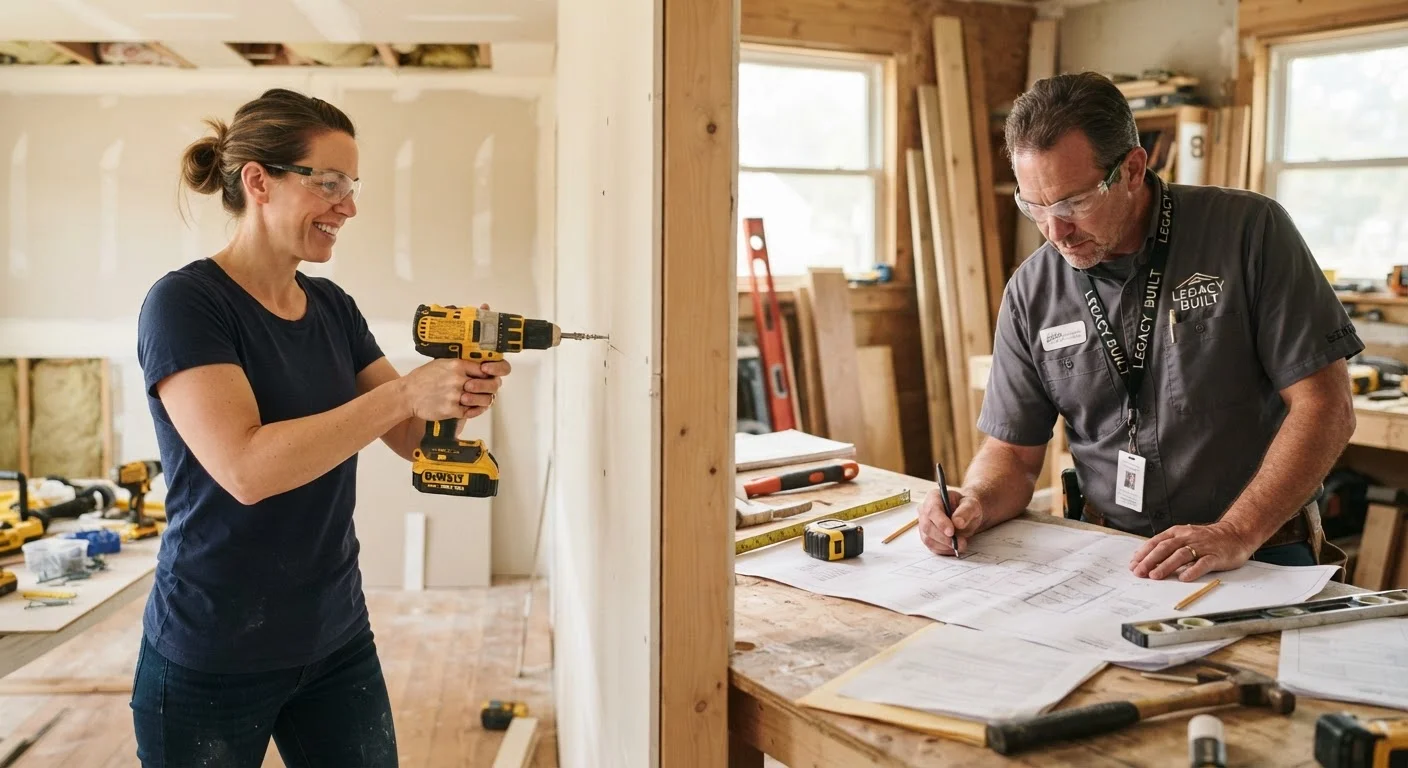
Photo credit: AdvisorHQ.net | Informative Website
In this article
Not every project is right for DIY — and not every job needs a contractor. Here's how to honestly assess skill, risk, cost, and timeline before you decide.
Key Takeaways
- Skill level, safety risk, permit requirements, and true cost are the four pillars of the DIY-vs-contractor decision.
- Some tasks - electrical panels, structural modifications, gas lines - almost always require a licensed professional.
- DIY saves money upfront but can cost more if mistakes require professional correction later.
- Permits and code compliance apply regardless of who does the work; skipping them creates legal and resale issues.
- Honest self-assessment of your time, tools, and tolerance for error is just as important as budget.
Why the Decision Matters More Than You Think
Every home project starts with the same fork in the road: tackle it yourself or bring in a professional. The stakes vary wildly depending on what you're working on. Paint the wrong wall color and you repaint it - no harm done. Wire an outlet incorrectly and you face fire risk, failed inspections, or voided homeowner's insurance. The framework below helps you apply the right level of scrutiny to every job before you pick up a tool or pick up the phone.
If you're newer to home projects, the beginner's guide to home improvement is a useful starting point for understanding scope and safety basics. And before any conversation with a contractor, it pays to brush up on home improvement terminology so you can follow the discussion confidently.
The Four-Pillar Assessment
Before committing to either path, evaluate your project against four honest questions:
- Skill match: Have you successfully completed something similar before, or would this be your first attempt at this type of work? There's a meaningful difference between watching a tutorial and having the tactile experience to execute cleanly.
- Safety risk: What is the realistic worst-case outcome of an error? A crooked tile can be re-laid. An improperly supported load-bearing wall can cause structural collapse. Rank the consequence, not just the probability.
- Permit and code requirements: Many jurisdictions require permits for electrical, plumbing, HVAC, roofing, and structural work - regardless of who performs it. Unpermitted work can complicate home sales and invalidate insurance claims. Check with your local building department before starting.
- True cost comparison: DIY isn't free. Factor in tool rental or purchase, materials (including waste from learning curves), and the value of your time. If a mistake would require a professional to fix, add that potential cost to your DIY estimate.
| DIY | Hiring a Contractor | |
|---|---|---|
| Upfront cost | Lower (materials + tools) | Higher (includes labor) |
| Risk of costly mistakes | Higher for complex work | Lower; professional liability applies |
| Permit handling | Homeowner's responsibility | Contractor typically manages |
| Timeline control | Flexible but slower | Faster; structured schedule |
| Skill requirement | Must match the task | Provided by the professional |
| Warranty on work | None | Usually included |
| Best project types | Cosmetic, low-risk, reversible | Structural, regulated, high-risk |
When DIY Makes Clear Sense
DIY is well-suited to projects that are cosmetic, reversible, and don't require specialized licensing. Painting, basic landscaping, installing hardware, replacing light fixtures (where wiring is already in place and power is safely shut off), laying peel-and-stick flooring, and caulking are tasks where mistakes are low-stakes and skills are genuinely transferable from tutorials and practice.
Start Small to Build Confidence
If you're on the fence about DIY, choose a small, low-stakes version of the task first. Tile a small bathroom floor before tackling an entire kitchen. This gives you a realistic sense of the skill gap and time involved before you're committed to a larger project. A failed practice run on a small scale costs far less than a failed large-scale attempt.
The same logic applies across domains - just as some car maintenance tasks are manageable at home while others carry real risk, home projects have a similar dividing line.
When to Hire a Professional
Certain categories of work should almost always involve a licensed contractor or tradesperson. These include:
- Electrical panel work, new circuits, or rewiring - licensed electricians carry insurance and must pass inspections for good reason.
- Gas line installation or repair - errors can cause explosions or carbon monoxide exposure.
- Structural modifications - removing or altering walls, especially load-bearing ones (defined as walls that carry the weight of the structure above them), requires engineering-level knowledge.
- Major plumbing connections to the municipal supply or sewer - many localities legally require licensed plumbers for this work.
- Roofing on steep or high structures - fall risk is significant and often underestimated.
When in doubt about whether work requires a permit or a licensed trade, contact your local building department - that call is free and can prevent costly problems later.
The Hidden Costs on Both Sides
Contractor bids can feel shocking until you price materials yourself and account for professional liability, warranty on labor, and the time savings. Conversely, DIY budgets frequently balloon when first-timers underestimate material waste, need specialized tools they don't own, or have to redo work that didn't pass inspection.
A practical habit: get at least two contractor quotes for any project you're seriously considering hiring out. The quotes give you a market-rate benchmark and reveal scope details you may not have considered - which itself improves your DIY planning if you go that route. This kind of structured comparison thinking, similar to frameworks used when deciding between bootstrapping and outside funding, helps prevent decisions driven by sticker shock alone.
This article provides general educational guidance for homeowners and is not a substitute for advice from a licensed contractor, building inspector, or other qualified professional. Local codes and permit requirements vary - always verify with your local authority before beginning any regulated work.

Author
Home & Garden Editorial Team
Home & Garden Editorial Team is the collective byline for our editorial team and contributor network. Articles published under this byline or an editorial pen name are researched, written, and reviewed according to our editorial standards for clarity, consistency, and independence before publication.
View all articles →