
Car Battery Basics: Voltage, Cold Cranking Amps, and What Weakens Them Over Time
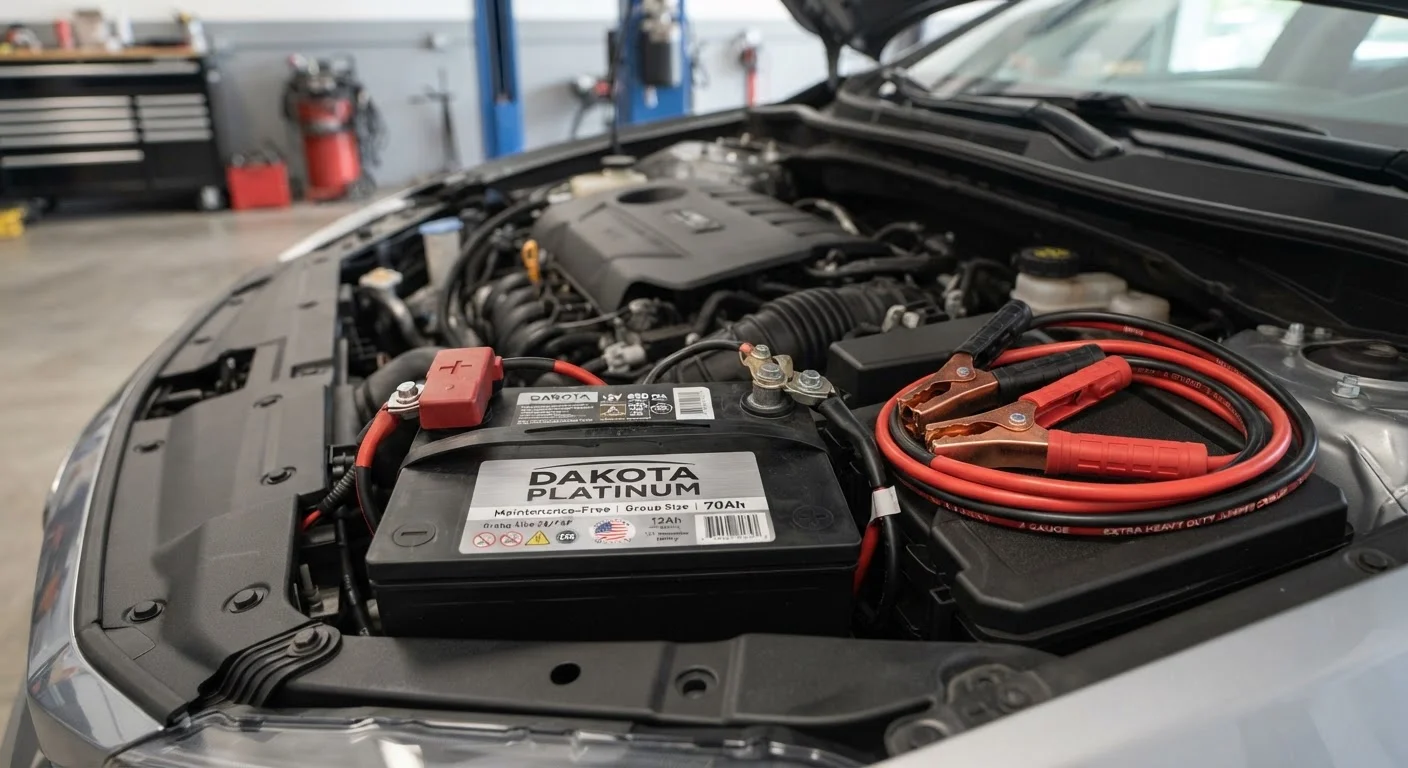
Photo credit: AdvisorHQ.net | Informative Website
In this article
Demystify the numbers on your car battery label and understand the common causes of premature battery failure.
Key Takeaways
- A fully charged 12V car battery reads between 12.6 and 12.8 volts at rest.
- Cold Cranking Amps (CCA) measures how well a battery starts your engine in freezing temperatures.
- Extreme heat accelerates battery degradation faster than cold weather.
- Short trips prevent the alternator from fully recharging the battery, shortening its lifespan.
- Most car batteries last three to five years under typical driving conditions.
- Parasitic drain from accessories can quietly kill a battery that sits unused.
Reading the Numbers on Your Battery Label
Pop the hood and look at your battery - you'll find a label packed with specifications that most drivers ignore. Two figures matter most: voltage and Cold Cranking Amps (CCA).
Voltage tells you the nominal energy level of the battery. Nearly all modern passenger vehicles use a 12-volt battery. When fully charged and at rest (engine off for at least an hour), a healthy battery reads 12.6-12.8V. At 12.0V, it's effectively half-depleted. Voltage while the engine runs should climb to 13.7-14.7V, which is the alternator keeping the battery topped up.
Cold Cranking Amps (CCA) is arguably the more important number for everyday reliability. It measures how many amps the battery can sustain for 30 seconds at 0°F without dropping below 7.2 volts - the minimum needed to spin the starter motor. Cold thickens engine oil and slows the chemical reactions inside the battery itself, making startup harder. A battery with a higher CCA rating handles these conditions more reliably. Your vehicle's owner manual specifies a minimum CCA for your engine; always meet or exceed it.
A related figure you may see is Reserve Capacity (RC) - the number of minutes a fully charged battery can supply 25 amps before dropping below 10.5V. This matters if your alternator fails; a higher RC buys you more driving time.
3-5 years
Typical car battery lifespan
The Car Care Council cites three to five years as the general range, with climate and driving habits being the primary variables.
0°F
Temperature at which CCA is measured
The Society of Automotive Engineers (SAE) standard for CCA testing uses 0°F (-18°C) as the benchmark cold-start condition.
~50%
Battery capacity lost at -22°F
Industry data indicates a lead-acid battery can lose roughly half its rated capacity at extreme cold, making CCA rating critical in northern climates.
What Gradually Weakens a Car Battery
Batteries don't usually fail without warning - they weaken through predictable mechanisms. Understanding these helps you catch problems early.
Heat, Not Cold, Is the Primary Enemy
Extreme heat accelerates the internal chemical reactions that cause sulfation - a process where lead sulfate crystals form on the battery's plates and reduce its capacity. Drivers in hot climates often see batteries fail after just two to three years. Ironically, cold weather reveals weakness but rarely creates it.
Short-Trip Driving
Every engine start draws a significant burst of current. Your alternator is designed to replenish that energy over a sustained drive. If most of your trips are under 15-20 minutes, the battery never fully recovers, accumulating a small deficit with every start. Over weeks and months, this chronic undercharging degrades capacity.
Deep Discharge Events
Leaving headlights on, a door ajar, or an interior light running overnight can fully drain a battery. Lead-acid batteries tolerate deep discharge poorly - each full drain causes measurable permanent damage to the plates. Even one severe discharge can reduce a battery's effective lifespan by months.
Parasitic Electrical Drain
Modern vehicles keep several systems active after shutdown - clocks, alarm modules, infotainment memory. Normal standby draw is typically under 50 milliamps. A parasitic drain occurs when a faulty component draws significantly more. A vehicle left undriven for two or more weeks can experience this drain even without a fault if the battery's capacity has already declined.
Test Before You're Stranded
Have your battery load-tested every autumn before cold weather sets in. A battery showing weakness in October is far easier to address proactively than one that fails on a January morning. Most retailers perform this test at no charge and provide a printed result.
To stay ahead of battery issues, consider pairing a voltage check with your regular oil changes. If you live in a climate with temperature extremes, the seasonal vehicle prep checklist covers battery inspection as part of a broader maintenance routine.
How to Monitor Battery Health
You don't need professional equipment to keep tabs on your battery. An inexpensive digital multimeter lets you measure resting voltage in minutes. Check it when the car has sat for at least an hour after driving for the most accurate reading.
Warning signs that deserve attention include:
- Engine cranking more slowly than usual, especially in the morning
- Headlights noticeably dimmer at idle
- Battery warning light illuminated on the dashboard
- Swollen or bloated battery case (a sign of overcharging or heat damage)
- Corrosion - a white or blue powder - around the terminal posts
Many auto parts retailers offer free battery load tests, which stress the battery under simulated cranking conditions to reveal hidden weakness that resting voltage alone won't show. This test takes a few minutes and gives you a clearer picture of remaining capacity than voltage alone.
Note that battery behavior shares some broad principles with other rechargeable power sources - though automotive lead-acid chemistry differs considerably from the lithium-ion cells in consumer electronics. The smartphone battery myths article explores how different battery chemistries are commonly misunderstood, which underscores why vehicle-specific guidance matters here.
AGM Batteries Require Different Charging
If your vehicle uses an AGM (Absorbed Glass Mat) battery - common in vehicles with start-stop systems or heavy accessory loads - use only a charger specifically rated for AGM chemistry. A conventional charger can overcharge and permanently damage an AGM battery. Check your owner's manual to confirm your battery type before using any external charger.
This article is for general informational purposes. Always consult your vehicle's owner manual and, where necessary, a qualified mechanic before replacing or servicing automotive electrical components.
Frequently Asked Questions

Author
Cars & Driving Editorial Team
Cars & Driving Editorial Team is the collective byline for our editorial team and contributor network. Articles published under this byline or an editorial pen name are researched, written, and reviewed according to our editorial standards for clarity, consistency, and independence before publication.
View all articles →