
Common Car Maintenance Myths That Are Costing Drivers Unnecessary Money
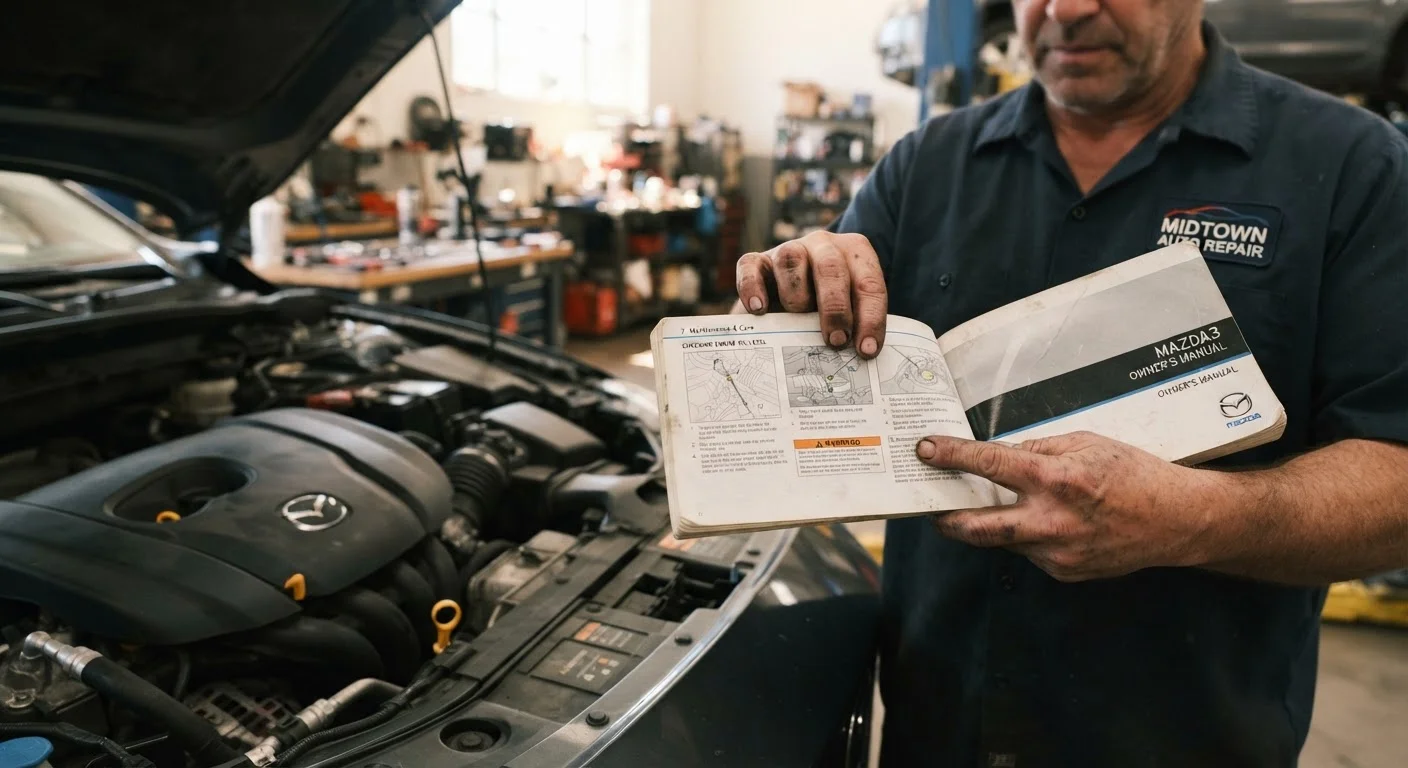
Photo credit: AdvisorHQ.net | Informative Website
In this article
From warming up your engine in winter to changing oil every 3,000 miles—separating ingrained habits from what the evidence actually shows.
Key Takeaways
- Modern engines don't need extended warm-up idling in cold weather before driving.
- Most vehicles today can go 5,000-10,000 miles between oil changes, not 3,000.
- Premium fuel offers no benefit in engines designed to run on regular-grade gasoline.
- Tire pressure should be set to your vehicle's spec, not the number printed on the tire sidewall.
- Following your owner's manual beats generic advice for nearly every maintenance decision.
Why Maintenance Myths Persist - and What They Cost You
Many car maintenance habits passed down from family members, mechanics, or quick-lube signage were once grounded in real engineering constraints. Engines, oils, and materials have changed dramatically over the past 30 years, but the advice hasn't always kept pace. The result: millions of drivers spend money on services their vehicles don't need, while sometimes overlooking ones that genuinely matter.
Understanding where these myths came from - and what the evidence actually shows - is one of the most practical things an everyday driver can do for their wallet. For a broader look at what car ownership actually costs, see the true cost of car ownership.
Myth
You must change your oil every 3,000 miles to protect your engine.
Fact
Most modern vehicles can safely go 5,000 to 10,000 miles or more between oil changes, depending on the oil type and driving conditions specified by the manufacturer.
The 3,000-mile rule originated decades ago when engine tolerances were looser and conventional motor oils degraded faster. Today's engines are built to tighter specifications, and modern synthetic and synthetic-blend oils maintain their protective properties far longer. Many automakers now specify intervals of 7,500 miles for conventional oil and up to 10,000-15,000 miles for full synthetic. Changing oil more frequently than needed wastes money and generates unnecessary waste oil - without adding any engine protection. The definitive source is your owner's manual. For a detailed breakdown, see what oil change intervals in your manual actually mean.
Myth
You need to let your engine idle and warm up for several minutes on cold mornings.
Fact
Modern fuel-injected engines warm up faster and more efficiently under gentle load than they do sitting at idle.
Extended idling in cold weather made sense for older carbureted engines that needed time to reach operating temperature before driving. Fuel-injected engines - standard since the 1990s - use sensors to manage fuel delivery precisely, even from a cold start. Idling for more than 30 to 60 seconds before driving wastes fuel, increases emissions, and can actually wash oil from cylinder walls in prolonged cold-idle situations. The better approach: start the engine, allow 30 seconds for oil to circulate, then drive gently for the first few minutes until the temperature gauge rises to normal.
Myth
Putting premium fuel in any car improves performance and engine health.
Fact
Premium fuel only benefits engines specifically designed and tuned to require higher octane; using it in a regular-grade engine provides no measurable advantage.
Octane rating measures a fuel's resistance to "knock" - premature ignition in the combustion chamber. High-compression and turbocharged engines are engineered to take advantage of that resistance. If your vehicle's manual says "regular unleaded recommended," premium fuel will not improve horsepower, fuel economy, or engine longevity. You're simply paying more for a chemical property your engine isn't built to use. Check the inside of your fuel door or your owner's manual for the correct octane rating. "Required" means use it; "recommended" leaves more room to use regular without harm - though following the recommendation is always the safer choice.
Myth
The maximum pressure number on a tire's sidewall is what you should inflate to.
Fact
The sidewall figure is the tire's maximum rated pressure, not the recommended operating pressure - which is found on a sticker inside your driver's door jamb.
Over-inflating tires to the sidewall maximum creates a smaller contact patch with the road, which reduces traction and makes the ride harsher. Under-inflation causes excessive heat buildup and uneven wear. The correct pressure is vehicle-specific - typically 32 to 36 PSI for passenger cars - and is listed on a placard in the driver's door jamb or in the owner's manual. Check pressure when tires are cold (the vehicle has been parked for at least three hours), since heat from driving temporarily raises pressure readings.
Myth
You must have your oil changed at a dealership to keep your warranty valid.
Fact
Federal law in the United States (the Magnuson-Moss Warranty Act) prohibits manufacturers from voiding a warranty solely because you used an independent shop or performed maintenance yourself, provided the work meets the specified standards.
This myth costs drivers real money by steering them toward higher-priced dealer service for routine maintenance. As long as you use the correct oil grade and filter type, and keep records of the service, your powertrain warranty remains intact regardless of where the oil change was performed. Keeping documented service records is essential - they're your proof of compliance. See how to keep reliable maintenance records for a practical approach. Note that warranty terms vary; always read your specific warranty documentation for details.
Myth
Replacing all four tires at once is always required, even when only two are worn.
Fact
Many vehicles can safely accept two new tires, but placement and vehicle drivetrain type matter significantly - the decision isn't one-size-fits-all.
For front-wheel-drive vehicles, new tires are generally placed on the rear axle to improve stability and reduce the risk of oversteer. All-wheel-drive vehicles are more sensitive: significant tread depth differences between axles can stress the drivetrain, and many AWD manufacturers do recommend four matching tires. The right answer depends on your specific vehicle, the remaining tread on existing tires, and your driving conditions. A qualified tire technician can measure tread depth and advise appropriately. Don't let a blanket upsell replace informed guidance tailored to your situation.
Making Smarter Maintenance Decisions Going Forward
The common thread through every myth above is that generic rules substitute for specific knowledge. Your vehicle's owner's manual contains interval schedules, fluid specifications, and tire pressure recommendations developed by the engineers who designed your engine - not approximations written for a generic car that doesn't exist.
Your Owner's Manual Is the Authority
Every maintenance interval, fluid specification, and service recommendation in this article should be cross-checked against your specific vehicle's owner's manual. Automakers engineer these schedules for your engine, climate range, and driving conditions. Generic rules of thumb - however widespread - are no substitute for manufacturer guidance.
If you're unsure whether a recommended service is genuinely due, ask your mechanic to show you the measurement or reading that supports it. Reputable shops welcome that question. For tasks that fall within a confident DIY range versus those best left to professionals, this guide on DIY maintenance boundaries provides a practical framework.
Don't Ignore Genuine Warning Signs
Debunking maintenance myths doesn't mean delaying legitimate service. If your check engine light is on, you notice unusual noises, or fluids are visibly leaking, those signals warrant prompt attention from a qualified mechanic. Saving money on unnecessary service is wise; skipping necessary repairs is not. See our guide on why small oil leaks escalate for a clear example.
Spending less on unnecessary maintenance doesn't mean spending less attention on your vehicle. Routine maintenance done on schedule - the right services at the right intervals - remains one of the strongest protections against large, unexpected repair bills. Similarly, maintenance myths aren't the only place where misinformation costs drivers money; auto insurance myths operate the same way and deserve equal scrutiny.
~$100+
Wasted per year on unnecessary 3,000-mile oil changes
Industry analysts estimate drivers following the outdated 3,000-mile interval on vehicles rated for 7,500+ miles pay for roughly twice as many oil changes as needed annually.
30-60 sec
Recommended cold-start idle time for modern engines
Automotive engineers generally advise no more than 30-60 seconds of idling before driving gently, replacing the old multi-minute warm-up habit.
32-36 PSI
Typical recommended tire pressure for passenger cars
This vehicle-specific figure - found on the driver's door jamb sticker - is routinely confused with the higher maximum pressure number molded into the tire sidewall.

Author
Cars & Driving Editorial Team
Cars & Driving Editorial Team is the collective byline for our editorial team and contributor network. Articles published under this byline or an editorial pen name are researched, written, and reviewed according to our editorial standards for clarity, consistency, and independence before publication.
View all articles →