
Buying a Refurbished Phone: What the Grading System Actually Means
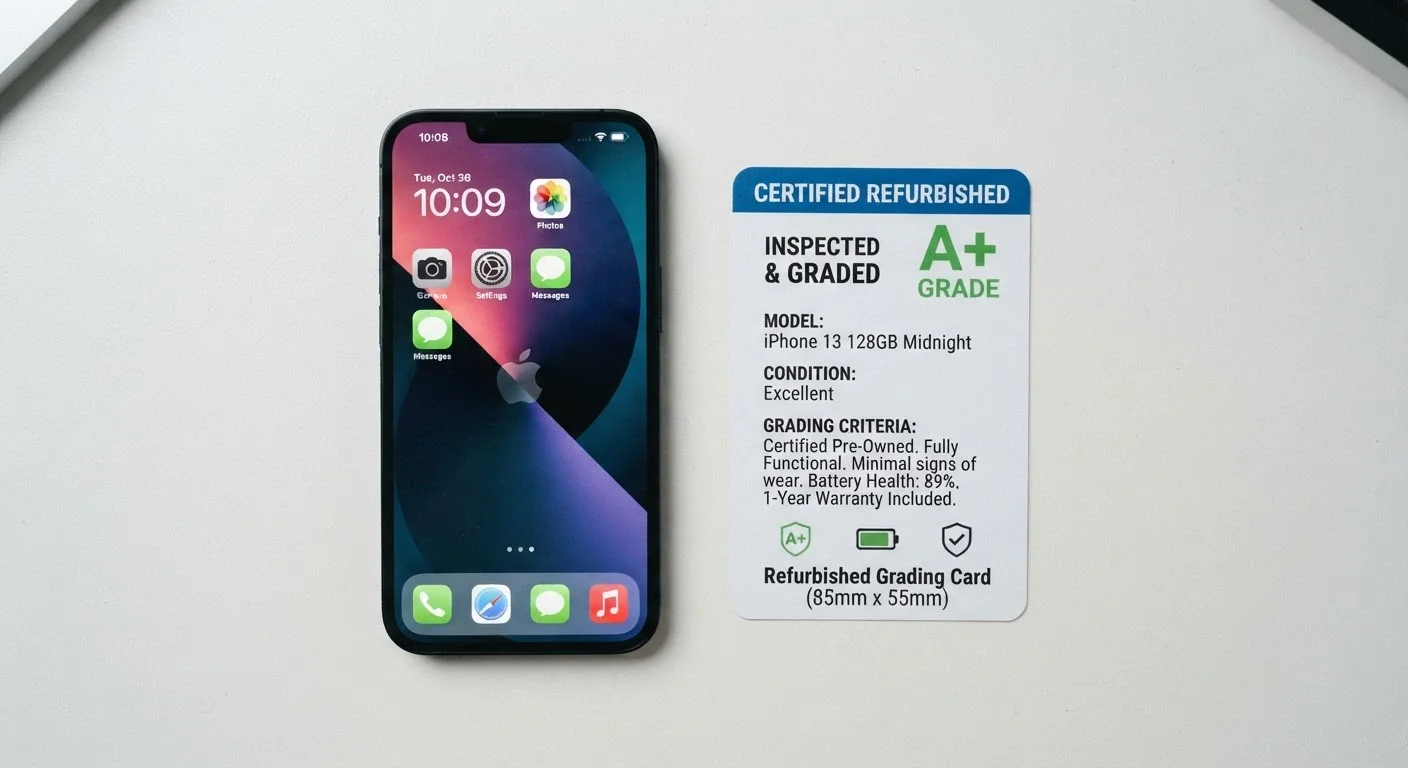
Photo credit: AdvisorHQ.net | Informative Website
In this article
Terms like 'Grade A' and 'certified refurbished' mean different things depending on who's selling. Here's how to read the labels accurately.
Key Takeaways
- Refurbished phone grades are not standardized - definitions vary by seller and marketplace.
- 'Certified Refurbished' typically means the manufacturer or an authorized partner did the inspection and repair.
- Cosmetic grades describe physical appearance; they do not always reflect battery health or internal performance.
- Always check the return policy and warranty terms before purchasing any refurbished device.
- Reading the full condition description, not just the grade label, gives you the most accurate picture.
Why the Grade Label Alone Isn't Enough
When you browse refurbished phones, you'll see terms like Grade A, Grade B, Excellent, Good, and Certified Refurbished scattered across listings. It's tempting to treat these like a straightforward quality scale - but they aren't. Unlike, say, egg carton grades regulated by the USDA, phone refurbishing grades have no governing body setting the rules. Each retailer, carrier, or online marketplace writes its own definitions.
That means a Grade B phone on one platform could look and function identically to a Grade A phone on another. The label is only as meaningful as the description behind it. Before focusing on the letter or word, your first step should always be reading the seller's own condition glossary - most reputable sellers publish one.
Grade Labels Are Seller-Defined, Not Industry-Regulated
There is no federal or industry-wide body that certifies or audits refurbished phone grades. When a listing says 'Grade A,' that designation comes entirely from the seller's internal standards. Two sellers can use identical grade names while applying very different criteria. Always read the condition details specific to that seller.
Breaking Down the Most Common Grade Tiers
While definitions vary, most sellers organize refurbished phones into a few broad tiers. Here's how they typically shake out:
- Grade A / Excellent / Like New: Little to no visible cosmetic wear. The screen and body should be free of significant scratches or dents. Some sellers specify that these devices show no scratches visible from arm's length; others guarantee a flawless screen but allow minor marks on the back or sides.
- Grade B / Good / Very Good: Light cosmetic wear - think small scratches on the back panel or minor scuffs on the frame. The screen is usually in good condition. Functionally, these devices should perform normally.
- Grade C / Fair / Acceptable: More noticeable cosmetic damage - visible scratches, possible dents, or discoloration. These devices work but show clear signs of prior use. Priced lower to reflect that.
A crucial point: cosmetic grades do not automatically tell you anything about battery health, speaker quality, or camera performance. Those are functional specs that should be listed separately. If a listing doesn't mention battery capacity remaining, it's worth asking or looking elsewhere.
~15%
Typical price discount vs. new for Grade A refurbished phones
Industry resale market analyses suggest Grade A refurbished devices commonly sell for 15-30% less than their new counterparts, with variation by brand, model age, and seller.
80%+
Battery health threshold recommended by most refurbishers
Many established refurbishing programs set 80% remaining battery capacity as the minimum threshold for a device to qualify for resale, though policies differ by seller.
3-4x
Longer functional lifespan vs. single-owner cycle
Refurbished devices extend a phone's usable life significantly beyond a single owner's typical 2-year upgrade cycle, according to circular economy research on consumer electronics.
What 'Certified Refurbished' Actually Signals
'Certified Refurbished' carries more weight than a generic grade label - but only when it comes from the original manufacturer or an authorized refurbishing partner. Programs run directly by device makers typically require that a device passes a defined checklist of functional tests, that worn parts (including batteries below a certain threshold) are replaced, and that the device ships with a warranty - sometimes as long as one year.
Third-party sellers can also call their programs 'certified,' but the certification is only as rigorous as their internal process. Look for specifics: What was tested? What was replaced? What warranty is included? A trustworthy seller will answer those questions clearly in the product listing or on a dedicated FAQ page.
“The term 'certified' in the refurbished market can mean almost anything - from a rigorous manufacturer inspection to a basic power-on test by a small reseller. Consumers need to look past the label and ask what the certification actually covers.”
— Consumer Electronics Resale Industry Analysis, Published overview of secondary market device grading standards
If you're evaluating a listing and plan to eventually pass the phone on, our guide on preparing your phone before selling or trading in walks through exactly what steps to take when it's time to move on.
What to Check Beyond the Grade
The grade is a starting point, not a finish line. Here are the details that matter just as much - or more:
- Battery health: Aim for 80% or higher remaining capacity. Some sellers replace batteries on all refurbished devices; others only do so on certain tiers.
- Warranty length: A 90-day warranty is common; 12 months is better. No warranty is a red flag.
- Return window: A 15-30 day return period gives you time to test the device thoroughly in real-world conditions.
- Network compatibility: Confirm the phone is unlocked or compatible with your carrier before purchasing.
- What's in the box: Many refurbished phones ship without original accessories. Make sure you know what's included.
If display quality matters to you, it's also worth cross-referencing the phone's original screen specs. Our breakdown of phone screen sizes, resolutions, and refresh rates can help you understand what to look for in a device's display before you commit.
Test Everything Within the Return Window
As soon as your refurbished phone arrives, test the camera, speakers, microphone, charging port, and cellular signal - not just the screen. Run the battery through at least one full charge cycle. If anything feels off, you want to catch it while a return is still possible.
Frequently Asked Questions

Author
Tech & Gadgets Editorial Team
Tech & Gadgets Editorial Team is the collective byline for our editorial team and contributor network. Articles published under this byline or an editorial pen name are researched, written, and reviewed according to our editorial standards for clarity, consistency, and independence before publication.
View all articles →