
Cash Flow vs. Profit: Understanding the Difference Before It Costs You
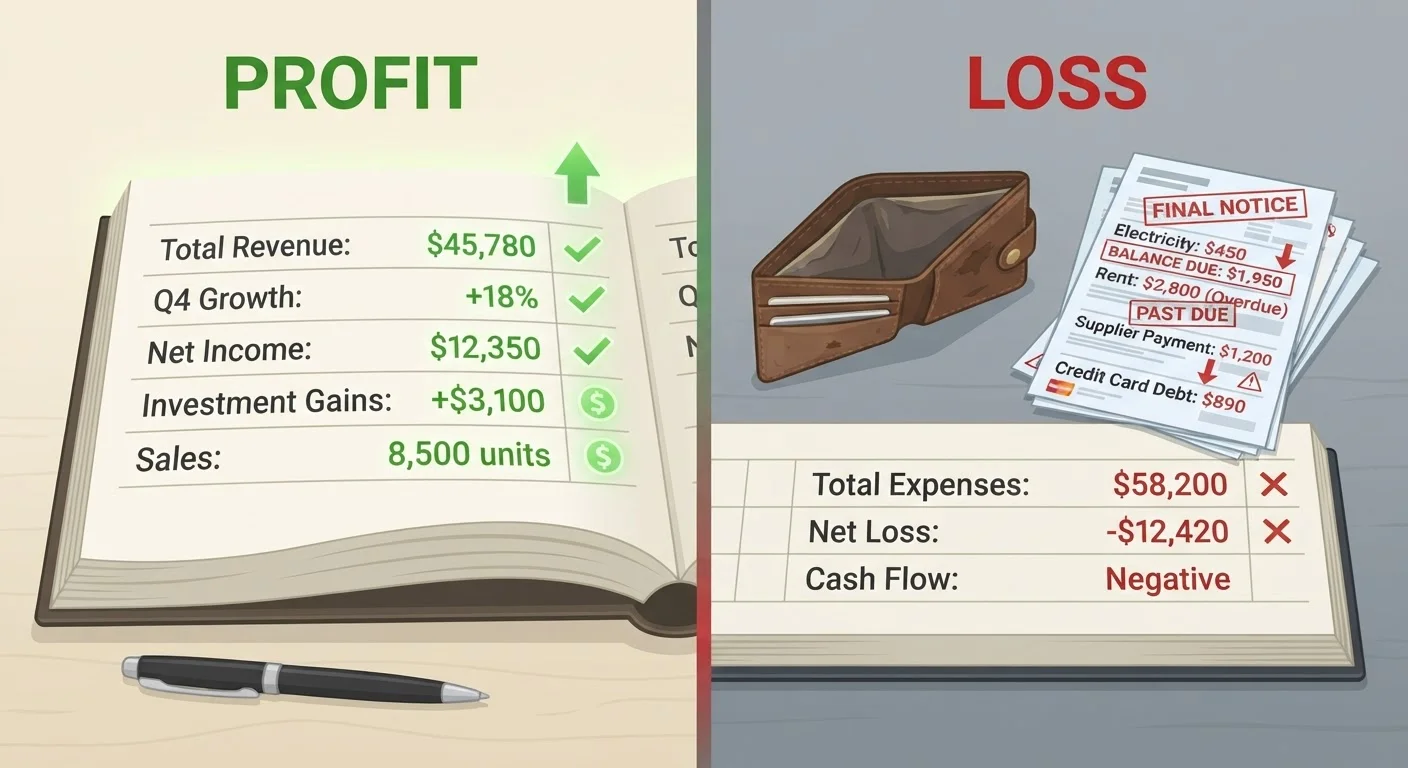
Photo credit: AdvisorHQ.net | Informative Website
In this article
A profitable business can still run out of cash. Learn why these two financial concepts are not the same and why both need attention.
Key Takeaways
- A business can show a profit on paper while simultaneously running out of cash to pay suppliers or employees.
- Cash flow tracks the actual movement of money in and out; profit measures revenue minus expenses over a period.
- Timing differences - like invoices paid 60 days late - are the most common reason profitable businesses hit cash crises.
- Both metrics are essential; ignoring either one creates serious financial blind spots for business owners.
- Strong cash flow management is especially critical for small businesses with thin reserves and unpredictable revenue cycles.
Why Profitable Businesses Still Fail
One of the most counterintuitive lessons in business finance: a company can be genuinely profitable and still collapse because it ran out of cash. This isn't rare - it's one of the leading reasons small businesses close, even when their income statements look healthy.
The confusion stems from treating cash flow and profit as interchangeable. They measure fundamentally different things. Profit tells you whether your business earned more than it spent during an accounting period. Cash flow tells you whether actual dollars moved through your accounts in a way that keeps operations running right now.
For aspiring entrepreneurs especially, misreading these two signals can mean the difference between a sustainable venture and an unexpected crisis. See our guide to small business accounting for broader context on how the numbers in your business fit together.
Accrual vs. Cash Accounting Matters Here
Most businesses use accrual accounting, which records revenue when it's earned and expenses when they're incurred - regardless of when cash actually moves. Cash-basis accounting, used by some smaller businesses, records transactions only when cash changes hands, making profit and cash flow figures closer to each other. If you're unsure which method your business uses, your accountant can clarify - and the choice has meaningful tax and reporting implications.
What Each Metric Actually Measures
Cash flow is the net amount of cash moving into and out of your business over a specific period. It accounts for real transactions - money received from customers, payments made to suppliers, loan repayments, payroll, rent. If more cash comes in than goes out, you have positive cash flow. If the reverse is true, you have negative cash flow - even temporarily, this can stop operations cold.
Profit (also called net income) is calculated on your income statement: total revenue minus total expenses. But crucially, many of those revenue and expense figures are recorded when they are earned or incurred, not necessarily when cash actually changes hands. This is the core of accrual accounting, the standard method for most businesses.
The timing gap is where things get dangerous. You might invoice a client for $40,000 in January, record it as revenue, and show a profit - but if that client pays in March, you have no cash in February to pay your team or your vendors. The profit was real. The cash wasn't there yet. For more on how key financial terms like net income and cash flow work in plain language, that reference guide is worth bookmarking.
| Criterion | Cash Flow | Profit |
|---|---|---|
| What it measures | Actual money moving in and out | Revenue minus expenses over a period |
| Primary financial statement | Cash flow statement | Income statement (P&L) |
| Timing of recognition | When cash is received or paid | When revenue is earned or costs incurred |
| Can be positive while the other is negative? | Yes - e.g., borrowing creates inflow | Yes - e.g., invoiced but unpaid revenue |
| Key risk if ignored | Can't pay bills despite appearing healthy | Unsustainable model masked by short-term inflows |
| Best used for | Day-to-day operational decisions | Long-term viability and growth planning |
The Timing Problem Every Owner Needs to Understand
Most cash flow problems aren't caused by bad business models - they're caused by timing mismatches. Long payment terms, seasonal revenue dips, upfront inventory purchases, and slow-paying clients all create windows where cash is tight even when annual profit looks fine.
Consider a contractor who completes $200,000 worth of projects in Q1 but operates on 60-day payment terms. Materials were purchased, workers were paid, and overhead continued - all from reserves. The profit is real once invoices clear, but the business may run out of operating cash before that happens.
82%
Small business failures attributed to cash flow problems
According to research cited by U.S. Small Business Administration sources, poor cash flow management is consistently identified as a top reason small businesses close.
60-90 days
Typical B2B invoice payment window
Many business-to-business contracts allow 60 to 90 days for payment, creating significant gaps between earning revenue and receiving cash.
Managing this requires more than watching your bank balance. Owners need a cash flow forecast - a rolling projection of expected inflows and outflows over the coming weeks and months. This is where understanding liquidity becomes directly relevant: assets that can't be quickly converted to cash don't help you meet a payroll deadline.
Practical levers include tightening invoice payment terms, offering early-payment discounts, negotiating longer terms with suppliers, and maintaining a cash reserve specifically for operational gaps. None of these improve your profit margin - but all of them can prevent a profitable business from shutting its doors.
This article is for general informational and educational purposes only and does not constitute financial, accounting, or legal advice. Consult a qualified financial professional or accountant for guidance specific to your business situation.

Author
Work & Business Editorial Team
Work & Business Editorial Team is the collective byline for our editorial team and contributor network. Articles published under this byline or an editorial pen name are researched, written, and reviewed according to our editorial standards for clarity, consistency, and independence before publication.
View all articles →