
Pricing Your Product or Service: The Logic Behind Numbers That Work
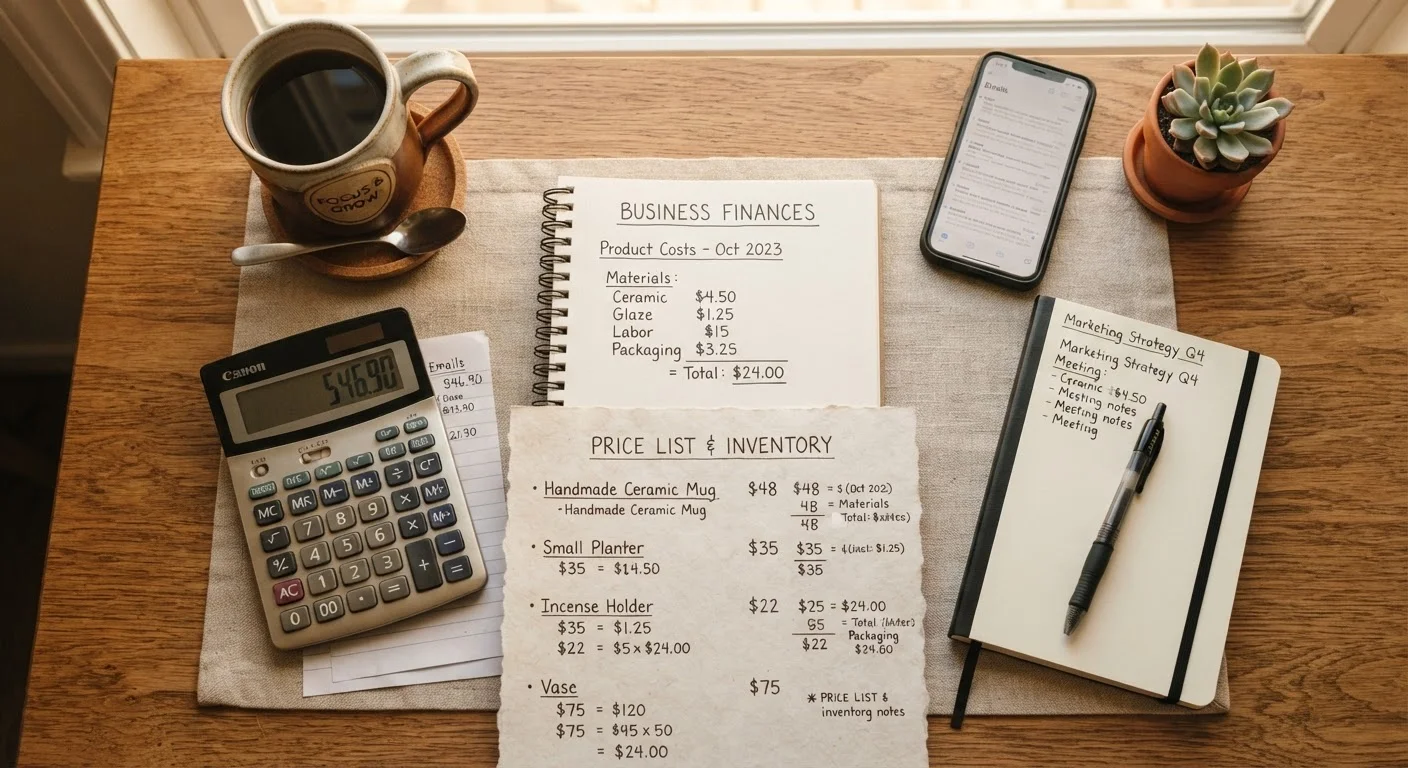
Photo credit: AdvisorHQ.net | Informative Website
In this article
Understand cost-plus, value-based, and competitive pricing strategies — and how to think through what to charge without guessing.
Key Takeaways
- Pricing below your true costs is one of the most common and damaging mistakes new entrepreneurs make.
- Three core strategies - cost-plus, value-based, and competitive - each serve different business models and goals.
- Your price sends a signal about quality; too low can be just as damaging as too high.
- Regular price reviews are essential - costs change and your pricing needs to keep up.
- Understanding your break-even point is a non-negotiable first step before setting any price.
Why Pricing Deserves More Thought Than Most Entrepreneurs Give It
Pricing is one of the highest-leverage decisions a small business owner makes - and one of the most frequently rushed. Too many entrepreneurs arrive at a number by instinct, by copying a competitor, or by picking something that feels "fair." None of those approaches give you a business that's built to last.
A price that's too low trains customers to undervalue your work, erodes margins, and can signal low quality. A price that's too high without clear justification pushes buyers away. The goal isn't simply to land somewhere in the middle - it's to set a price that reflects real costs, real market conditions, and real value delivered.
This article walks through the core frameworks - cost-plus, value-based, and competitive pricing - and how to think through them practically. For a broader look at how pricing connects to your financial picture, see our guide on small business accounting fundamentals.
The Three Core Pricing Frameworks
There's no single right pricing model - but there are three well-established frameworks that cover most situations. Understanding each one lets you choose deliberately rather than by default.
Cost-plus pricing starts with what it costs you to make or deliver something, then adds a margin. It's logical and protects against losses, but it doesn't account for what buyers are actually willing to pay.
Value-based pricing starts from the customer's perspective - what is the outcome worth to them? This tends to produce higher prices and better margins when your offering genuinely solves a real problem. It requires you to understand your customer deeply.
Competitive pricing uses the market as a reference point. It's useful context but can become a trap if you let it drive your decisions without understanding your own cost structure or differentiation.
In practice, effective pricing borrows from all three. You use cost-plus to set a floor, competitive research to understand the range, and value-based thinking to find where you can price above the middle without losing buyers.
Calculate your true cost before setting any price
Many entrepreneurs undercount their costs by forgetting indirect expenses like software subscriptions, packaging, payment processing fees, or their own time. If you don't know what something actually costs to produce or deliver, any price you set is a guess. Understanding your full cost floor is the foundation every other pricing decision rests on.
Use cost-plus pricing as your baseline, not your ceiling
Cost-plus pricing - adding a target margin on top of your costs - is straightforward and ensures you cover expenses. But it's a floor, not a strategy on its own. Markets don't care what something cost you; they care what it's worth to them. Use cost-plus to confirm viability, then layer other factors on top.
Apply value-based pricing when your offering solves a specific, meaningful problem
Value-based pricing anchors your price to what the outcome is worth to the buyer - not what it cost you. This approach works well when your product or service delivers measurable results, saves significant time, or fills a gap competitors don't. It typically allows for higher margins and attracts customers who are choosing on quality rather than price alone.
Research competitive pricing without letting it dictate yours
Knowing what competitors charge is useful context, but blindly matching their prices ignores differences in costs, quality, and positioning. If you undercut everyone, you may win customers who leave the moment someone charges less. If you're priced higher, make sure you can clearly articulate why.
Know your break-even point before you commit to a price
Break-even is the revenue level at which you cover all fixed and variable costs - below it, you're losing money with every sale. Knowing this number tells you the minimum viable price and the minimum volume you need to survive. It's a reality check that should come before any pricing decision is finalized.
Practical Steps to Arrive at a Working Price
Theory is useful, but you need a number. Here's how to work through it systematically.
Start by mapping every cost - direct materials, labor (including your own time), overhead, and fees. Entrepreneurs commonly forget payment processing charges, shipping, software tools, and the hours spent on non-billable tasks. These hidden costs are the same kind of overlooked expenses that catch people off guard in other spending contexts - not unlike the hidden costs travelers routinely underestimate.
Once you have a true cost figure, calculate your break-even point. Then research your market - what are buyers currently paying for comparable outcomes? Where does your offer sit relative to what's available?
Finally, consider the signal your price sends. In many markets, a very low price doesn't attract more customers - it raises doubts about quality. Pricing communicates positioning, whether you intend it to or not.
Pricing Is Not Set-and-Forget
Many new business owners set a price at launch and never revisit it. But costs shift, competitors adjust, and customer expectations evolve. Build a habit of reviewing your pricing at least annually, or whenever your input costs change significantly. What worked at launch may quietly erode your margins over time.
Adjusting and Testing Over Time
No price is permanent. Costs change, competition shifts, and as your reputation grows, your pricing power may increase. Build in regular reviews so you aren't locked into a rate that made sense at launch but no longer reflects reality.
Testing small price increases is often less risky than entrepreneurs fear. If your existing customers value what you do, modest increases rarely drive significant churn - and the margin improvement can be substantial. If you're building toward a growing customer base, see our complementary guide on building a customer base from zero for strategies that work alongside a clear pricing approach.
“Price is what you pay. Value is what you get. The two are rarely the same number - and the gap between them is where business strategy lives.”
— Warren Buffett, Investor and business strategist, widely cited on value and pricing philosophy
Pricing well is an ongoing discipline, not a one-time decision. The entrepreneurs who get it right are the ones who treat it as a strategic tool rather than an afterthought.

Author
Work & Business Editorial Team
Work & Business Editorial Team is the collective byline for our editorial team and contributor network. Articles published under this byline or an editorial pen name are researched, written, and reviewed according to our editorial standards for clarity, consistency, and independence before publication.
View all articles →