
Warning Signs Your Workplace Culture Is Making You Sick
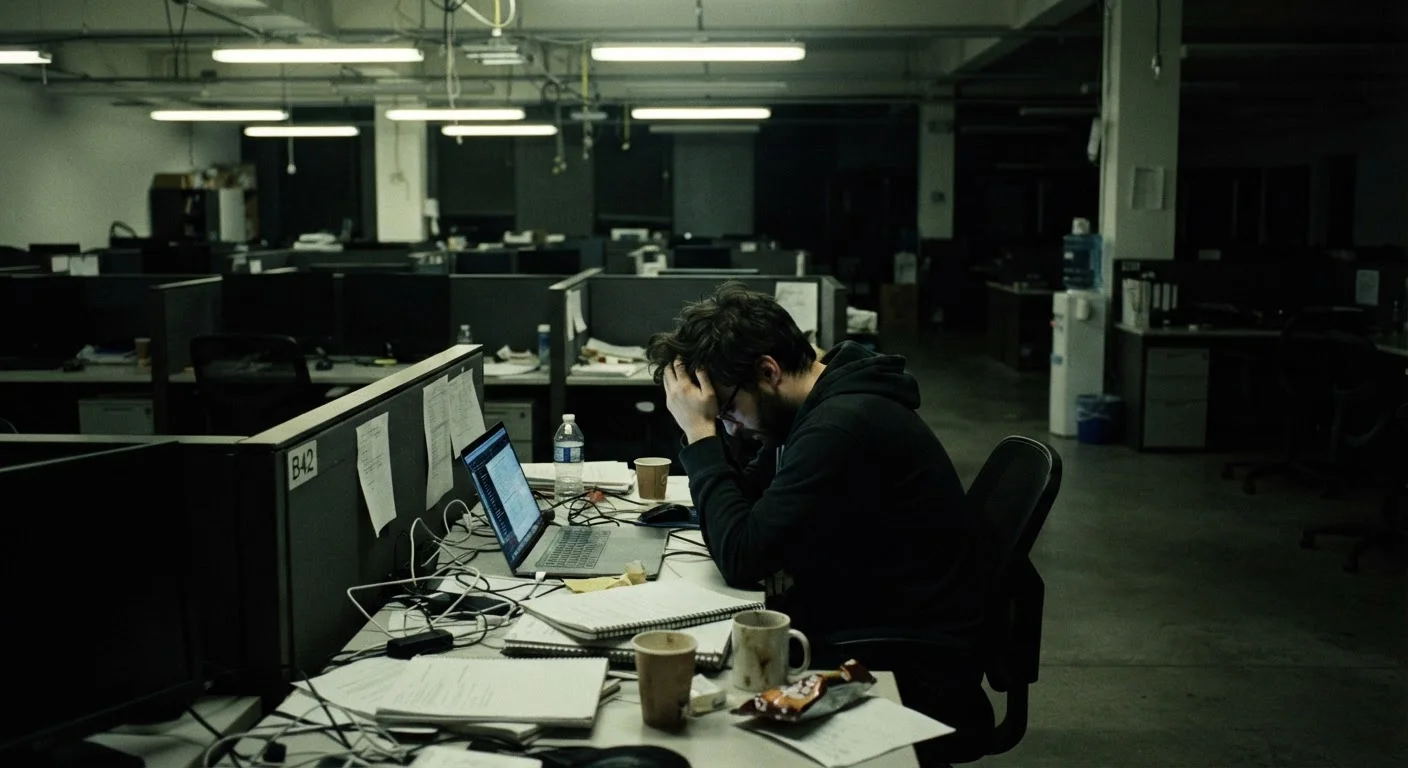
Photo credit: AdvisorHQ.net | Informative Website
Some work environments quietly erode well-being over time. These are the organizational patterns that research links to chronic stress and poor health.
Key Takeaways
- Chronic workplace stress has measurable links to cardiovascular disease, immune suppression, and mental health disorders.
- Organizational patterns - not just individual workloads - are often the root cause of employee health decline.
- Recognizing early warning signs gives workers and managers a chance to intervene before damage becomes serious.
- Many stress-related workplace harms are normalized, making them harder to identify without specific markers to look for.
- Addressing toxic culture requires systemic changes, not just personal resilience strategies.
When Work Itself Becomes the Health Risk
Most people expect work to be demanding. Deadlines, pressure, and occasional long hours are part of professional life. But there's a meaningful difference between manageable challenge and a workplace culture that systematically erodes your health - and research suggests many workers can't easily tell one from the other until they're already struggling.
The World Health Organization classifies burnout as an occupational phenomenon tied to chronic, unmanaged workplace stress. Studies linking high-demand, low-control work environments to elevated risks of cardiovascular disease, sleep disorders, and depression are well-established in occupational health literature. Yet the cultural patterns driving those outcomes often get dismissed as just how things are.
This list focuses on organizational warning signs - not individual habits or workload complaints - because that's where the real leverage is. If you're wondering whether your stress is typical or something more serious, understanding the difference between chronic stress and clinical burnout is a useful starting point.
Psychological safety is absent
When employees routinely self-censor, avoid raising problems, or fear reprisal for honest feedback, the organization has a psychological safety problem. Research by organizational psychologist Amy Edmondson at Harvard Business School identifies low psychological safety as a predictor of poor team performance and elevated individual stress - people expend significant cognitive and emotional energy managing what they say rather than doing their actual work.
The chronic vigilance required in these environments activates the body's stress response in sustained, low-grade ways. Over time, that sustained activation is associated with elevated cortisol, disrupted sleep, and weakened immune response. Understanding what psychological safety actually means can help you gauge whether your workplace has this foundational element in place.
Chronic self-censorship at work is not just uncomfortable - it's physiologically costly.
Boundaries between work and personal time are structurally ignored
This goes beyond a busy season or a demanding project. The warning sign is when after-hours availability is treated as a baseline expectation - when unanswered weekend messages generate visible friction, or when taking leave triggers guilt or professional consequences. Research from occupational health fields consistently shows that lack of recovery time is a core driver of burnout, not simply long hours in isolation.
Recovery - psychological detachment from work - is a documented need, not a perk. Cultures that erode it are, functionally, cultures that prevent the body and mind from resetting. The physical toll of sustained desk work compounds significantly when adequate rest is never built in.
Cultures that erase recovery time don't just exhaust workers - they prevent the body from resetting.
Workload is permanently unrealistic
Every organization has crunch periods. The pattern to watch for is permanent overload - where the backlog never clears, headcount is chronically insufficient for actual scope, and employees routinely skip meals, breaks, or sleep to stay afloat. This isn't hustle culture; it's a structural mismatch between resources and expectations.
Occupational health models like the Job Demands-Resources framework identify sustained high demands paired with inadequate resources as a direct pathway to exhaustion and disengagement. Workers often internalize the gap as a personal failing rather than a management problem - which makes it harder to name and address. Common misconceptions about workplace stress often lead employees to absorb organizational dysfunction rather than question it.
Permanent overload is a management failure, not an individual performance gap.
Recognition is absent or weaponized
Workplaces where good work goes consistently unacknowledged, or where recognition is used selectively to create competition and anxiety, produce measurably higher stress levels. Effort-reward imbalance - a concept from occupational health research - describes the mismatch between what workers give and what they receive in return, including recognition, status, and fairness. High imbalance correlates with elevated risk of depression and cardiovascular problems in multiple longitudinal studies.
Recognition doesn't mean constant praise. It means fair acknowledgment, honest feedback, and visible alignment between contribution and outcomes. When those are missing, workers often experience eroding motivation and rising cynicism - early markers of the disengagement phase of burnout.
Sustained effort-reward imbalance is one of the most researched pathways from work stress to physical illness.
Conflict is avoided rather than resolved
A culture where disagreements fester, grievances accumulate, and interpersonal tensions are never actually addressed creates a low-level but constant stress environment. Workers spend energy navigating unspoken dynamics rather than focusing on their roles. Over time, this kind of ambient relational tension - particularly when it involves perceived unfairness or exclusion - activates the same stress pathways as more acute threats.
This is distinct from workplaces where robust, direct disagreement is welcomed. Healthy conflict resolution and conflict avoidance are opposite ends of the spectrum. The former reduces uncertainty; the latter compounds it.
Avoided conflict doesn't disappear - it accumulates as ambient stress workers carry constantly.
Worker autonomy is minimal
The demand-control model, one of the most replicated frameworks in occupational health, identifies low control over one's work - how tasks are done, when, and at what pace - as a primary risk factor for work-related illness. This is especially significant when paired with high job demands. Workers in high-demand, low-autonomy environments show elevated risk for hypertension, depression, and immune-related conditions across multiple studies.
Micromanagement is the most visible form of autonomy erosion, but the pattern also shows up in rigid processes, constant surveillance, lack of decision-making authority, and minimal input into how work is structured. It's worth distinguishing between appropriate oversight and control that signals distrust.
High demands plus low control is one of occupational health's most reliable predictors of illness.
What to Do With This Information
Naming the problem is not the same as solving it, but it's a necessary first step. If several of these patterns describe your workplace, the issue isn't your resilience or your ability to cope - it's systemic, and personal coping strategies alone rarely fix systemic problems.
Talk to Someone With Real Authority to Help
HR departments vary widely in their capacity and willingness to address cultural issues. If internal channels aren't responsive, employee assistance programs (EAPs), union representatives, or external occupational health professionals may offer more neutral support. Don't assume silence means the problem isn't serious enough to raise.
Document what you're experiencing. Talk to HR, a trusted manager, or an employee assistance program if one is available. If you're in a position of authority, consider how managers unintentionally undermine team well-being - some of these patterns start at the leadership level without anyone realizing it.
If physical symptoms are present - persistent fatigue, frequent illness, sleep disruption - consult a qualified healthcare professional. This article is general workplace information, not medical advice, and a doctor is the right person to evaluate what your body is telling you. For a structured way to assess your situation before things escalate, auditing your work week can help you see the full picture.
This article is for general informational purposes only and does not constitute medical, psychological, or professional advice. If you are experiencing symptoms affecting your health or well-being, please consult a qualified healthcare professional.

Author
Work & Business Editorial Team
Work & Business Editorial Team is the collective byline for our editorial team and contributor network. Articles published under this byline or an editorial pen name are researched, written, and reviewed according to our editorial standards for clarity, consistency, and independence before publication.
View all articles →