
Monthly Budget Setup Checklist
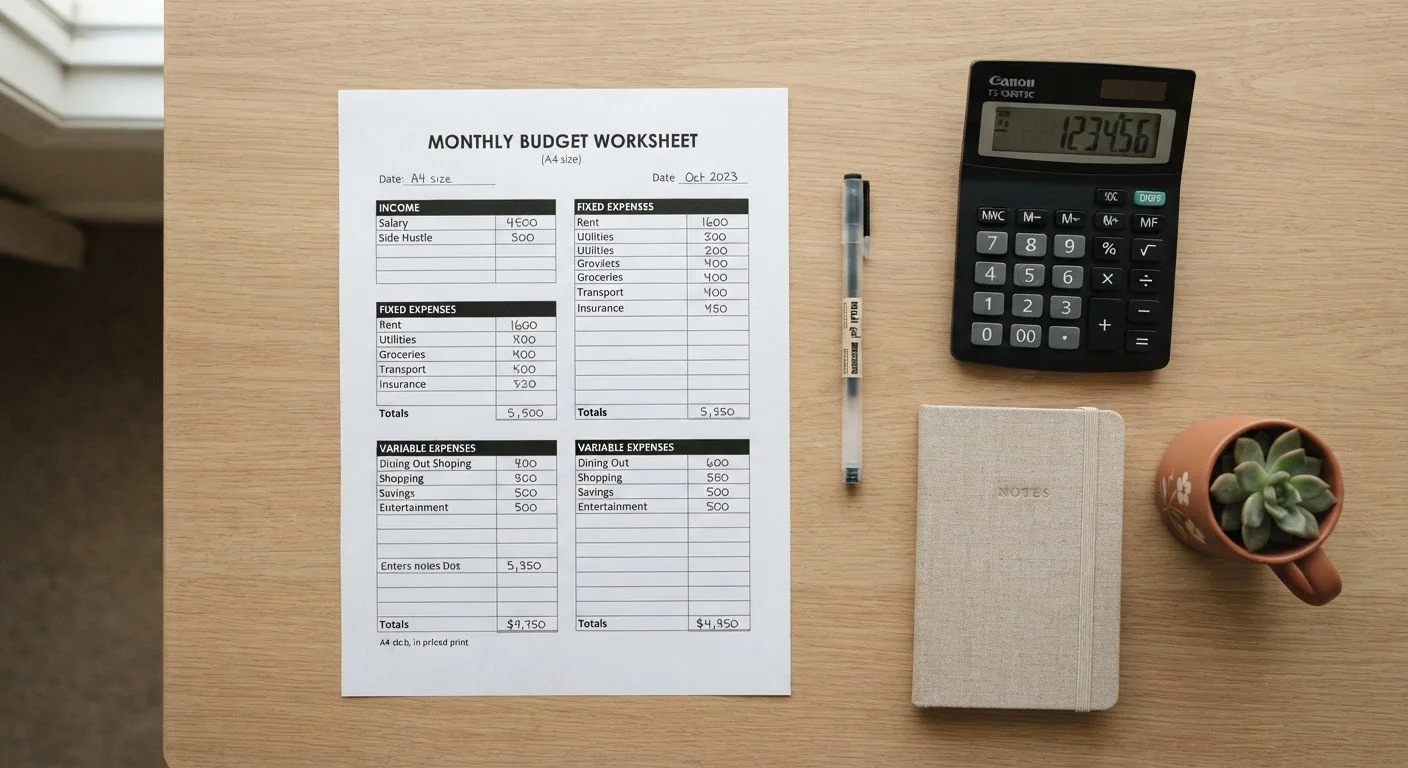
Photo credit: AdvisorHQ.net | Informative Website
A step-by-step checklist to walk through at the start of each month — covering income, bills, savings goals, and spending categories.
Key Takeaways
- Confirm your actual take-home income before assigning any dollar to a category.
- List every fixed bill with its due date before allocating discretionary spending.
- Savings goals belong in the budget as line items, not afterthoughts.
- A zero-based approach ensures every dollar has a designated purpose before the month starts.
- Reviewing last month's spending reveals patterns that make this month's plan more realistic.
Why a Monthly Reset Matters
Most budgets fail not because of bad intentions, but because of missing structure. Life shifts every month - a utility bill spikes, an extra paycheck arrives, a car registration comes due. A monthly setup routine forces you to account for those changes before they become surprises rather than after they have already strained your account.
If you are new to budgeting or want a stronger foundation, the introduction to budgeting covers the core concepts that underpin everything in this checklist. For those who have tried budgeting before and quit, it is worth understanding why budgets fall apart in month two before starting again - the same patterns tend to repeat.
This checklist is designed to be worked through once at or just before the start of each month. It is general financial education, not personalised financial advice. For guidance specific to your situation, consult a qualified financial professional.
Income Review
Fixed Expenses
Variable and Irregular Expenses
Savings Goals
Debt Payments
Balance and Zero Out
Last Month's Review
Tools You Will Need
You do not need expensive software to run an effective monthly budget. The right tool is simply the one you will actually use consistently. If you are weighing your options, see our comparison of spreadsheet budgeting versus budgeting apps for a practical breakdown.
Spreadsheet (Google Sheets or Excel)
Create and maintain a fully customisable monthly budget template you can update in real time.
Budgeting app
Automate transaction import and category tracking to reduce manual data entry each month.
Bank and credit card statements
Provide accurate figures for last month's spending to inform this month's category estimates.
Pay stubs or income records
Confirm your exact net income figure before assigning dollars to any budget category.
Bill calendar or reminder app
Track due dates for all fixed bills alongside your pay schedule to avoid late payments.
Making the Checklist Work Long-Term
A single month of disciplined budgeting creates a data point. Several months in a row create a pattern - and patterns are what make future planning genuinely accurate. The single habit that compounds fastest is consistent expense tracking. See the full breakdown in tracking expenses: the habit that makes everything else easier.
If your income varies month to month - whether you freelance, work hourly shifts, or run a side business - the standard approach in this checklist needs a few adjustments. The guide to budgeting on irregular income covers those adaptations in detail.
One planning tool worth building into your budget early is a sinking fund - a dedicated sub-account for predictable irregular expenses like car insurance renewals, holiday gifts, or annual subscriptions. Learn how they work in the sinking funds guide. Building these into your monthly setup prevents large irregular bills from derailing an otherwise solid plan.
Avoid Copying Last Month's Budget Unchanged
It can be tempting to paste last month's numbers and call it done, but expenses shift in ways that matter - utility costs rise seasonally, irregular bills appear, and income can change. Spending a few minutes reviewing actual versus planned figures from the prior month makes this month's plan significantly more accurate and realistic.
This article is for general informational and educational purposes only and does not constitute personalised financial, tax, or legal advice. Consult a qualified financial professional for guidance tailored to your individual circumstances.

Author
Finance Editorial Team
Finance Editorial Team is the collective byline for our editorial team and contributor network. Articles published under this byline or an editorial pen name are researched, written, and reviewed according to our editorial standards for clarity, consistency, and independence before publication.
View all articles →