
The Credit and Debt Terms Every First-Time Borrower Should Know
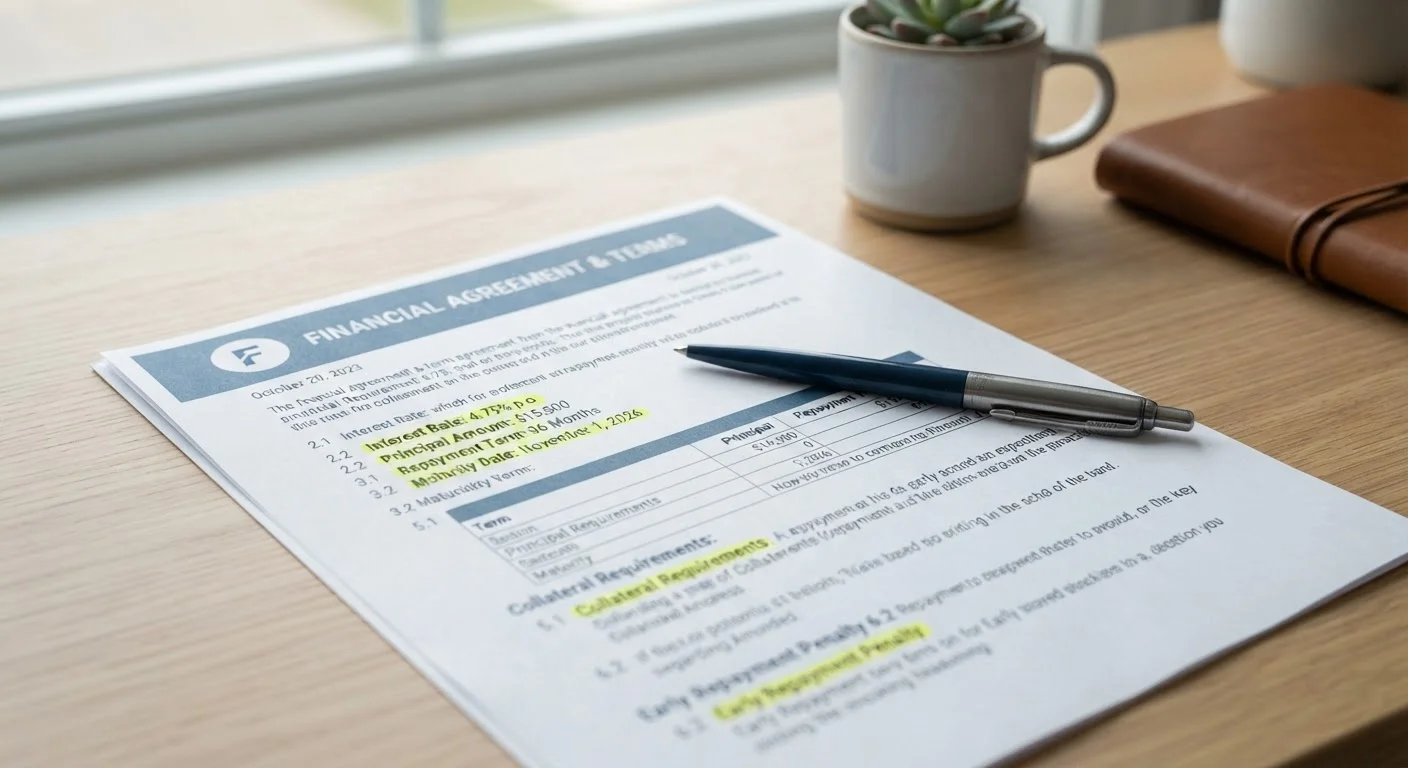
Photo credit: AdvisorHQ.net | Informative Website
In this article
APR, principal, charge-off, hard inquiry—a clear glossary of the terms you'll encounter when dealing with credit and loans.
Why This Vocabulary Matters Before You Borrow
Loan agreements and credit disclosures are written in precise financial language. If you don't know what a term means, you may agree to conditions that cost you more than you expected - or misread how much flexibility you actually have. This reference covers the core terms you'll encounter at every stage of the borrowing process, from the moment you apply to the moment your balance reaches zero.
For a broader orientation to the borrowing process itself, see our complete starting point for first-time borrowers.
Core Loan and Interest Terms
These are the terms you'll see on nearly every loan or credit agreement.
Understanding how interest compounds is especially important. When interest accrues on both your original balance and previously accumulated interest, balances can grow faster than minimum payments reduce them. For a deeper look at how this dynamic works against borrowers, see why borrowers end up deeper in debt despite making payments.
Credit Report and Score Terms
Your credit history affects the rates you're offered and the loans you can access. These terms describe how that history is built and evaluated.
- Credit Report
- A detailed record of your borrowing history maintained by the three major credit bureaus - Equifax, Experian, and TransUnion. It lists open and closed accounts, payment history, balances, and any negative marks.
- Credit Score
- A three-digit number, typically ranging from 300 to 850, calculated from the data in your credit report. Lenders use it to quickly assess how likely you are to repay a debt. Higher scores generally qualify for lower interest rates.
- Hard Inquiry
- A credit check initiated when you formally apply for credit. Hard inquiries can temporarily lower your score by a few points and remain on your report for two years.
- Soft Inquiry
- A credit check that does not affect your score. Checking your own credit or a lender pre-qualifying you without a formal application are common examples.
- Derogatory Mark
- A negative item on your credit report - such as a late payment, collection account, or bankruptcy - that signals elevated risk to lenders and can lower your score significantly.
Before you commit to any loan, running through a structured checklist is worthwhile. Our pre-borrowing checklist walks you through the key items to verify.

Author
Finance Editorial Team
Finance Editorial Team is the collective byline for our editorial team and contributor network. Articles published under this byline or an editorial pen name are researched, written, and reviewed according to our editorial standards for clarity, consistency, and independence before publication.
View all articles →