
Stocks, Bonds, and Cash: What Each Asset Class Actually Does
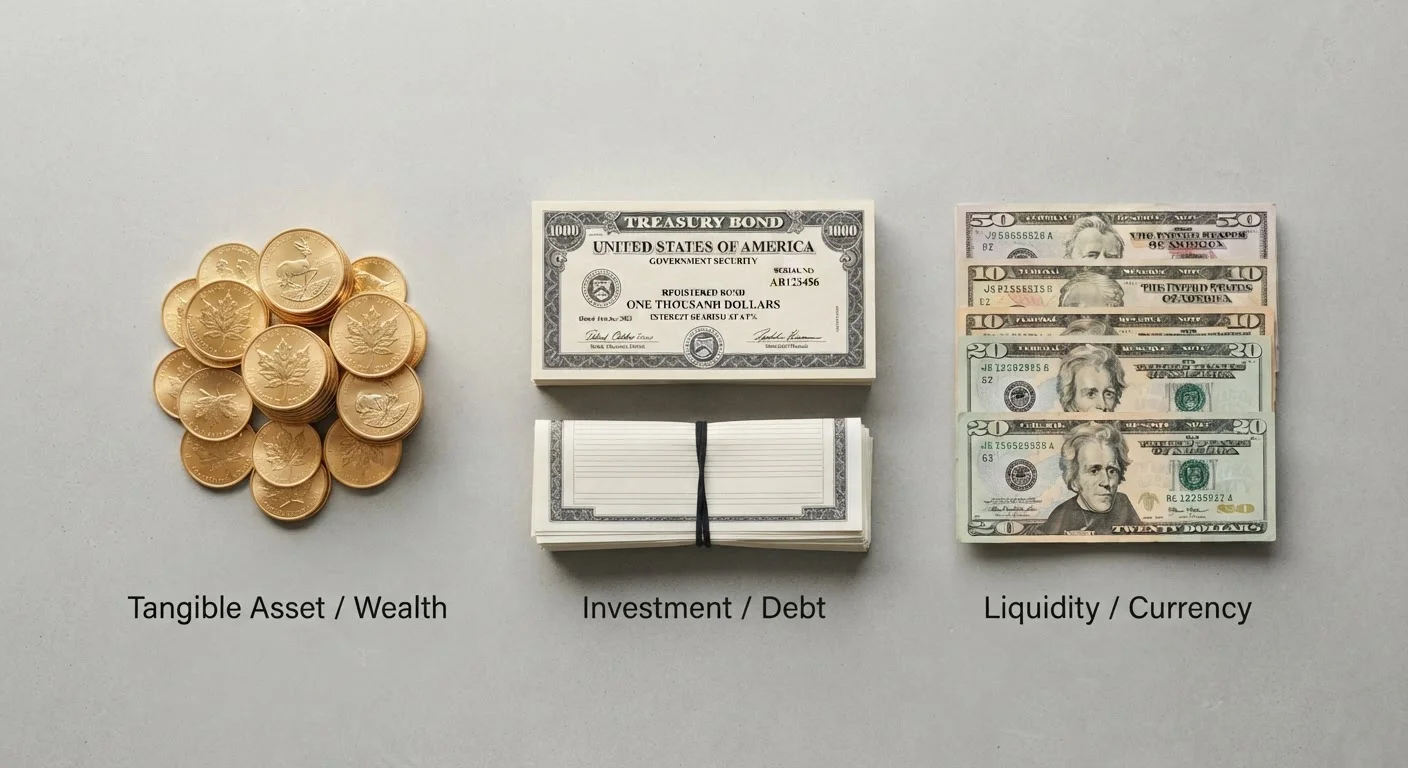
Photo credit: AdvisorHQ.net | Informative Website
In this article
Asset classes form the building blocks of any portfolio. Understand what stocks, bonds, and cash bring to the table — and their trade-offs.
The Building Blocks of Any Portfolio
When financial professionals talk about asset classes, they mean broad categories of investments that share similar characteristics, behave similarly in markets, and are subject to the same general regulatory framework. Stocks, bonds, and cash are the three foundational asset classes - everything from a simple savings account to a complex retirement portfolio is built from some combination of them.
Understanding what each asset class actually does - not just what it is - helps you make sense of investing concepts, portfolio construction, and risk conversations. This is general financial education, not personalized investment advice. For guidance tailored to your situation, a licensed financial adviser is the appropriate resource.
| Stocks also called | Equities or shares |
| Bond interest payments | Called coupon payments |
| Most liquid asset class | Cash and cash equivalents |
| Main risk of holding cash long-term | Inflation eroding purchasing power |
| Bond issuer types | Federal/local governments and corporations |
| Stocks' primary upside | Capital appreciation and potential dividends |
Stocks: Ownership and Growth Potential
A stock (also called an equity or share) represents a fractional ownership stake in a company. When a company issues stock, it is selling pieces of itself to raise capital. As a shareholder, you benefit if the company grows in value - and you bear losses if it declines.
Stocks are historically associated with higher long-term returns among mainstream asset classes, but that potential comes with meaningful volatility. Share prices can swing sharply based on company earnings, economic conditions, or broader market sentiment. There is no guarantee of return, and it is possible to lose the entire amount invested in a single stock.
Stocks can also pay dividends - periodic distributions of a portion of company profits - though not all companies do, and dividends can be reduced or eliminated. For a deeper look at how equity markets function, see our plain-English guide to how the stock market works.
Bonds: Lending and Income
A bond is a debt instrument. When you buy a bond, you are lending money to the issuer - a government, municipality, or corporation - in exchange for regular interest payments (called coupon payments) and the return of the principal amount when the bond matures.
Because the terms are defined upfront, bonds are generally considered less volatile than stocks. However, they carry their own risks: if interest rates rise, existing bond prices typically fall. If the issuer defaults, you may not receive your payments. Bonds issued by the US federal government are generally considered lower credit risk than corporate bonds, though all bonds carry some degree of risk.
Bonds often serve a stabilizing role in a portfolio - providing regular income and partially offsetting stock volatility, though this relationship is not constant or guaranteed. Once you understand these fundamentals, concepts like index funds vs. actively managed funds become easier to navigate.
Asset class
A broad category of investments that share similar characteristics and behave similarly in markets. Stocks, bonds, and cash are the three primary asset classes.
Equity
Another word for stock - it represents an ownership interest in a company. Equity holders may benefit when the company grows in value.
Coupon payment
The regular interest payment a bondholder receives from the bond issuer. The rate and schedule are set when the bond is issued.
Liquidity
How quickly and easily an asset can be converted to cash without significant loss in value. Cash is the most liquid asset; some investments take days or longer to sell.
Dividend
A distribution of a portion of a company's profits paid to shareholders. Not all companies pay dividends, and they are not guaranteed.
Volatility
The degree to which an investment's price fluctuates over time. Higher volatility means larger and more frequent price swings, which indicates higher short-term risk.
Cash and Cash Equivalents: Safety and Liquidity
Cash and cash equivalents include physical currency, savings accounts, money market funds, and short-term government securities like Treasury bills. Their defining feature is liquidity - the ability to access funds quickly without significant loss of value.
Cash carries the lowest risk of the three asset classes, but it also typically offers the lowest returns. Inflation is a real concern: if your cash earns less in interest than the inflation rate, its purchasing power erodes over time. Cash holdings serve important practical purposes - covering emergencies, short-term expenses, or providing a stable reserve - but holding too much over the long term can mean opportunity cost relative to growth-oriented assets.
The right proportion of each asset class in a portfolio depends on individual goals, time horizon, and risk tolerance - all factors best evaluated with a qualified financial professional. The same disciplined thinking about trade-offs applies whether you're considering investments or other major financial decisions, such as financing a vehicle versus paying cash.
This article is for general informational and educational purposes only and does not constitute personalized financial, investment, or tax advice. Consult a licensed financial adviser before making decisions about your own finances.

Author
Finance Editorial Team
Finance Editorial Team is the collective byline for our editorial team and contributor network. Articles published under this byline or an editorial pen name are researched, written, and reviewed according to our editorial standards for clarity, consistency, and independence before publication.
View all articles →