
What a Savings Rate Actually Tells You About Financial Progress
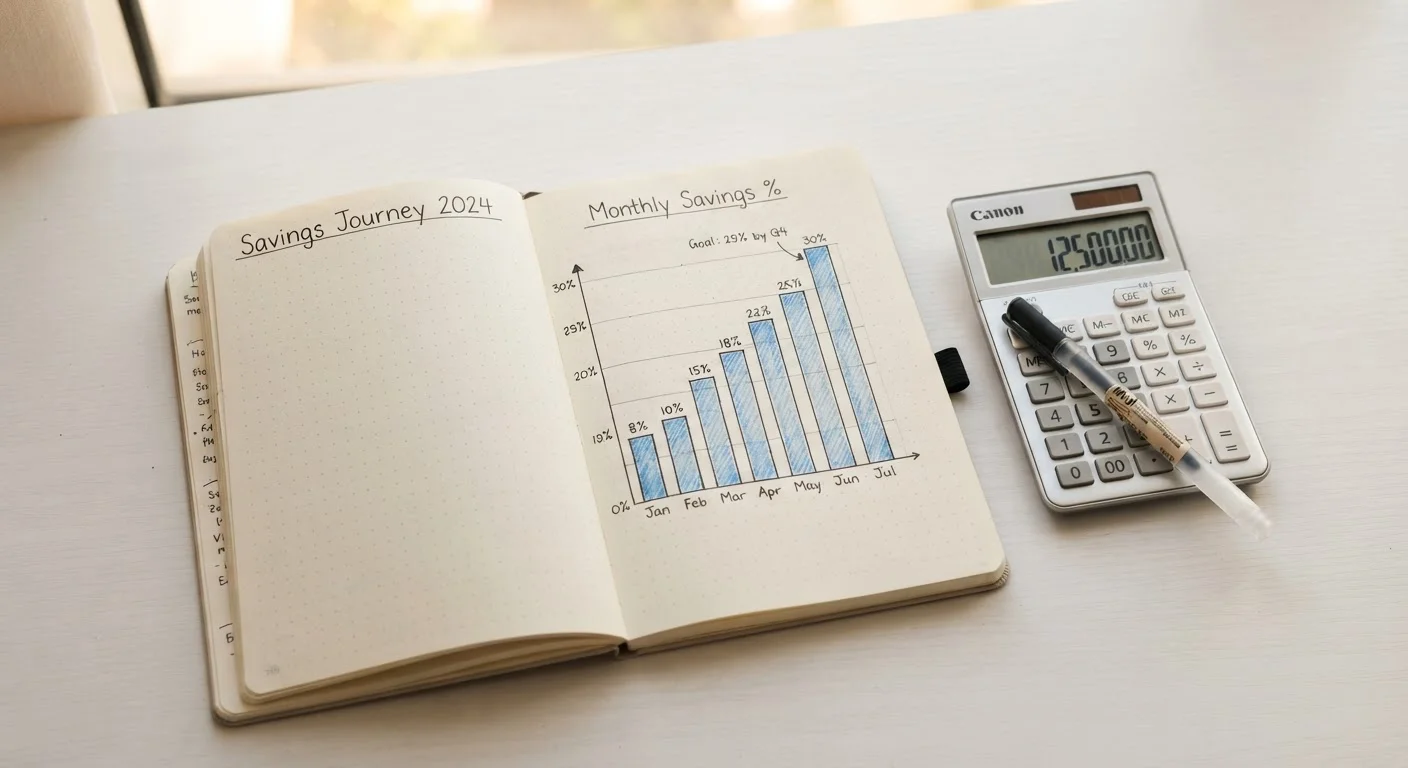
Photo credit: AdvisorHQ.net | Informative Website
In this article
Your savings rate — the share of income you set aside — is one of the clearest indicators of financial health. Here's how to think about it.
Key Takeaways
- Your savings rate measures the share of income you keep, not just the dollar amount saved.
- A higher savings rate generally accelerates financial progress more than income growth alone.
- No single savings rate suits everyone - your rate should reflect your goals, obligations, and life stage.
- Where you direct your savings matters as much as the rate itself.
- Tracking your savings rate over time reveals trends that a monthly budget snapshot can miss.
The Metric That Tells More Than Your Bank Balance
Most people judge their financial health by how much money is sitting in their account right now. But that snapshot can be misleading - a large balance could reflect one-time circumstances, while a modest balance might belong to someone consistently building wealth month over month.
Your savings rate cuts through that noise. Because it's expressed as a percentage of income rather than a dollar amount, it scales to your actual circumstances and shows whether your financial habits are moving you forward - regardless of how much you earn.
Consider two people: one earns $40,000 a year and saves $6,000, a rate of 15%. Another earns $120,000 and saves $8,000, a rate of roughly 7%. The second person saves more money in absolute terms, but the first is building financial resilience at a faster proportional rate. Over time, that difference compounds - in wealth, in options, and in how quickly each person reaches financial milestones.
~5%
U.S. personal savings rate (recent years average)
The U.S. Bureau of Economic Analysis tracks the personal saving rate, which has generally hovered in the low single digits in recent years, with spikes during periods of economic uncertainty.
15-20%
Commonly cited long-term savings target
Many financial educators and retirement planning frameworks suggest saving 15-20% of income for long-term financial security, though this varies widely based on individual goals and timelines.
1 in 4
Americans with no emergency savings
Various consumer surveys, including those conducted by the Federal Reserve and Bankrate, have consistently found that a significant share of American adults have little to no emergency fund.
How to Calculate Your Own Savings Rate
The basic formula is straightforward:
Savings Rate = (Amount Saved ÷ Income) × 100
The two variables you need to decide on are what counts as "saved" and which income figure to use.
What to include as savings
- Contributions to retirement accounts (401(k), IRA, etc.)
- Money moved to an emergency fund or savings account
- Investment contributions outside of retirement accounts
- Extra principal payments on debt (optional, depending on your goal)
Which income figure to use
Using your net income - what actually hits your bank account after taxes and deductions - tends to give a more grounded picture of your saving behavior. Using gross income (before taxes) is also valid, particularly if you want to compare your rate to published benchmarks, which often use gross figures. Just stay consistent.
How you prioritize saving within your budget has a real effect on whether your calculated rate holds up in practice month after month.
What Your Savings Rate Actually Reveals
A savings rate is more than arithmetic - it's a behavioral indicator. It tells you:
- Whether your income and expenses are in balance. A savings rate that's near zero or negative signals that spending has expanded to meet (or exceed) income.
- How quickly you're building a financial buffer. A higher rate means you're accumulating resources that can absorb unexpected expenses or support future goals.
- Your sensitivity to income disruption. Someone with a high savings rate generally has more runway if income falls temporarily.
What it doesn't tell you directly is where those savings are going - and that matters significantly. Money parked in a low-yield account loses purchasing power over time. Inflation quietly erodes savings that aren't earning a meaningful return. And there's a meaningful difference between keeping money liquid and putting it to work through investing - a distinction worth understanding clearly. Saving and investing are not the same thing, even if both increase your savings rate on paper.
“It's not how much money you make, but how much money you keep, how hard it works for you, and how many generations you keep it for.”
— Robert Kiyosaki, Author, financial educator
Using Your Savings Rate to Guide - Not Judge - Your Decisions
Savings rate benchmarks can be useful reference points, but they're not verdicts. A person supporting multiple dependents on a single income faces structural constraints that a benchmark doesn't account for. Someone early in their career with student debt is in a fundamentally different position than someone in peak earning years with a paid-off mortgage.
The more productive use of your savings rate is to track it over time. A rate trending upward - even slowly - generally signals improving financial habits and growing capacity. A rate that's flat or declining despite rising income suggests lifestyle inflation may be outpacing progress.
Building the systems that make saving consistent often matters more than chasing a specific percentage. Small, durable increases in your rate - one or two percentage points per year, as income grows - tend to compound meaningfully without requiring dramatic lifestyle changes.
This article is for general informational and educational purposes only and does not constitute personalized financial, investment, or tax advice. Consult a qualified financial professional for guidance specific to your circumstances.
Frequently Asked Questions

Author
Finance Editorial Team
Finance Editorial Team is the collective byline for our editorial team and contributor network. Articles published under this byline or an editorial pen name are researched, written, and reviewed according to our editorial standards for clarity, consistency, and independence before publication.
View all articles →