
Retinol vs. Retinoids: What's Actually Different
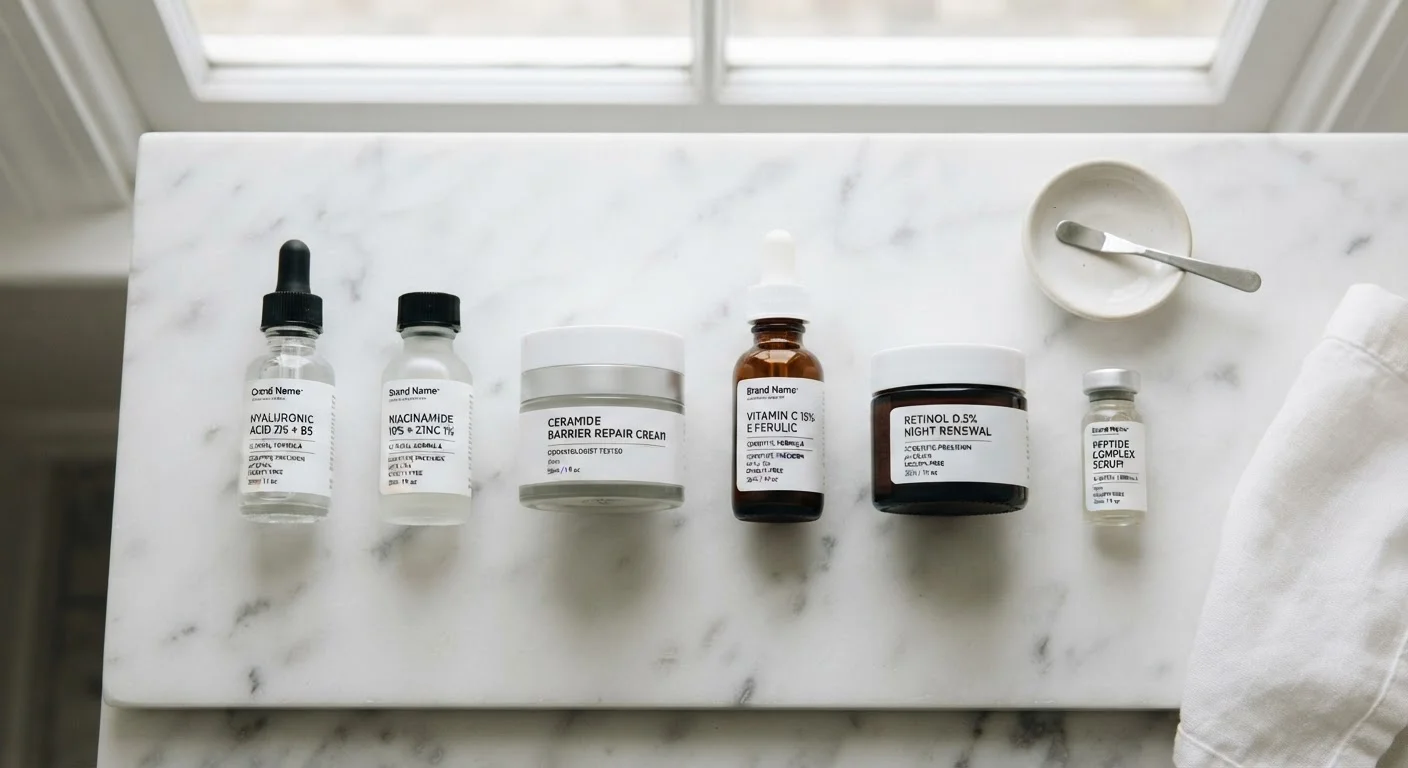
Photo credit: AdvisorHQ.net | Informative Website
In this article
Both promise smoother, clearer skin — but retinol and prescription retinoids are not the same. Here's what sets them apart and why it matters.
Key Takeaways
- Retinoids is the umbrella term; retinol is one specific, milder member of that family.
- Prescription retinoids like tretinoin work faster and at lower concentrations because skin converts them more directly.
- Retinol requires more conversion steps in the skin, making it gentler but slower to show results.
- Both forms increase sun sensitivity - consistent daily sunscreen use is essential with either.
- Side effects such as dryness and peeling are more common with prescription retinoids, especially at the start.
- A dermatologist can help determine which form and strength is appropriate for your individual skin concerns.
The Vitamin A Family: Understanding the Hierarchy
The word retinoid is a broad scientific term that covers all compounds structurally related to vitamin A - including retinol, retinal (retinaldehyde), retinoic acid, and several prescription molecules. Retinol, by contrast, is one specific compound within that family: a milder, over-the-counter (OTC) form that your skin must convert through multiple enzymatic steps before it becomes biologically active retinoic acid.
Prescription retinoids such as tretinoin (retinoic acid) skip those conversion steps entirely. They bind directly to retinoic acid receptors in skin cells, which is why they work faster and at lower concentrations - and why they also carry a higher likelihood of early-stage irritation. Think of it as a spectrum: the closer a compound sits to retinoic acid, the more potent and the more potentially irritating it tends to be.
| Criterion | Retinol (OTC) | Prescription Retinoids |
|---|---|---|
| Availability | No prescription needed | Requires a prescription |
| Common examples | Retinol, retinyl palmitate | Tretinoin, tazarotene, adapalene Rx |
| Conversion to active form | Multiple enzymatic steps in skin | None - directly active |
| Potency at equivalent use | Lower effective concentration | Higher effective concentration |
| Speed of visible results | Gradual (months) | Faster (weeks to months) |
| Irritation risk | Generally lower | Generally higher, especially initially |
| Clinical evidence base | Moderate, especially for fine lines | Extensive, including acne and photoaging |
| Sun sensitivity increase | Yes - daily SPF required | Yes - daily SPF required |
How Each Form Works in the Skin
Both retinol and prescription retinoids ultimately deliver the same end signal to skin cells, but the journey matters. When you apply an OTC retinol product, your skin's enzymes first convert it to retinal, then to retinoic acid. Each conversion step reduces the final concentration that reaches your receptors - which is partly why results from retinol appear gradually over weeks to months, rather than in weeks.
Prescription retinoids bypass this process, meaning a much higher proportion of what you apply becomes active. That directness explains their clinical track record: tretinoin in particular has decades of peer-reviewed research supporting its effectiveness for acne, fine lines, and hyperpigmentation. Other prescription options, such as adapalene (now available OTC in lower concentrations in the U.S.) and tazarotene, were designed to target specific receptors with the goal of balancing efficacy and tolerability.
40+ years
Tretinoin's clinical research history
Tretinoin (all-trans retinoic acid) has been studied for skin applications since the 1970s, making it one of dermatology's most extensively researched topical ingredients.
~20x
Estimated potency difference vs. retinol
Research published in dermatology literature suggests retinoic acid can be roughly 20 times more potent than retinol at equivalent applied concentrations, due to the conversion loss in OTC forms.
4-8 weeks
Typical retinization adjustment period
Dermatologists commonly observe that initial dryness, peeling, and sensitivity peak within the first four to eight weeks of starting a retinoid, after which most users' skin adapts.
Understanding where each product sits on this spectrum also helps when combining actives. For instance, layering vitamin A compounds with certain chemical exfoliants can amplify irritation - see our guide to AHAs, BHAs, and PHAs for timing and compatibility considerations.
Side Effects, Skin Adjustment, and Who Should Be Cautious
A predictable skin adjustment period - sometimes called retinization - is common with both forms. Symptoms typically include dryness, flaking, redness, and temporary sensitivity, most pronounced during the first four to eight weeks. These effects are generally more intense with prescription retinoids, especially at higher concentrations.
To minimize discomfort, dermatologists often recommend a "low and slow" approach: starting with a lower concentration two to three nights per week before building frequency. Applying a plain moisturizer after the retinoid (sometimes called the sandwich method) can buffer irritation without eliminating efficacy.
Pregnancy and Retinoids: A Critical Caution
Prescription retinoids - particularly oral forms like isotretinoin - are contraindicated during pregnancy due to well-documented risks of birth defects. Topical prescription retinoids are also generally avoided as a precaution. If you are pregnant, planning to become pregnant, or breastfeeding, speak with your obstetrician or dermatologist before using any retinoid product, including OTC retinol. This is one area where professional guidance is not optional.
Certain groups should consult a healthcare provider before using any retinoid. People who are pregnant or trying to become pregnant should avoid prescription retinoids - some carry known risks during pregnancy. Those with chronic inflammatory skin conditions such as eczema or rosacea may also experience significant flares and need professional guidance on whether or how to use these ingredients.
Sun protection is non-negotiable with both forms. Vitamin A derivatives increase photosensitivity, so consistent daily sunscreen use is essential. Our breakdown of mineral versus chemical sunscreens can help you choose an option that works alongside your retinoid routine. For guidance on when to apply retinoids within your overall regimen, morning vs. night skincare routines explains why these ingredients belong in an evening routine.
This article is for general informational and educational purposes only and is not a substitute for professional medical or dermatological advice. Consult a qualified healthcare provider for guidance specific to your skin type, health history, and any existing conditions.

Author
Health & Beauty Editorial Team
Health & Beauty Editorial Team is the collective byline for our editorial team and contributor network. Articles published under this byline or an editorial pen name are researched, written, and reviewed according to our editorial standards for clarity, consistency, and independence before publication.
View all articles →