
Everything Homeowners Get Wrong About Caulk and Weatherstripping
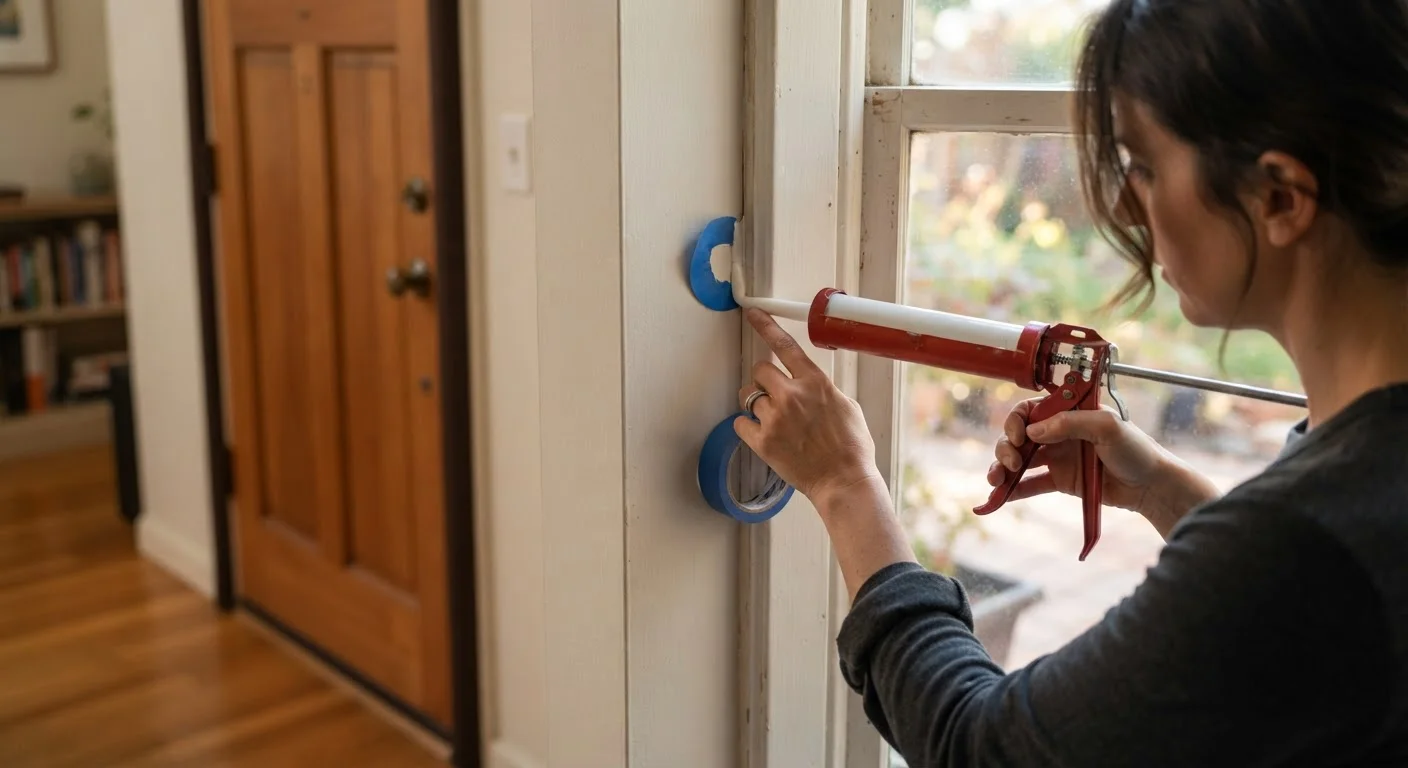
Photo credit: AdvisorHQ.net | Informative Website
These two air-sealing staples are widely misunderstood. Separate the myths from the facts on where to use each, how long they last, and what actually works.
Key Takeaways
- Caulk seals stationary gaps; weatherstripping handles moving parts like doors and operable windows.
- Most caulk lasts 5-10 years before it cracks or pulls away and needs replacement.
- Applying caulk over old, deteriorated caulk creates a weaker seal than starting fresh.
- Weatherstripping type matters - foam, felt, and vinyl each suit different locations and wear levels.
- Even small air gaps can meaningfully affect your home's heating and cooling efficiency.
Why These Two Products Cause So Much Confusion
Walk into any hardware store and you'll find entire aisles devoted to caulk and weatherstripping. Yet despite their widespread availability, homeowners routinely misapply both - using weatherstripping on stationary surfaces, layering new caulk over failing old caulk, or assuming one product can do the job of the other. The result is wasted effort, money spent on materials, and drafty homes that never quite feel comfortable.
The confusion is understandable. Both products seal gaps and both promise improved energy efficiency. But they work through completely different mechanisms, and using the wrong one in the wrong place means the problem keeps coming back. If you've ever wondered why your weatherstripping seems to fail quickly or your caulk bubbles and peels, the answer is often a case of the right product applied in the wrong situation.
For a broader look at where air infiltration hides in your home, see where air leaks into your home - many of those spots require careful product selection too.
Myth
Caulk and weatherstripping are interchangeable - either one can seal any gap around a window or door.
Fact
They serve distinct purposes: caulk is for stationary joints, while weatherstripping is designed for surfaces that move.
Caulk is a flexible sealant that bonds two stationary surfaces together - think the joint between a window frame and exterior siding, or where trim meets drywall. It cures to a semi-rigid state and would crack quickly if applied to a surface that opens and closes. Weatherstripping, by contrast, is a compressible material designed to form a seal when a door or operable window presses against it. Using caulk on a door frame will likely seal the door shut or tear away the first time it's used. Each product belongs in a specific context, and the location - not personal preference - should determine your choice.
Myth
You can apply fresh caulk right over old caulk to save time.
Fact
New caulk applied over deteriorated old caulk bonds poorly and will fail faster than a properly prepared surface.
Old caulk that is cracked, peeling, or pulling away from the substrate has lost adhesion. Applying new caulk on top doesn't restore that bond - it just adds another weak layer. The new material can only adhere as strongly as the layer beneath it, which means it will lift, bubble, or crack in short order. The correct approach is to remove all old caulk with a utility knife or caulk removal tool, clean the surface thoroughly, allow it to dry completely, and then apply a fresh bead. It takes more time upfront but the result lasts significantly longer.
Myth
Once caulk or weatherstripping is installed, it lasts indefinitely.
Fact
Most caulk has a functional lifespan of roughly 5-10 years, and weatherstripping typically needs replacement every 3-5 years depending on use and material.
Both materials degrade over time from UV exposure, temperature cycling, moisture, and physical wear. Silicone caulk tends to be the most durable option for exterior applications, while acrylic latex caulk works well for interior painted surfaces but may not hold up as long outdoors. Weatherstripping made from foam compresses and loses its spring; felt varieties absorb moisture and deteriorate; vinyl and rubber types generally last longer. Inspecting both annually and replacing them when you notice gaps, crumbling, or compression loss is a normal part of home maintenance - not a sign that something was done incorrectly the first time.
Myth
Any type of caulk works anywhere - the product is basically the same.
Fact
Caulk formulations vary widely, and choosing the wrong type for the location can cause premature failure.
There are several distinct caulk types with meaningfully different properties. Silicone caulk offers excellent water resistance and flexibility, making it well suited for kitchens, bathrooms, and exterior joints - but it can't be painted. Acrylic latex (also called painter's caulk) is paintable and easy to clean up, but it is less moisture-resistant and better suited for interior trim work. Siliconized acrylic blends offer a middle ground. Using a paintable acrylic caulk in a wet bathroom, for example, can lead to mold growth and early failure. Always check the product label for recommended applications and confirm it suits your specific surface type and environment.
Myth
A tight-fitting door doesn't need weatherstripping.
Fact
Even doors that feel snug can have significant air gaps, especially at the threshold and corners.
A door that closes firmly doesn't necessarily create an airtight seal. Gaps at the top corners, along the hinge side, and especially at the floor threshold are common even in well-fitted doors. Over time, homes settle, door frames shift slightly, and hardware loosens - all of which can open up gaps that weren't there when the door was first installed. A simple way to check: hold a lit incense stick or a piece of tissue near the door edges on a windy day and watch for movement. Weatherstripping should form consistent contact across the entire perimeter, and a door sweep or threshold seal is usually needed at the bottom regardless of how well the door appears to fit.
Getting the Application Right
Even once you've chosen the correct product, application mistakes are common. For caulk, surface preparation is the single most important step most homeowners skip. The surface must be clean, dry, and free of old caulk before a new bead is applied. A caulk removal tool and mineral spirits can help clear out old material. Applying a thin, continuous bead - then smoothing it with a wet finger or caulk tool - ensures proper adhesion without gaps or air pockets.
For weatherstripping, accurate measurement and a clean, flat surface are essential. Most peel-and-stick foam tape loses adhesion when applied to dirty or painted surfaces. Measure the full perimeter of the door or window opening before cutting, and replace the entire run rather than patching a worn section. A door sweep along the bottom threshold is often the most overlooked component and one of the most impactful.
Don't Seal Your Home Too Tightly Without Ventilation
Aggressively air-sealing a home without considering ventilation can reduce indoor air quality by trapping moisture, combustion gases, and pollutants. If your home is already well-insulated or has gas appliances, consult a qualified contractor or building performance professional before undertaking extensive air-sealing work. Proper ventilation and sealing should be planned together, not independently.
It's also worth remembering that neither caulk nor weatherstripping is permanent. Building an annual inspection into your routine - ideally before winter - lets you catch failures early, before energy bills or comfort become a problem. Just as car maintenance myths lead drivers to skip or repeat unnecessary work, home sealing myths lead homeowners down similarly costly paths. Treating air sealing as a periodic maintenance task rather than a one-and-done fix is the mindset shift that makes the biggest practical difference.

Author
Home & Garden Editorial Team
Home & Garden Editorial Team is the collective byline for our editorial team and contributor network. Articles published under this byline or an editorial pen name are researched, written, and reviewed according to our editorial standards for clarity, consistency, and independence before publication.
View all articles →