
Home Insulation Types and Where Each One Belongs
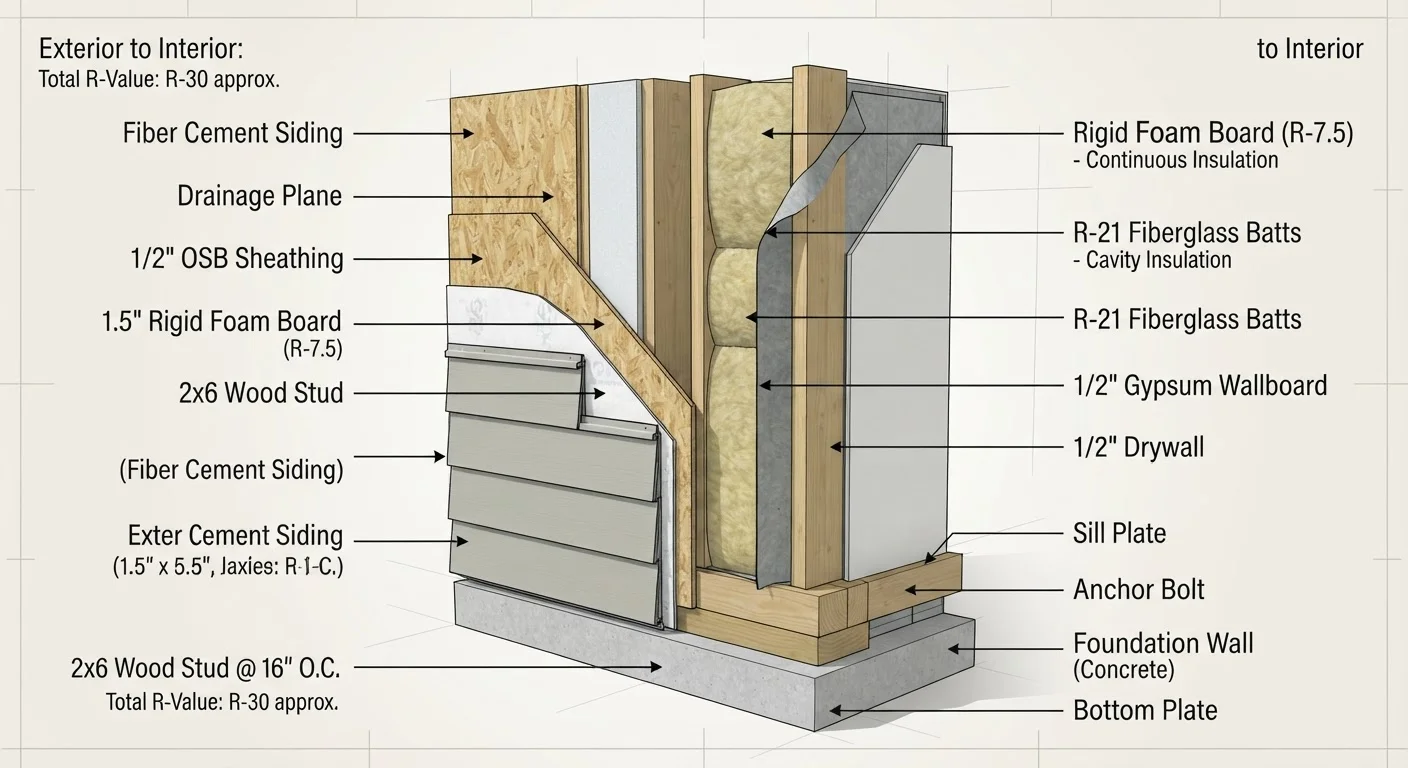
Photo credit: AdvisorHQ.net | Informative Website
In this article
Fiberglass batts, spray foam, rigid board, blown-in — each insulation type has a job. This reference breaks down R-values, applications, and trade-offs.
Why Insulation Type Matters as Much as R-Value
Most homeowners know that insulation keeps a house warmer in winter and cooler in summer, but the conversation rarely goes deeper than that. In practice, choosing the right insulation type for a specific location in your home is just as important as hitting a target R-value (a measure of thermal resistance - the higher the number, the better the resistance to heat flow). The wrong material in the wrong spot can trap moisture, underperform, or create installation headaches that cost more to fix than to prevent.
Understanding your options upfront - before a contractor gives you a bid or before you pull insulation off a hardware store shelf - puts you in a much stronger position. For a broader grounding in renovation language, see our home improvement terminology reference for plain-language definitions you'll encounter throughout any project.
| R-Value of Fiberglass Batts (3.5") | Approximately R-11 to R-15 (U.S. Department of Energy, general guidance) |
| R-Value of Closed-Cell Spray Foam (per inch) | Approximately R-6 to R-7 (U.S. Department of Energy, general guidance) |
| R-Value of Rigid XPS Board (per inch) | Approximately R-5 (Industry standard product data) |
| Common Attic R-Value Target (Climate Zone 4-5) | R-38 to R-60 (U.S. DOE Energy Saver zone recommendations) |
| Cellulose Recycled Content | Typically 75-85% post-consumer recycled fiber (Cellulose Insulation Manufacturers Association) |
The Main Insulation Types at a Glance
There are five insulation types you'll encounter in most residential settings. Each has a distinct form, installation method, and set of applications where it performs best.
Fiberglass Batts and Rolls
Fiberglass batts are the pink or yellow blanket-style insulation sold pre-cut to fit standard stud and joist spacing. They're among the most DIY-accessible options and work well in open wall cavities, attic floors, and crawl space ceilings. Typical R-values range from R-11 to R-38 depending on thickness. The main drawback: batts must fit snugly without gaps or compression - either problem reduces effective performance significantly.
Blown-In (Loose-Fill) Insulation
Available in fiberglass or cellulose (recycled paper fiber), blown-in insulation is pneumatically installed and excels at filling irregular spaces and settling around obstructions. It's the standard choice for existing attic floors, enclosed wall cavities, and hard-to-reach areas. Cellulose has a higher recycled content and tends to resist air movement slightly better than fiberglass loose-fill.
Spray Foam Insulation
Spray polyurethane foam (SPF) comes in two forms: open-cell (softer, lower R-value per inch, vapor-permeable) and closed-cell (denser, higher R-value per inch, acts as a vapor barrier). Closed-cell foam is particularly effective in rim joists, crawl spaces, and exterior wall assemblies where moisture control is a concern. Open-cell is often used for interior walls and soundproofing. Professional installation is strongly recommended for spray foam - improper mixing can result in off-gassing and adhesion failures.
Spray Foam Requires Professional Installation
Unlike batts or blown-in insulation, spray foam involves chemical mixing ratios and proper protective equipment. Improperly installed spray foam can off-gas irritants, fail to cure correctly, or void a home's warranty. For closed-cell applications especially - such as rim joists and crawl spaces - hire a licensed spray foam contractor and ensure adequate ventilation during and after installation.
Rigid Foam Board
Foam boards (EPS, XPS, and polyisocyanurate are the three main types) are rigid panels that can be cut to size. They're commonly used on exterior wall sheathing, basement walls, and under slab foundations. Because they don't absorb water, rigid boards are a go-to in below-grade and high-moisture environments. R-values per inch are higher than fiberglass batts, making them useful where space is tight.
Mineral Wool (Rockwool/Slag Wool)
Made from volcanic rock or steel-industry slag, mineral wool batts are naturally fire-resistant and water-repellent. They're a strong choice for walls requiring fire separation, utility rooms, and anywhere sound dampening matters. They cost more than fiberglass but hold their shape better and don't require a separate fire barrier in some applications - always verify local building codes.
R-Value
A measure of an insulation material's resistance to heat flow. Higher R-values indicate better thermal performance. Required R-values vary by climate zone and location within the home.
Vapor Barrier
A material that resists the movement of water vapor through walls, floors, or ceilings. Placement and necessity depend on climate zone and wall assembly design.
Thermal Bridging
Heat loss that occurs through materials - like wood studs - that conduct heat more readily than insulation. Continuous insulation layers on exterior walls help reduce thermal bridging.
Conditioned Space
An area of a home that is actively heated or cooled. Whether a crawl space or attic is conditioned affects which insulation strategy is appropriate.
Closed-Cell Foam
A type of spray polyurethane foam with a dense, closed cellular structure. It provides a high R-value per inch and acts as a vapor retarder, making it suitable for moisture-prone areas.
Loose-Fill / Blown-In
Insulation installed by blowing loose fibers (fiberglass or cellulose) into a space using pneumatic equipment. Ideal for irregular cavities and existing enclosed spaces.
Matching Insulation to Location: A Quick Guide
Here's a simplified breakdown of which materials are commonly used where:
- Attic floor: Blown-in cellulose or fiberglass, fiberglass batts
- Attic roof deck (unvented assembly): Closed-cell spray foam or rigid board above deck
- Exterior walls (new construction): Fiberglass or mineral wool batts; rigid board as continuous exterior layer
- Existing enclosed walls: Blown-in (via small drill holes, then patched)
- Rim joists: Cut-and-cobble rigid foam or closed-cell spray foam
- Basement walls: Rigid foam board (interior face) or closed-cell spray foam
- Crawl spaces: Closed-cell spray foam on walls (conditioned crawl space) or fiberglass batts between joists (vented crawl space)
Local climate zone, existing moisture conditions, and whether the space is conditioned or unconditioned all influence the best choice. The U.S. Department of Energy publishes climate zone maps and corresponding recommended R-values by zone - these are a practical starting point for determining how much insulation you need in each area of your home.
This article is for general informational purposes only. Insulation work involving electrical systems, vapor barriers, or significant structural areas may require permits or licensed trades in your jurisdiction. Always verify local building code requirements before beginning any insulation project.

Author
Home & Garden Editorial Team
Home & Garden Editorial Team is the collective byline for our editorial team and contributor network. Articles published under this byline or an editorial pen name are researched, written, and reviewed according to our editorial standards for clarity, consistency, and independence before publication.
View all articles →