
The Truth About Fertilizer Numbers on the Bag
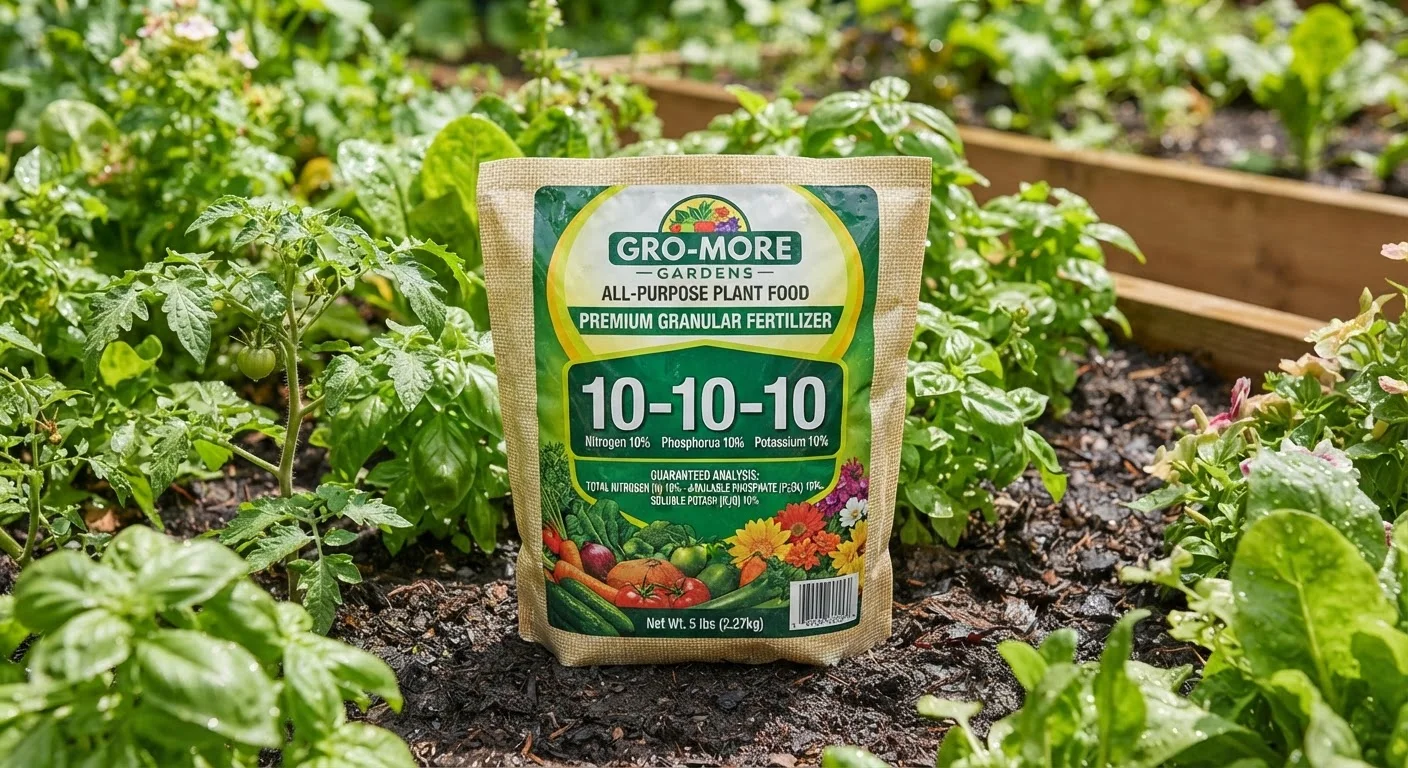
Photo credit: AdvisorHQ.net | Informative Website
In this article
Those three numbers on every fertilizer label — nitrogen, phosphorus, potassium — tell you a lot. Here's what they actually mean for your plants.
Key Takeaways
- The three numbers on a fertilizer bag represent nitrogen, phosphorus, and potassium percentages by weight.
- A higher number does not always mean a better or faster-working fertilizer for your garden.
- Applying the wrong fertilizer ratio can harm plants and contribute to nutrient runoff in waterways.
- Soil testing before fertilizing is the most reliable way to know what your garden actually needs.
- Slow-release fertilizers often outperform high-number fast-release products for long-term plant health.
What the N-P-K Numbers Actually Mean
Every bag of fertilizer sold in the United States is required by law to display three numbers on its label, separated by hyphens - for example, 10-10-10 or 5-3-4. These numbers are called the N-P-K ratio, standing for nitrogen (N), phosphorus (P), and potassium (K). Each number tells you the percentage of that nutrient by weight contained in the bag.
So a 50-pound bag labeled 10-5-5 contains 5 pounds of nitrogen, 2.5 pounds of phosphorus compounds, and 2.5 pounds of potassium compounds. The remaining weight is made up of filler materials, micronutrients, or carrier ingredients that help distribute the active nutrients evenly.
Each macronutrient plays a distinct role. Nitrogen drives leafy, green growth and is especially important for lawns and vegetable crops. Phosphorus supports root development and flowering. Potassium strengthens overall plant health, helping with water regulation and disease resistance. Understanding this basic framework is the foundation for making smart fertilizer choices - but many gardeners carry misconceptions that lead to wasted money and damaged plants.
Myth
A fertilizer with higher numbers is stronger and always better for your plants.
Fact
Higher numbers simply mean more concentrated nutrients by weight - not superior performance for all plants or conditions.
Concentration and effectiveness are not the same thing. A 30-0-4 fertilizer applied to a garden bed that already has abundant nitrogen can scorch plants, force excessive leafy growth at the expense of fruit or flowers, and push excess nitrates into groundwater. The right N-P-K ratio depends entirely on what your soil already contains and what your specific plants need at a given stage of growth.
Myth
If you apply more fertilizer than the label recommends, your plants will grow faster.
Fact
Over-fertilizing commonly burns roots, causes leaf scorch, and can kill plants outright - more is not better.
Plants absorb nutrients through osmosis, and when soil salt concentrations become too high - as they do when excess fertilizer is applied - water actually moves out of root cells rather than in. This is called fertilizer burn. Following the label's recommended application rate is important not just for plant health but also to minimize environmental impact, since unused nutrients leach into waterways and contribute to algae blooms.
Myth
The middle number (phosphorus) helps all plants bloom more abundantly if you add extra.
Fact
Most established garden soils already have adequate phosphorus; excess phosphorus can lock out other nutrients and harm soil microbes.
Phosphorus accumulates in soil over time and is relatively immobile - it doesn't wash away quickly. Many American garden soils, particularly those that have been fertilized regularly for years, already have phosphorus levels that are sufficient or even excessive. Adding more does not necessarily produce more blooms and can actually interfere with a plant's ability to absorb zinc and iron, creating secondary deficiencies.
Myth
Organic fertilizers don't have N-P-K numbers and therefore can't be compared to synthetic ones.
Fact
Organic fertilizers are also legally required to display N-P-K values, though their numbers are typically lower and their release is slower.
A bag of composted chicken manure, feather meal, or kelp meal will display an N-P-K ratio just like a synthetic product - for example, 3-2-2 or 5-1-1. The numbers tend to be lower because organic sources are less concentrated, but the nutrients are real and measurable. The key difference is that organic nutrients are released gradually as soil microbes break down organic matter, which generally reduces the risk of burn and supports long-term soil structure.
Using Fertilizer Numbers to Make Smarter Garden Decisions
Once you understand what N-P-K numbers represent, you can use them purposefully rather than guessing. A lawn in active growing season typically benefits from a fertilizer higher in nitrogen. Bulbs and flowering perennials at planting time respond well to a higher phosphorus ratio. Established trees and shrubs often need very little supplemental fertilizer at all.
The single most effective step before buying any fertilizer is a soil test. Many university extension services and local garden centers offer affordable soil testing kits. The results tell you which nutrients are already present in sufficient quantities - and which ones your soil genuinely lacks. Without this information, you may be adding nutrients your soil doesn't need while missing the ones that matter. Soil pH also affects whether plants can absorb nutrients efficiently; learn more in our guide to soil pH and garden health.
Fertilizer Runoff Harms Local Waterways
Excess nitrogen and phosphorus that wash off lawns and gardens after rain enter streams, rivers, and lakes, where they fuel algae overgrowth that depletes oxygen and harms aquatic life. Always apply fertilizer according to label directions, avoid applying before heavy rain, and consider slow-release formulas to reduce runoff risk.
When reading labels, also look at the fertilizer's release type. Slow-release formulations break down gradually over weeks or months, feeding plants steadily and reducing the risk of runoff. Fast-release options deliver nutrients quickly but require more careful application timing and dosing. Neither is universally better - the right choice depends on your plants, your soil, and the time of year.

Author
Home & Garden Editorial Team
Home & Garden Editorial Team is the collective byline for our editorial team and contributor network. Articles published under this byline or an editorial pen name are researched, written, and reviewed according to our editorial standards for clarity, consistency, and independence before publication.
View all articles →