
Soil pH and Why It Determines Whether Your Garden Thrives or Struggles
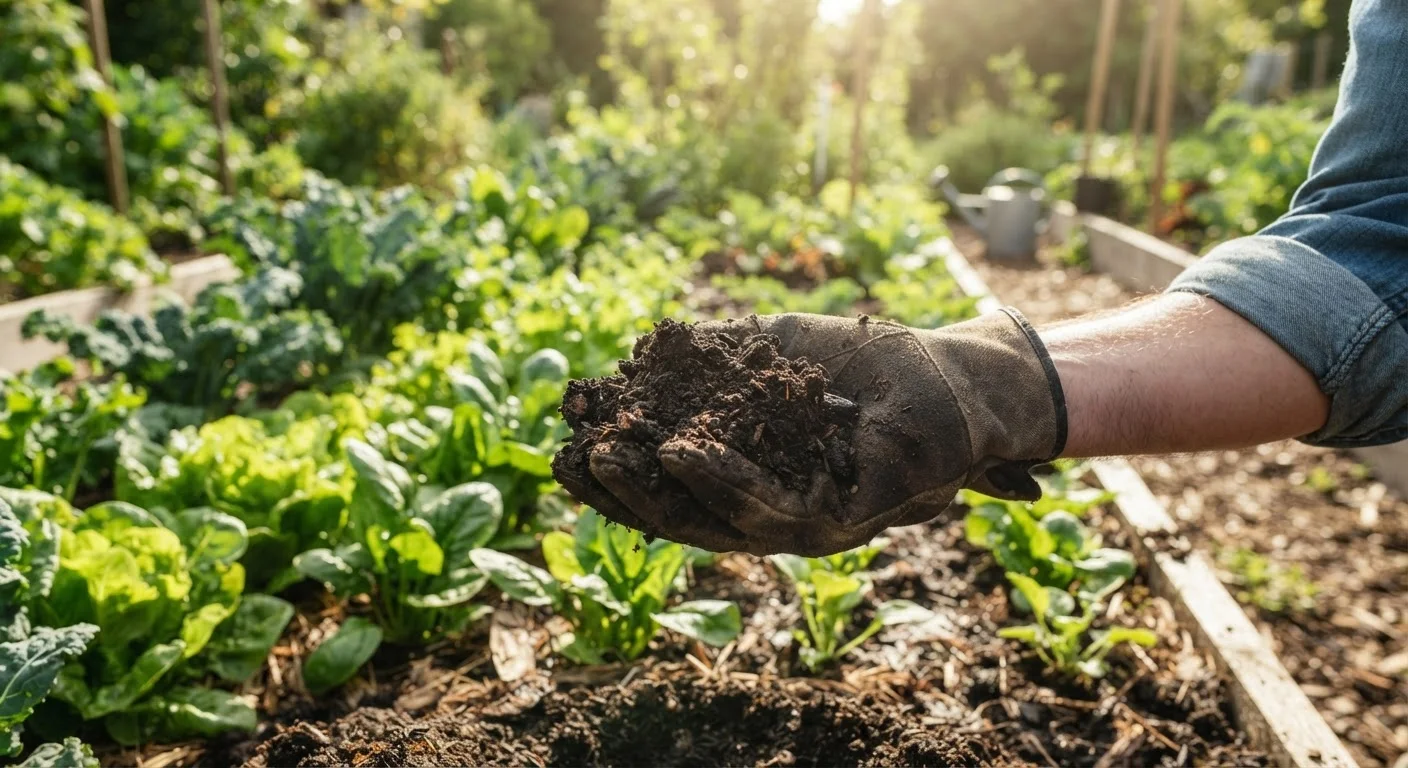
Photo credit: AdvisorHQ.net | Informative Website
In this article
Learn what soil pH means, how it affects nutrient availability, and why testing your soil is the first step to a healthier yard.
Key Takeaways
- Soil pH controls how well plants can access nutrients already present in the ground.
- Most vegetables and flowers grow best in slightly acidic soil between pH 6.0 and 7.0.
- Lime raises soil pH; sulfur or acidifying fertilizers lower it.
- Testing your soil before planting is the single most effective first step in any garden.
- Even nutrient-rich soil can leave plants starved if the pH is outside their preferred range.
What Soil pH Actually Measures
Think of soil pH as a report card for your soil's chemical environment. It doesn't tell you how much of a nutrient is present - it tells you how available those nutrients are to your plants. Soil can contain plenty of iron, manganese, or phosphorus, but if the pH is off, plants can't absorb them efficiently no matter how much fertilizer you apply.
The 0-14 pH scale works logarithmically, meaning each whole-number step represents a tenfold change. Soil at pH 5 is ten times more acidic than soil at pH 6. That might sound like a small shift, but it makes a meaningful difference to plant chemistry at the root level.
Understanding what fertilizer labels actually tell you becomes much more useful once you understand pH, because nutrients in fertilizer are only as effective as your soil's pH allows them to be.
Why pH Affects Nutrient Availability
Nutrients exist in your soil bound to mineral particles or dissolved in soil water. The pH level determines whether those nutrients stay locked up or release into a form plant roots can take in. In very acidic soil (below pH 5.5), nutrients like phosphorus become chemically bound and unavailable, while heavy metals like aluminum and manganese can reach levels that are toxic to many plants. In highly alkaline soil (above pH 7.5), iron, manganese, and zinc tend to become insoluble, leading to deficiencies even in otherwise fertile ground.
The sweet spot for most garden plants - roughly pH 6.0 to 7.0 - is where the widest range of nutrients stays soluble and accessible. This is why experienced gardeners treat pH adjustment as a foundation step, not an afterthought.
pH 6.0-7.0
Optimal range for most vegetable crops
Most university extension programs and soil science resources cite this range as ideal for maximizing nutrient availability to common garden vegetables.
~10x
Difference in acidity per pH unit step
The pH scale is logarithmic, so each whole-number change represents a tenfold difference in hydrogen ion concentration.
Every 2-3 years
Recommended soil testing frequency
Many cooperative extension services recommend retesting established gardens every two to three years, as pH drifts gradually with rainfall and organic matter breakdown.
How to Test Your Soil Before You Plant
Testing is straightforward and inexpensive. Home test kits and digital meters give quick readings, but for the most actionable results, a lab test through your local cooperative extension service provides a full picture - including pH, nutrient levels, and specific amendment recommendations tailored to your region and goals.
To collect a sample, take small scoops of soil from several spots in your garden bed at a depth of 4 to 6 inches, mix them together, and use that blend as your test sample. This averages out any localized variation. Test before planting a new bed and again every two to three years in established gardens, since pH naturally drifts over time.
If you're starting a vegetable garden from scratch, testing your soil before you buy a single transplant can save significant time and frustration down the line.
Test Before You Amend - Always
Adding lime or sulfur without a current soil test is guesswork that can make problems worse. Over-liming acidic soil can push pH too high just as easily as under-liming leaves it too low. A $15-$20 lab test from your cooperative extension service gives you a precise starting point and specific amendment quantities - making every dollar you spend on soil inputs go further.
Adjusting pH: Lime, Sulfur, and Patience
Once you have your test results, adjusting pH is a manageable process - but not an instant one. To raise pH in acidic soil, ground limestone (calcitic or dolomitic lime) is worked into the top several inches of soil. Dolomitic lime also adds magnesium, which benefits magnesium-deficient soils common in the eastern U.S. To lower pH in alkaline soil, elemental sulfur is the standard choice, though it works slowly as soil bacteria convert it to sulfuric acid over weeks to months.
The quantity of amendment you need depends on three factors: your starting pH, your target pH, and your soil texture. Clay soils require more amendment than sandy soils to shift the same number of pH units, because clay has a higher buffering capacity. Your extension service lab report will typically include specific quantity recommendations.
Keep in mind that pH naturally shifts over time. Rainfall leaches alkaline minerals from soil, slowly acidifying it. Organic matter decomposition also acidifies soil slightly. Plan to retest every few years as a routine part of garden maintenance - the same way lawn aeration addresses compaction that builds up gradually and quietly.
Matching Plants to Your Soil's Natural pH
Sometimes the most practical strategy isn't to change your soil's pH dramatically - it's to choose plants that already thrive at your native pH. Blueberries and azaleas love acidic soil in the 4.5-5.5 range. Lavender and many herbs prefer a near-neutral to slightly alkaline environment. Knowing your soil's baseline opens the door to making smarter planting choices rather than fighting your soil's natural chemistry.
When planning a mixed garden of perennials and annuals, grouping plants by pH preference rather than just sun exposure can dramatically reduce the maintenance needed to keep everything healthy.
A gardener adds bags of fertilizer to a tomato bed every season but the plants remain pale and stunted. A soil test reveals pH of 5.2 - far too acidic for tomatoes.
Blueberry bushes planted in a bed with pH 7.0 produce few berries and show yellowing between leaf veins (a sign called chlorosis).
A lawn in the Pacific Northwest gradually thins and develops moss despite regular fertilizing and overseeding.
A community garden in the Southwest has alkaline soil at pH 8.0. Gardeners who plant acid-loving herbs like blueberries struggle, while those who plant lavender and rosemary thrive.
Frequently Asked Questions

Author
Home & Garden Editorial Team
Home & Garden Editorial Team is the collective byline for our editorial team and contributor network. Articles published under this byline or an editorial pen name are researched, written, and reviewed according to our editorial standards for clarity, consistency, and independence before publication.
View all articles →