
Documents, Details, and Deadlines Every Traveler Should Track
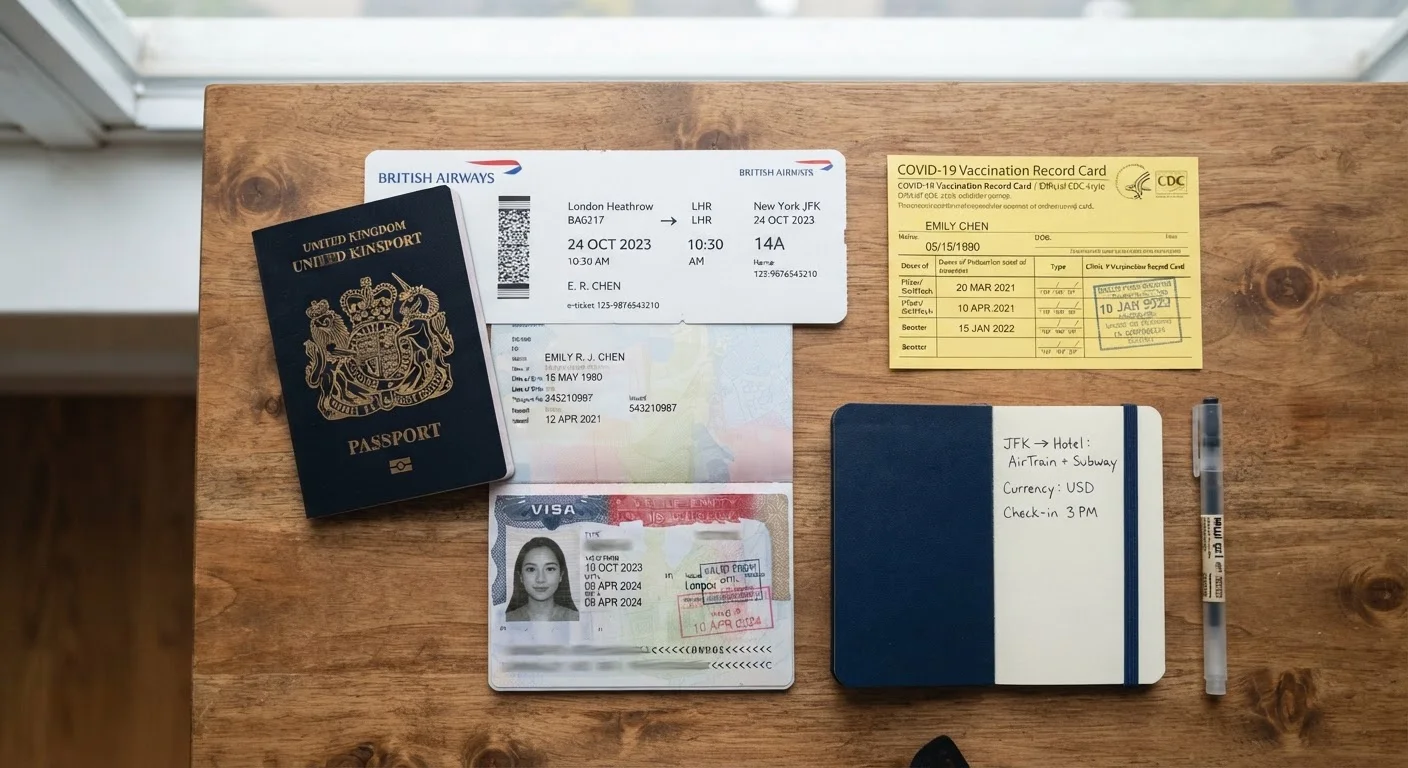
Photo credit: AdvisorHQ.net | Informative Website
In this article
A practical reference covering passports, visas, travel insurance, vaccination records, and other paperwork travelers commonly overlook.
The Documents Every Traveler Needs to Track
Whether you're heading abroad for the first time or logging your tenth passport stamp, the paperwork side of travel deserves the same attention as your itinerary. Missing a document - or discovering it's expired at the airport - can derail a trip entirely. This reference covers the core documents travelers most commonly overlook, along with the deadlines and details that matter most.
| Passport validity buffer | 6 months beyond return date (required by most countries) (U.S. Department of State) |
| Standard passport renewal time | 6-8 weeks (can vary significantly) (U.S. Department of State) |
| Common visa lead time | 4-12 weeks depending on destination (Varies by embassy or consulate) |
| Travel insurance purchase window | Within 14-21 days of initial deposit for broadest coverage (Policy-dependent; verify with your insurer) |
| Vaccination lead time | Some require 4-6 weeks or a multi-dose series (CDC Traveler's Health) |
| Document backup best practice | Secure cloud storage + encrypted phone folder + trusted home contact |
Passport
Your passport is the foundation of international travel. Most countries require it to be valid for at least six months beyond your intended return date - a rule many travelers don't realize until they're already at the gate. Renewal processing times can run several weeks under standard service; expedited options exist but vary. Check your expiration date well before booking any international travel. If your passport has been significantly damaged or you've legally changed your name, you'll need a new one regardless of the expiration date.
Visa
A visa grants permission to enter a specific country and comes in many forms: tourist, business, transit, or long-stay. Some countries issue visas on arrival; others require advance applications that can take weeks. Entry requirements change over time, so always verify current rules through official government sources - both the destination country's embassy and the U.S. Department of State. See what entry requirements for international travel really involve for a deeper look at how these rules work in practice.
Travel Insurance Documentation
Travel insurance policies vary enormously in what they cover. Keep your policy number, the insurer's 24-hour emergency contact line, and your coverage summary accessible - not just buried in email. Know the claims process before you need it: some policies require pre-authorization for medical care abroad.
Health Records, Deadlines, and Digital Backups
Vaccination Records
Some countries require proof of specific vaccinations - yellow fever being the most common - as a condition of entry, not just a health recommendation. The standard proof document is the International Certificate of Vaccination or Prophylaxis (ICVP), sometimes called the yellow card. Vaccination requirements and health advisories can change, so consult the CDC's Traveler's Health website and your destination's entry rules well ahead of departure. Allow enough lead time: some vaccines require multiple doses spread over weeks.
ICVP (Yellow Card)
The International Certificate of Vaccination or Prophylaxis is an official WHO document that records vaccinations, particularly yellow fever. Some countries require it as a condition of entry.
Six-Month Passport Rule
A requirement enforced by many countries that your passport must remain valid for at least six months past your planned return date. Failing this rule can result in denied boarding or entry.
Visa on Arrival
A visa issued to eligible travelers upon reaching their destination, rather than requiring advance application. Eligibility depends on your nationality and the destination country's current policies.
Travel Insurance Policy Number
A unique identifier for your travel insurance plan. You'll need it to file claims, access emergency assistance, or verify coverage details while abroad.
Expedited Passport Service
A faster passport processing option available through the U.S. State Department for an additional fee, typically used when standard timelines don't accommodate an upcoming trip.
Key Deadlines to Build Into Your Timeline
- Passport renewal: Apply at least 6-8 weeks before travel under standard service, longer during peak periods.
- Visa applications: Some require 4-12 weeks; check the specific embassy or consulate timeline.
- Travel insurance purchase: Buying within 14-21 days of your initial trip deposit often unlocks pre-existing condition coverage and cancel-for-any-reason add-ons - exact windows vary by policy.
- Vaccinations: Some require 4-6 weeks to take full effect; others need a series spread over months.
Digital Backups: A Smart Safety Net
Scan or photograph every critical document - passport, visa, insurance card, vaccination records, hotel confirmations, and emergency contacts - and store copies in a secure cloud location and a separate encrypted folder on your phone. A trusted contact at home should also have copies. For a broader approach to protecting your files, see this practical backup checklist. Keep physical photocopies in your carry-on, separate from originals. Never pack original documents in checked luggage - lost bags are rare but real.
For a full pre-departure walkthrough, the pre-departure checklist covers everything to confirm before you leave home. And for the complete trip-planning picture, Travel Planning: Everything in One Place brings it all together in one structured reference.

Author
Travel & Trips Editorial Team
Travel & Trips Editorial Team is the collective byline for our editorial team and contributor network. Articles published under this byline or an editorial pen name are researched, written, and reviewed according to our editorial standards for clarity, consistency, and independence before publication.
View all articles →