
Packing for Any Climate Without Overfilling Your Bag
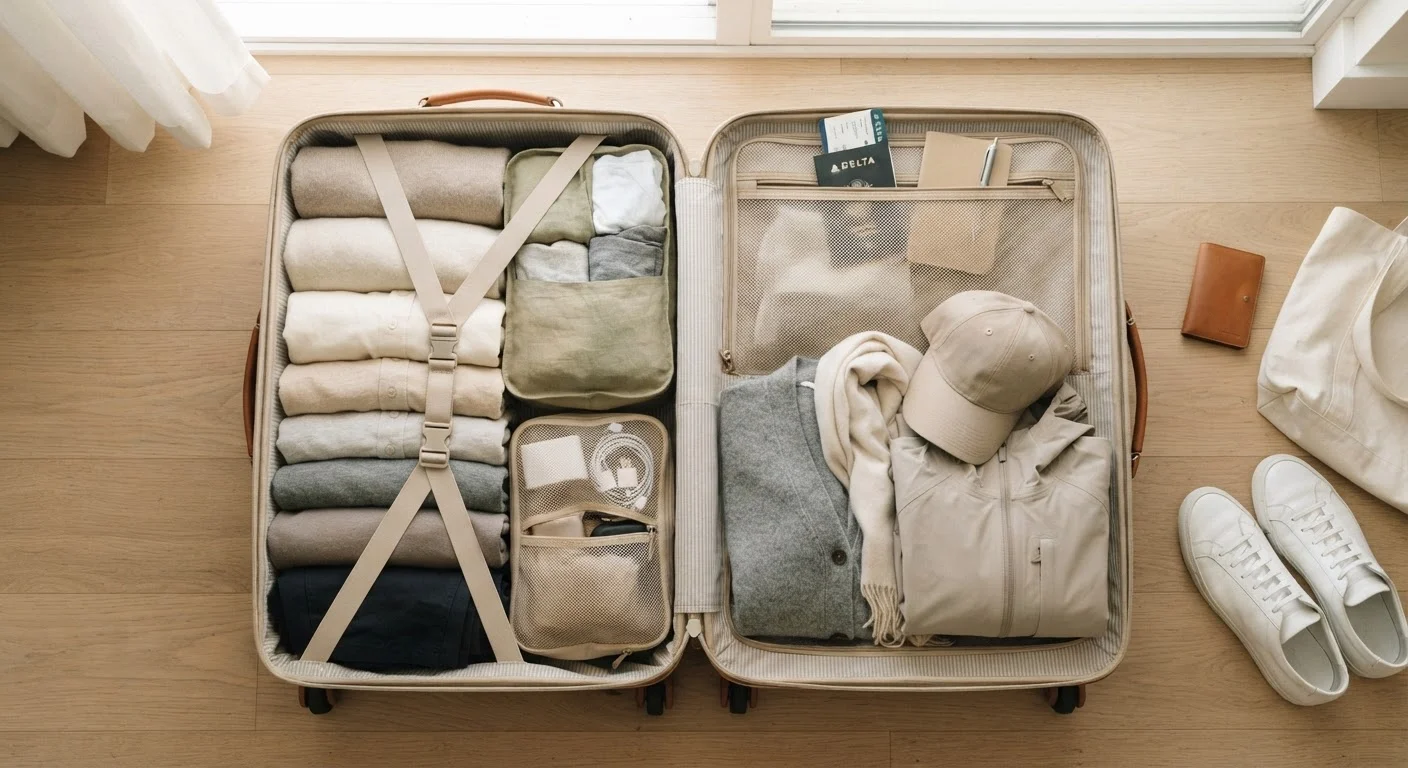
Photo credit: AdvisorHQ.net | Informative Website
In this article
Practical strategies for packing versatile, weather-appropriate clothing and gear—no matter where you're headed or for how long.
Key Takeaways
- Research your destination's climate range, not just its average temperature, before packing.
- Layering versatile, neutral-toned pieces covers more weather scenarios with fewer items.
- Packing cubes and compression techniques maximize space without adding bulk.
- One well-chosen outer layer can replace three single-use pieces.
- Check airline baggage rules before committing to a bag size or packing strategy.
Why Climate-Smart Packing Matters
Overpacking for weather uncertainty is one of the most common travel frustrations - and it's almost entirely preventable. Travelers routinely stuff bags with redundant layers, heavy backup shoes, and "just in case" outerwear that never leaves the suitcase. The result is a bag that's harder to carry, slower through security, and more likely to generate airline fees.
The challenge intensifies when a trip crosses multiple climates - say, a week in the Pacific Northwest followed by a few days in coastal California, or a European city break that spans spring shoulder season. But the solution isn't packing more - it's packing smarter.
Climate-flexible packing comes down to three things: knowing your actual conditions, choosing pieces that layer and cross over between contexts, and being honest about what you'll really wear. For everything that goes into that calculation before you even open your suitcase, our pre-departure checklist covers the full picture.
What you will need
What to Bring and How to Pack It
Approach your packing like building a small capsule wardrobe - each item earns its place by serving multiple functions across your planned activities. Neutral colors, packable fabrics, and a deliberate layering system do most of the heavy lifting. Below, you'll find the step-by-step process to get there.
Packing Cubes
Compress and organize clothing by category, making it easier to find items and maximize suitcase space.
Lightweight Packable Jacket
Serves as a windbreaker, light rain shield, and layering piece - replacing multiple single-purpose outer layers.
Luggage Scale
Allows you to weigh your bag at home before departure to avoid airline overweight fees.
Laundry Bag or Dry Sack
Separates worn clothing from clean items, especially useful on multi-week trips.
Research the Climate Range for Your Exact Travel Dates
Don't just look up average temperatures - find the daily high-low range for your specific dates and location. Check whether your trip spans a shoulder season where temperatures swing widely between morning and afternoon. If you're visiting multiple destinations with different climates on the same trip, note the coldest and warmest points and pack to bridge them.
Define Your Activity Profile
List the types of activities you'll actually do: city walking, hiking, swimming, dining out, attending meetings. Each activity type has a clothing need, and many overlap. A pair of dark, wrinkle-resistant pants can work for both a restaurant dinner and a museum visit. Avoid packing for activities you might do if they're not confirmed in your itinerary.
Build a Layering System Instead of Packing by Temperature
The core of climate-flexible packing is a layering approach: a moisture-wicking base layer, a mid-layer (lightweight fleece or merino sweater), and a packable outer layer. This trio covers you from 40°F to 75°F with mix-and-match flexibility. Choose neutral colors - navy, grey, black, olive - so every piece pairs with every other piece.
[tip_callout]Apply the Outfits-Not-Items Rule
Pack complete outfits, not individual items. Lay out each planned outfit on your bed and look for redundancies - two shirts that serve the same purpose, two pairs of shoes with identical use cases. Cut those duplicates. Aim for a capsule where every piece works with at least two others. For most trips of a week or less, five to six bottoms-and-tops combinations is plenty.
Pack Strategically Using Cubes and Compression
Use packing cubes to group items by category - tops, bottoms, base layers - and compress each cube before placing it in your bag. Roll softer items like t-shirts and underwear; fold structured items like trousers flat. Place heavier items (shoes, toiletry bag) closest to the wheels or the back of the bag to keep the center of gravity stable.
Do a Final Weight and Size Check
Weigh your fully packed bag using a luggage scale before heading to the airport. Compare it against your airline's published limits for your ticket class. If you're over, remove items starting with the heaviest and least versatile. Remember: a bag that fits in the overhead bin on a domestic flight may not meet the carry-on rules for a regional or international leg of the same trip.
Always Verify Airline Baggage Rules First
Carry-on size limits and personal item dimensions vary significantly between airlines and fare classes. Before finalizing your bag choice, check your specific carrier's current policy directly on their website. Fees for oversized or overweight bags can be steep and are entirely avoidable with a quick check. See our guide to carry-on vs. checked bags for a fuller breakdown.
Don't Pack for Every Possible Scenario
A common overpacking trap is preparing for every unlikely situation - a formal dinner that probably won't happen, rain gear for a destination with a 10% chance of showers. Pack for the likely 90% of your trip, not the improbable 10%. Most items you forget can be borrowed, bought locally, or simply done without.
Troubleshooting Common Packing Problems
Even with a solid plan, a few packing problems come up repeatedly. Here's how experienced travelers handle them:
- "I can't get the bag to close." Remove one complete outfit and reassess. If the bag won't close with room to spare, you've packed too much - not too little space.
- "I'm visiting two very different climates." Identify the coldest point and pack for it using layers. In the warmer location, you simply shed layers and store them in your bag.
- "I need formal and casual options." A single versatile pair of shoes and one elevated bottom (dark trousers or a wrap dress) can anchor both looks. Accessories shift the register more than additional clothing does.
- "I'm going for three weeks, not three days." Longer trips don't require more clothes - they require a laundry plan. Building in one mid-trip laundry session (hotel laundry service, a laundromat, or hand-washing quick-dry fabrics) means you can pack for a week and extend it indefinitely.
For a deeper look at how overpacking habits form and how to break them for good, see our piece on packing light without leaving something behind. And if your overall trip plan needs a stress check, common itinerary pitfalls is worth a read before you finalize your schedule.

Author
Travel & Trips Editorial Team
Travel & Trips Editorial Team is the collective byline for our editorial team and contributor network. Articles published under this byline or an editorial pen name are researched, written, and reviewed according to our editorial standards for clarity, consistency, and independence before publication.
View all articles →