
Packing Light Without Leaving Something Important Behind
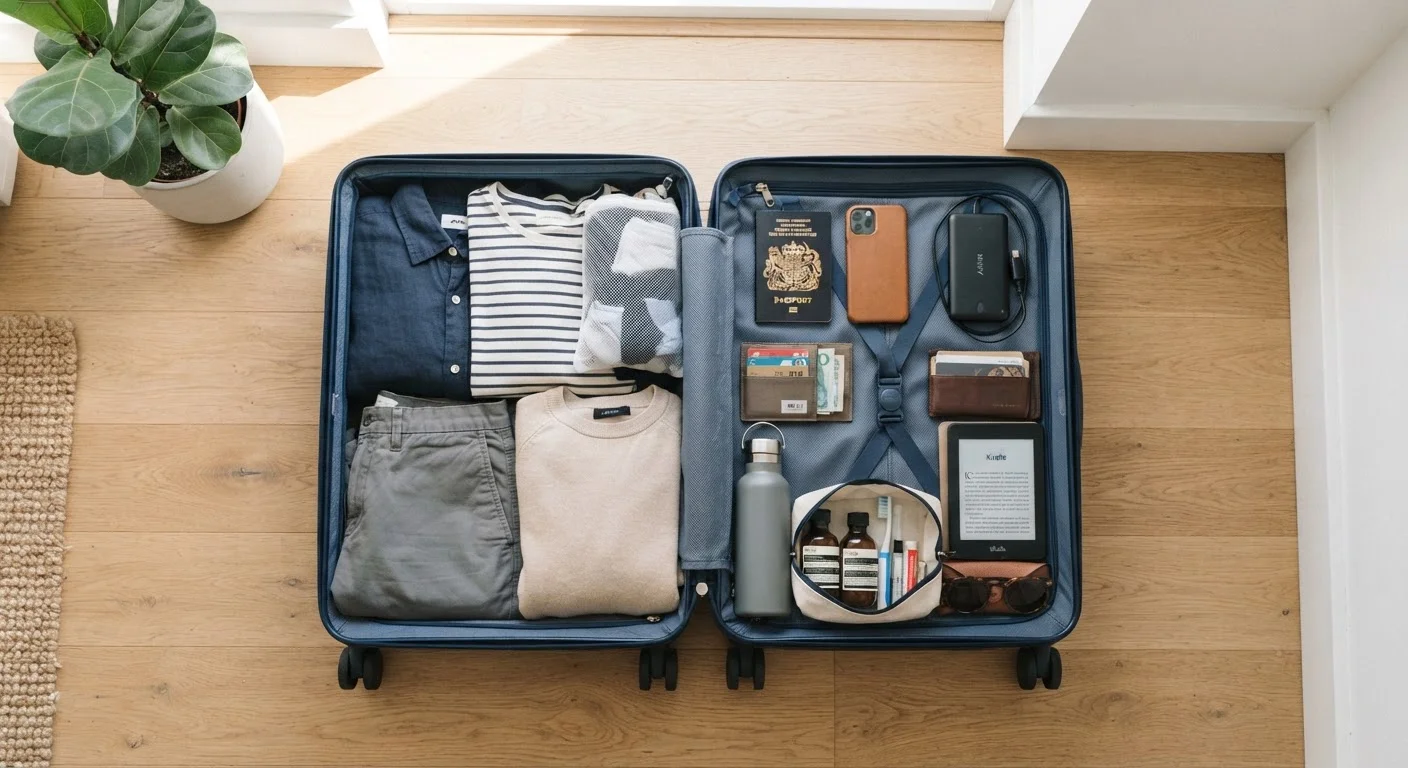
Photo credit: AdvisorHQ.net | Informative Website
In this article
Overpacking is one of the most common travel regrets. Here's how experienced travelers cut their loads without missing what matters.
Key Takeaways
- Most travelers can cover a week-long trip in a carry-on by choosing versatile, mix-and-match clothing pieces.
- Creating a reusable master packing list prevents both over-packing and accidental omissions.
- The 'one out, one in' rule - removing one item for every new one added - keeps bags honest.
- Critical documents and medications should always travel in your carry-on, never in checked luggage.
- Doing a trial pack 48 hours before departure gives you time to edit without last-minute panic.
Why Packing Light Feels So Hard
Overpacking isn't a character flaw - it's a planning problem. When you're uncertain about what you'll need, the instinct is to bring everything "just in case." The result is a bag that strains your shoulders, slows you down, and somehow still doesn't contain the one thing you actually needed.
The good news: packing light is a learnable skill, not a talent reserved for minimalist influencers. It starts with shifting your mental frame. Instead of asking "What might I need?" ask "What will I definitely use?" That one change in question eliminates a surprising amount of dead weight before you've touched a single item.
For deeper trip-planning structure, the Trip Planning hub covers everything from budgeting to logistics that complement a smarter packing approach.
Core Practices for Packing Smarter
These proven strategies come from the kind of road-tested experience that only accumulates after one too many overweight bag fees at the airport counter.
Build your wardrobe around a single color palette.
When every piece works with every other piece, you need far fewer items to create a full week of outfits. A mismatched wardrobe forces you to pack more because fewer combinations work together. This also means you're less likely to over-pack "just in case" an outfit doesn't come together.
Apply the one-out rule before you zip the bag.
Most bags are over-packed not from one big decision but from dozens of small ones, each individually defensible. Forcing yourself to remove one item for each new addition creates the friction needed to make honest choices about what's truly necessary.
Plan your actual activities, not hypothetical ones.
Packing for vague possibilities - "maybe we'll go somewhere fancy" or "what if there's a hiking trail?" - is what turns a sensible bag into a rolling closet. If an activity isn't on your actual itinerary, it doesn't justify packing for it.
Do a trial pack at least 48 hours before departure.
Packing at the last minute means you have no time to edit. A trial pack with breathing room lets you live with your choices overnight, spot duplicates, and make swaps without stress. It also reveals weight issues before you're at the check-in counter.
Use your phone to replace physical items wherever possible.
Books, travel guides, printed confirmations, and entertainment all add weight that a phone already carries. Digital boarding passes, e-books, downloaded maps, and PDF confirmations are lighter and often more accessible than their physical equivalents.
What You Genuinely Cannot Leave Behind
Packing light is not the same as packing carelessly. There's a short list of items where forgetting them means real disruption - not minor inconvenience. Medications, travel documents, phone chargers, and any items that can't be replaced locally deserve a non-negotiable spot in your bag.
Pack Medications in Your Carry-On - Always
Prescription and over-the-counter medications should never go in a checked bag. If your luggage is delayed or lost, you could be without medication for days. Keep them in your personal item or carry-on, ideally in original labeled containers. If traveling internationally, verify any entry requirements for your specific medications with the destination country's official government sources before you go.
Documents especially need deliberate placement. Never pack a passport, printed visa, or travel insurance confirmation in checked luggage. Our guide on documents you should never pack in your checked bag lays out exactly which items belong within arm's reach at all times.
Think of your carry-on as your insurance policy. Even if you're checking a bag, keep your essentials with you. Lost luggage is uncommon but it does happen, and the trips it disrupts most are the ones where everything critical was tucked into a checked bag.
Quick Wins You Can Apply Before Your Next Trip
You don't need to overhaul your entire packing system at once. A few targeted changes make an immediate difference - whether you're flying out next week or next month.
Once you've streamlined what goes in the bag, you'll also want to think about which bag makes the most sense for your trip. The decision between carry-on and checked luggage has more nuance than it first appears - see our carry-on vs. checked bag breakdown for a clear-eyed look at both options.
Build a Packing List That Works Every Time
The single most reliable tool experienced travelers use isn't a special packing cube or a compression sack - it's a master packing list they refine after every trip. After you return home, spend five minutes noting what you used, what you didn't, and what you wished you'd had. Over time, that list becomes genuinely personalized to how you travel.
A structured pre-departure checklist also keeps you from the panicked "did I forget something?" spiral in the taxi to the airport. Our pre-departure checklist gives you a ready-made starting point you can adapt to any trip type.
nearly 1 in 5
Travelers who say overpacking is their biggest trip regret
Travel industry surveys consistently find overpacking ranks among the most common self-reported mistakes, particularly among less frequent travelers.
7 outfits
Average outfits packed for a 4-day trip
Packing behavior research suggests most travelers bring roughly double the clothing they actually wear, pointing to a clear opportunity to cut load without sacrifice.
And if you're packing for destinations with unpredictable or varied weather, the challenge is slightly different - see packing for any climate without overfilling your bag for strategies tailored to shifting conditions.

Author
Travel & Trips Editorial Team
Travel & Trips Editorial Team is the collective byline for our editorial team and contributor network. Articles published under this byline or an editorial pen name are researched, written, and reviewed according to our editorial standards for clarity, consistency, and independence before publication.
View all articles →