
Bootstrapping vs. Outside Funding: Choosing the Right Starting Point
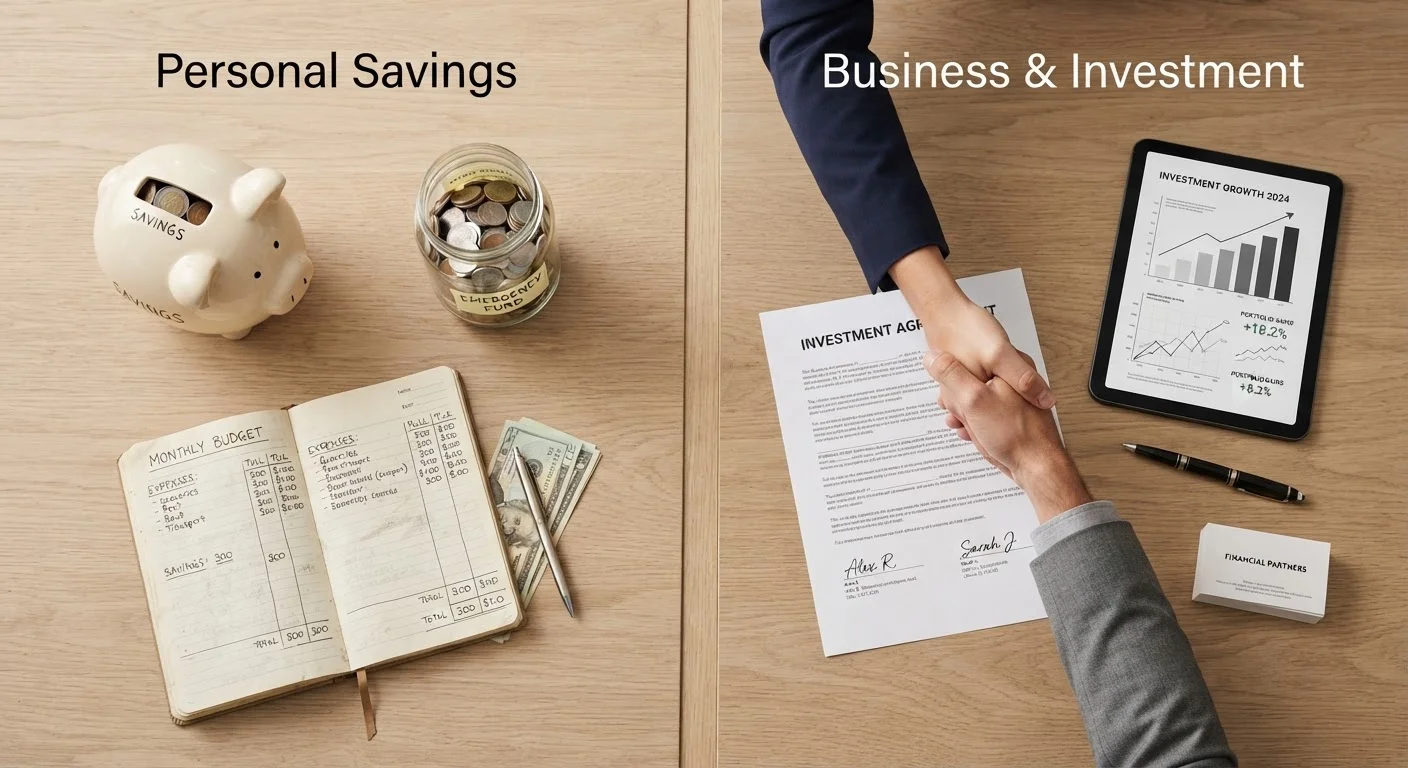
Photo credit: AdvisorHQ.net | Informative Website
In this article
A side-by-side look at self-funding and seeking investors or loans, covering trade-offs in control, speed, and financial risk.
Key Takeaways
- Bootstrapping keeps you in control but limits how fast you can scale without outside capital.
- Outside funding - loans, equity investors, or grants - accelerates growth but often comes with strings attached.
- Your business model, industry, and risk tolerance should drive the funding decision, not ambition alone.
- Giving up equity is permanent; debt carries repayment obligations regardless of business performance.
- Many founders combine approaches - starting lean and seeking funding once traction is proven.
What Each Approach Actually Means
Bootstrapping means funding your business with personal savings, early revenue, or money from friends and family - without bringing in outside investors or institutional lenders. You build lean, reinvest profits, and grow at a pace your cash flow supports.
Outside funding covers a spectrum: small business loans (from banks or the SBA), equity investment from angel investors or venture capital firms, revenue-based financing, and sometimes grants. Each carries different expectations, timelines, and obligations.
Neither approach is inherently superior. The right choice depends heavily on what your business needs, how fast the market moves, and how much financial and ownership risk you're willing to carry. As part of the broader landscape of starting a small business, funding strategy deserves the same careful thought as your business model itself.
| Criterion | Bootstrapping | Outside Funding |
|---|---|---|
| Ownership retained | 100% | Partial (equity) or full (debt) |
| Decision-making authority | Complete | Shared or constrained |
| Growth speed | Tied to cash flow | Can accelerate significantly |
| Repayment obligation | None | Yes (loans) or dilution (equity) |
| Personal financial risk | High (personal savings at stake) | Moderate (varies by structure) |
| Flexibility to pivot | High | May be restricted |
| Proof of concept required | Not externally | Often yes, for investors |
| Access to networks/mentors | Self-sourced | Often included with investors |
The Real Trade-Offs: Control, Speed, and Risk
Control is the clearest differentiator. Bootstrapped founders answer to themselves. Equity investors - especially those with board seats - have legitimate say in major decisions, including hiring, spending priorities, and even when or whether to sell the company. Lenders don't take equity, but loan covenants can restrict how you operate.
Speed cuts the other way. Outside capital lets you hire faster, market earlier, and build infrastructure before revenue can support it. A bootstrapped business must often wait until cash flow permits each next step, which can mean slower growth in competitive markets.
Financial risk is more nuanced than it appears. Bootstrapping risks your personal savings; if the business fails, that money is gone. Debt financing means repayment obligations regardless of revenue - a meaningful pressure during slow periods. Equity doesn't require repayment, but giving up ownership is permanent. This is general financial information, not personalized advice - consult a licensed financial or legal professional before making funding decisions that affect your personal finances.
77%
Small businesses rely on personal savings at launch
According to U.S. Federal Reserve Small Business Credit Survey data, personal savings remain the most common startup funding source among small employers.
20-30%
Typical equity stake sought by early-stage investors
Angel investors commonly seek equity stakes in this range in exchange for early-stage capital, though terms vary widely by deal and industry.
It's also worth noting that many successful small businesses never seek outside capital at all. According to the U.S. Small Business Administration, the majority of small businesses are self-funded at launch. That doesn't make bootstrapping the default right answer, but it counters the narrative that outside funding is the only serious path forward - a point explored further in common entrepreneurship myths.
How to Think Through Your Decision
A few practical questions help frame the choice:
- What does early-stage survival actually require? Some businesses - consulting, freelance services, digital products - can launch with minimal capital. Others, like food manufacturing or app platforms with network-effect dynamics, may need significant upfront investment to be viable at all.
- Do you have proof of demand? Investors want traction. If you can validate your concept on a shoestring first, you'll negotiate from a stronger position and may give up less equity - or discover the idea needs more work before it's fundable.
- What's your personal financial cushion? Bootstrapping while covering living expenses requires a runway. How you manage your personal cash flow during this period directly affects how long you can sustain the build phase.
- How competitive is the market timing? If early-mover advantage matters and well-funded competitors exist, moving slowly may cost more than the dilution of taking on investors.
Once you've launched and established early customers, growth strategy becomes the next challenge. Building a customer base from zero is a practical next step regardless of how you funded the start.
This article is for general informational and educational purposes only and does not constitute financial, investment, or legal advice. Consult a qualified professional regarding your specific circumstances before making funding decisions.

Author
Work & Business Editorial Team
Work & Business Editorial Team is the collective byline for our editorial team and contributor network. Articles published under this byline or an editorial pen name are researched, written, and reviewed according to our editorial standards for clarity, consistency, and independence before publication.
View all articles →