
Registering Your Business: Federal, State, and Local Requirements Explained
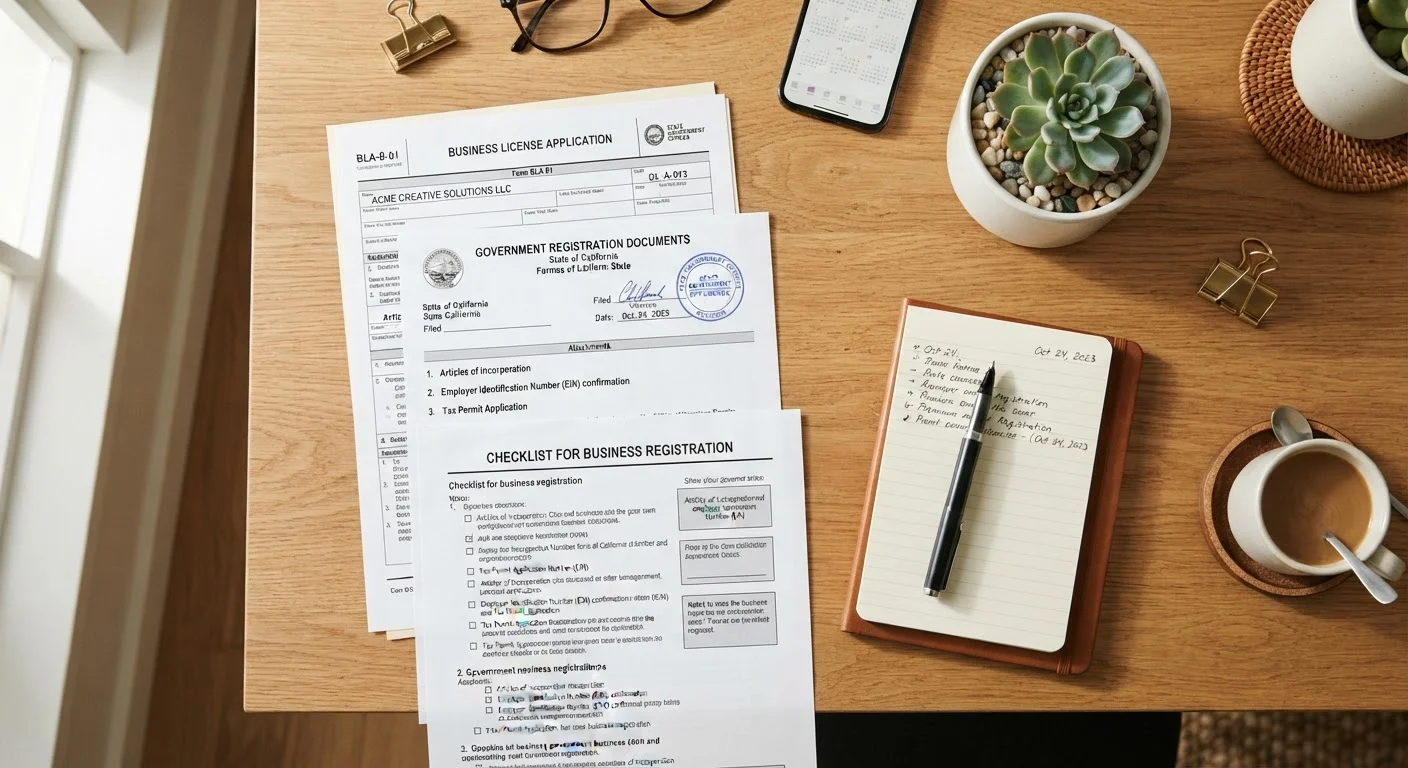
Photo credit: AdvisorHQ.net | Informative Website
In this article
Learn which government registrations, licenses, and permits most small businesses need — and why getting this wrong can be costly.
Why Business Registration Isn't Optional
Starting a business without the proper registrations isn't just a technicality - it can expose you to fines, back taxes, and forced closure. Federal, state, and local governments each have their own requirements, and they don't automatically talk to each other. That means you're responsible for tracking down what applies to you.
The good news: most small business registrations are straightforward once you know what to look for. The key is understanding which level of government requires what - and in what order. Before any of this, you'll want to choose a legal structure, since that decision shapes nearly every registration that follows. See how different business structures compare before moving forward.
| EIN Issuing Authority | Internal Revenue Service (IRS) (IRS.gov) |
| LLC Formation Filing Location | State Secretary of State office |
| States with No Sales Tax | 5 (Oregon, Montana, New Hampshire, Delaware, Alaska) (Tax Foundation) |
| Cost to Get an EIN | Free - apply directly at IRS.gov (IRS.gov) |
| DBA Filing Location | County clerk or Secretary of State, depending on the state |
| Typical Local Business License Renewal | Annual |
Federal Requirements: Who Needs to Register with the IRS
At the federal level, the most important step for most businesses is obtaining an Employer Identification Number (EIN) from the IRS. Think of it as a Social Security number for your business - it's used for tax filings, opening a business bank account, and hiring employees.
You need an EIN if your business has employees, operates as a corporation or partnership, or files certain tax returns (excise, employment, or alcohol/tobacco/firearms). Sole proprietors with no employees may operate under their Social Security number, but obtaining an EIN is still widely recommended for liability and privacy reasons.
Some industries - financial services, firearms dealers, broadcasters - also require federal licenses through agencies like the FCC, ATF, or others. The IRS website and SBA.gov are the authoritative sources for current federal requirements.
Federal Licenses Are Industry-Specific
Most small businesses don't need a federal business license - that requirement is reserved for specific regulated industries such as broadcasting, agriculture, firearms, and alcohol production. If you're in a general retail, service, or consulting business, your federal obligation is typically limited to obtaining an EIN and meeting IRS tax reporting requirements. When in doubt, check the SBA's official license and permits tool at SBA.gov.
State Requirements: Formation, Licensing, and Sales Tax
State-level registration is where most of the formation paperwork happens. If you're forming an LLC or corporation, you'll file Articles of Organization or Articles of Incorporation with your state's Secretary of State office and pay a filing fee. Sole proprietors and general partnerships don't typically file formation documents, but they often still need a state business license.
Most states also require businesses that sell taxable goods or certain services to register for a sales tax permit (sometimes called a seller's permit or sales tax license). Collecting sales tax without being registered - or failing to collect it when required - creates significant liability. Requirements vary by state, and a handful of states have no sales tax at all.
Certain professions - contractors, healthcare providers, accountants, real estate agents - face state-level occupational licensing in addition to basic business registration. These vary widely by state and profession. Once you're registered and operating, understanding your accounting obligations becomes the next critical step.
Local Requirements: Permits, Zoning, and Doing Business As
Local government - your city or county - handles the registrations closest to your daily operations. A general business license from the city or county is required in most jurisdictions just to operate legally, regardless of your business type. Fees are typically modest, but renewal is annual.
If you're operating from a physical location, zoning compliance matters. Home-based businesses face restrictions in many residential zones. Commercial locations need a certificate of occupancy. Businesses with food service, public assembly, or hazardous materials face additional inspection requirements from health or fire departments.
If you're operating under a name other than your legal name - for example, "Jane Smith" doing business as "Riverside Consulting" - most states and counties require you to file a DBA (Doing Business As), also called a fictitious business name or trade name registration. This is a simple, low-cost filing but easy to overlook. For a fuller picture of what needs to happen before you open your doors, see the pre-opening checklist for first-time business owners. And if you plan to hire, be aware that bringing on your first employee triggers its own set of registration obligations.
This article provides general information about business registration requirements and is not legal or tax advice. Requirements vary by location, business type, and individual circumstances. Consult a licensed attorney, accountant, or your state's official business resources for guidance specific to your situation.

Author
Work & Business Editorial Team
Work & Business Editorial Team is the collective byline for our editorial team and contributor network. Articles published under this byline or an editorial pen name are researched, written, and reviewed according to our editorial standards for clarity, consistency, and independence before publication.
View all articles →