
Sole Proprietorship, LLC, or Corporation: What Each Business Structure Actually Means
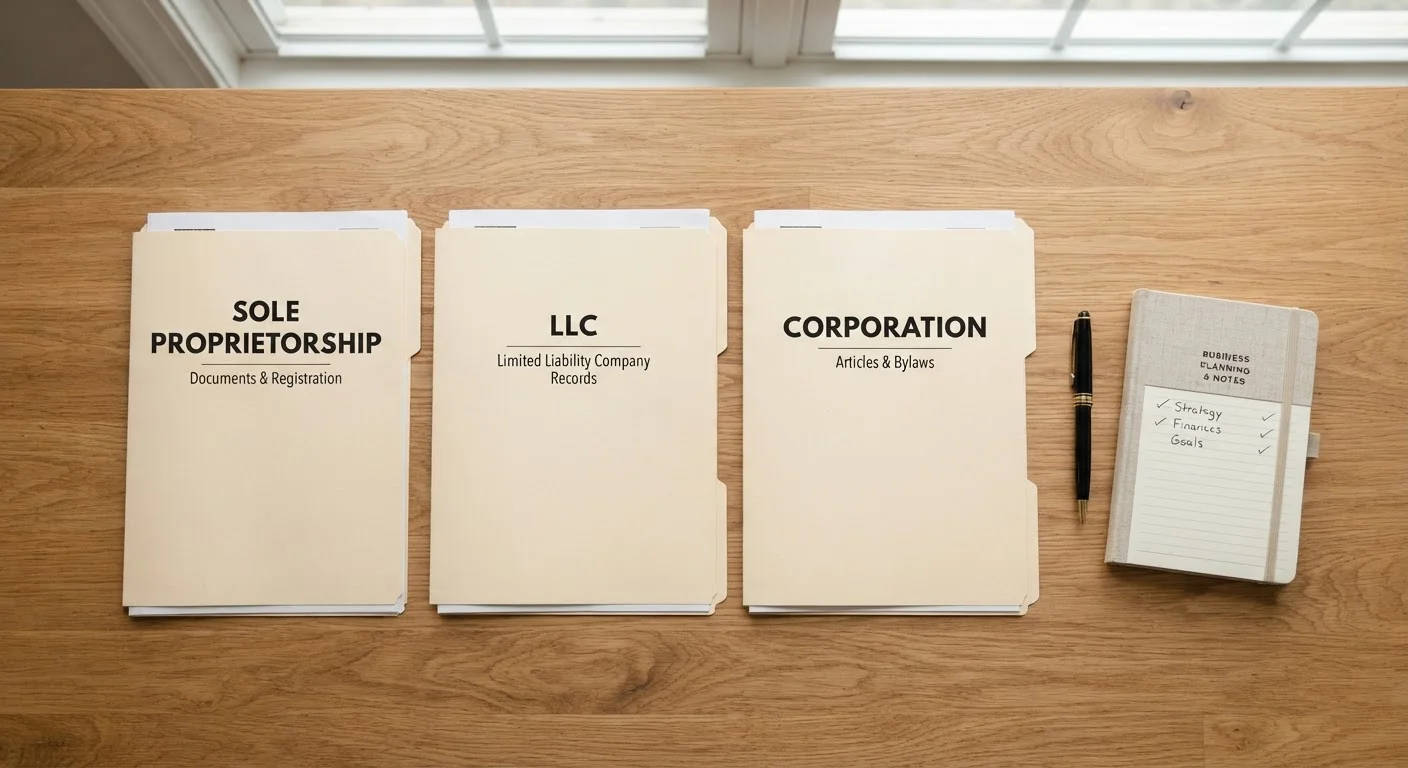
Photo credit: AdvisorHQ.net | Informative Website
In this article
Understand the real differences between sole proprietorships, LLCs, and corporations before choosing a structure for your small business.
Key Takeaways
- Sole proprietorships are the simplest structure but offer no legal separation between you and your business.
- LLCs combine liability protection with flexible taxation, making them popular among small business owners.
- Corporations are best suited for businesses seeking outside investment or planning significant growth.
- Your structure affects how you're taxed, not just how you're legally protected.
- Most structures require state registration; some also have federal and local filing obligations.
- Changing your structure later is possible but can be complex and costly - getting it right early matters.
Sole Proprietorship: Simple, but You're Personally on the Hook
A sole proprietorship is the default structure for any individual doing business without formally registering a separate legal entity. If you start mowing lawns for neighbors or selling handmade goods online without creating an LLC or corporation, you're already a sole proprietor.
The upside is simplicity. There are no formation fees, no articles of organization to file, and the business income flows directly onto your personal tax return (Schedule C). What you earn, you report - no separate business tax return required.
The downside is significant: there is no legal separation between you and your business. If your business is sued or can't pay a debt, creditors can come after your personal bank account, car, or home. For low-risk ventures with minimal overhead, this may be an acceptable trade-off. For anyone taking on contracts, employees, or physical liability, it's a real vulnerability worth taking seriously.
Keep Business and Personal Finances Separate
Even as a sole proprietor, opening a dedicated business checking account makes recordkeeping cleaner and helps demonstrate business legitimacy. For LLCs, commingling personal and business funds can potentially void your liability protection - a serious risk that's easy to avoid with basic financial discipline.
LLC: The Middle Ground Most Small Businesses Choose
A Limited Liability Company (LLC) is a state-registered business entity that separates your personal legal identity from your business. That separation is the core benefit: if the business is sued or goes into debt, your personal assets generally aren't exposed - as long as you're operating the business properly.
LLCs also offer tax flexibility. By default, they're treated as pass-through entities - profits flow to the owner's personal return - but an LLC can elect to be taxed as an S-corporation, which can reduce self-employment taxes for some business owners. That's a nuance worth discussing with a qualified accountant.
Formation typically requires filing Articles of Organization with your state and paying a filing fee, which varies by state. Ongoing requirements - annual reports, fees - also differ by state. For most solo operators or small partnerships, the LLC hits a practical sweet spot between protection and simplicity.
~73%
U.S. businesses operating as sole proprietorships
According to IRS Statistics of Income data, the vast majority of U.S. business tax returns are filed as sole proprietorships, reflecting how common this default structure remains.
50+
Different sets of LLC rules across U.S. states
Each state sets its own LLC formation fees, annual report requirements, and regulations, meaning the practical cost and complexity of an LLC varies significantly by location.
~35%
Of new employer businesses fail within 5 years
According to U.S. Bureau of Labor Statistics data, roughly 35% of businesses with employees close within five years - underscoring why early structural and legal decisions matter.
Once your structure is chosen, you'll need to handle the formal registration process. See what registrations most small businesses actually need to avoid missing required filings.
Corporation: Built for Growth, More Complex to Run
A corporation is a fully independent legal entity - it can own property, enter contracts, and be sued entirely on its own. Shareholders own the corporation, a board of directors oversees it, and officers manage day-to-day operations. This structure is designed for businesses that want to raise outside investment, issue stock, or eventually go public.
There are two common types: a C-corporation pays corporate income tax, and shareholders also pay tax on any dividends received - this is the so-called double taxation issue. An S-corporation avoids that by passing income through to shareholders' personal returns, but it comes with restrictions, including a cap on the number and type of shareholders.
Corporations require more administrative work: bylaws, board meetings, minutes, and stricter recordkeeping. For a solo operator or early-stage small business, that overhead is usually unnecessary. But if you're planning to bring in investors, issue equity to employees, or scale aggressively, a corporation may be the right foundation from the start.
Understanding your structure also directly shapes your bookkeeping needs. The core accounting concepts every small business owner should know differ depending on whether you're filing as a pass-through entity or a corporation.
“Choosing your business entity is not just a legal formality - it's a foundational decision that shapes how you're taxed, how you can raise capital, and how much personal risk you carry every single day you operate.”
— Small Business Administration (SBA), U.S. federal agency supporting small business formation and growth
How to Think About the Choice
No single structure is universally best. The right answer depends on your risk exposure, income level, growth plans, and how much administrative complexity you're willing to manage.
- Low risk, testing an idea: Sole proprietorship lets you move fast with no upfront cost.
- Established or growing small business: An LLC provides meaningful protection without excessive paperwork.
- Seeking investors or issuing stock: A corporation is typically required - investors expect it.
Tax treatment should factor into your decision, but it's not the only variable. Liability exposure, the way you plan to run the business, and your long-term goals all matter just as much. For a broader look at how structure fits into the larger picture of ownership, the complete guide to small business ownership covers the full journey from concept to operation.
This article provides general educational information about business structures and is not legal, tax, or financial advice. Business laws and tax rules vary by state and individual circumstance. Consult a licensed attorney or qualified accountant before making decisions about your business entity.
Frequently Asked Questions

Author
Work & Business Editorial Team
Work & Business Editorial Team is the collective byline for our editorial team and contributor network. Articles published under this byline or an editorial pen name are researched, written, and reviewed according to our editorial standards for clarity, consistency, and independence before publication.
View all articles →