
Seasonal Vehicle Prep: Getting Your Car Ready for Summer and Winter
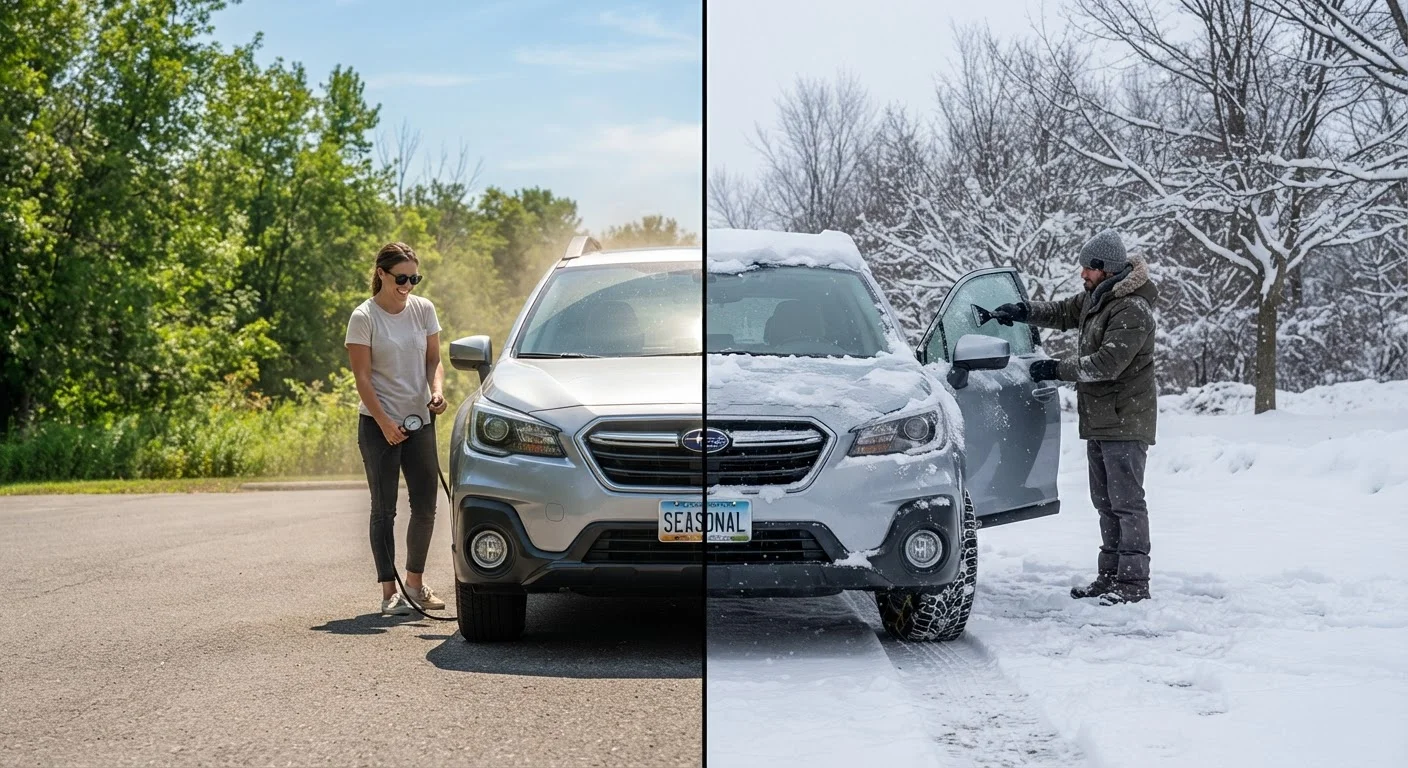
Photo credit: AdvisorHQ.net | Informative Website
In this article
Temperature extremes put unique stress on your car. Here's a practical seasonal checklist to protect performance year-round.
Key Takeaways
- Tires, fluids, and battery are the three systems most stressed by seasonal temperature swings.
- Many seasonal checks take under 10 minutes and require no special tools.
- Summer heat accelerates fluid breakdown and stresses cooling systems.
- Winter cold thickens fluids, reduces battery output, and makes worn wiper blades dangerous.
- Addressing seasonal prep proactively is less costly than roadside repairs or tow fees.
- Some tasks - brake inspections, coolant flushes - are best left to a qualified mechanic.
Why Seasonal Prep Matters More Than You Think
Most drivers associate vehicle maintenance with mileage milestones - oil changes every 5,000 miles, tire rotations every other visit. But temperature extremes place unique stress on your car that mileage alone doesn't predict. A battery that performs fine in July may struggle to turn over an engine on a 10°F morning. Engine coolant formulated for summer protection may not provide adequate freeze resistance come November.
The good news: a systematic seasonal check doesn't require a garage full of tools or deep mechanical knowledge. Working through a clear checklist twice a year - once before summer heat peaks and once before temperatures drop below freezing - keeps most common failure points visible and manageable. For anything beyond a visual inspection or fluid top-off, a qualified mechanic is your best resource. This checklist is designed to help you identify what needs attention, not to replace professional service.
For a broader year-round view of vehicle responsibilities, see the annual car ownership checklist covering insurance, registration, and safety reviews. And if you want to build a quick habit before every drive, this pre-trip safety check is a useful companion.
Summer Prep: Cooling and Fluids
Summer Prep: Tires and Exterior
Summer Prep: Battery and Electrical
Winter Prep: Fluids and Freeze Protection
Winter Prep: Tires and Brakes
Winter Prep: Visibility and Emergency Kit
Tools and Resources to Have on Hand
Most items on this checklist call for nothing more than good lighting, clean rags, and your vehicle's owner's manual. However, a few basic tools make the process faster and more accurate. Check your glove box or manufacturer's app for the recommended fluid specifications before purchasing any fluids - the wrong viscosity or coolant type can cause problems rather than prevent them.
Tire pressure gauge
Accurately measures tire inflation so you can compare against the manufacturer's door jamb specification.
Antifreeze tester
Checks the freeze-protection level of your coolant mix before winter temperatures arrive.
Flashlight or work light
Illuminates the engine bay, tire sidewalls, and undercarriage for visual inspections.
Vehicle owner's manual
Specifies correct fluid types, capacities, and maintenance intervals for your exact make and model.
Clean rags or shop towels
Used for wiping dipsticks and checking fluid color and clarity.
Quarter (coin)
Quick DIY tread-depth check - insert into the groove to assess whether tread depth is safe.
Battery terminal cleaner or brush
Removes corrosion from battery terminals to maintain reliable electrical connection.
Understanding how your cooling system works - and the early signs it may be struggling - is worthwhile reading before summer. The article Signs Your Coolant System Needs Attention Before It Overheats walks through the warning indicators. For a thorough review of all underhood fluids, the Fluids Under the Hood checklist provides step-by-step guidance so nothing gets missed.
Never Open a Hot Radiator Cap
Coolant systems operate under pressure, and a hot radiator cap releases scalding steam instantly when opened. Always allow the engine to cool completely - at least 30 minutes after shutting off - before checking or opening the coolant reservoir or radiator cap. Even a brief exposure to pressurized coolant can cause serious burns.
Some Fluid and Brake Work Requires a Professional
Flushing coolant, bleeding brake fluid, and inspecting brake components involve safety-critical systems. If you are unsure whether a fluid needs replacement rather than just a top-off, or if you notice any brake pedal softness or unusual brake noise, have the vehicle inspected by a qualified mechanic before driving it in demanding seasonal conditions.
Driving Adjustments That Go With Seasonal Prep
Preparing the vehicle is only half the equation. Summer heat increases stopping distances on sun-softened asphalt, and winter conditions demand a fundamentally different driving approach. If you use cruise control regularly, it is worth understanding why that habit can become risky in cold or wet conditions - Cruise Control on Wet or Icy Roads explains the physics clearly. More broadly, How Weather Changes the Rules of the Road covers rain, snow, fog, and wind with practical guidance for adjusting your approach to match conditions.
Clear All Snow Before Driving - Not Just the Windshield
Driving with snow on your roof is dangerous and illegal in many states. Snow can slide onto your windshield during braking, blocking visibility instantly, or it can fly off onto other vehicles and cause accidents. Before pulling away in winter, clear snow and ice from all glass surfaces, mirrors, lights, and the vehicle roof. Allow adequate time so this is never rushed.

Author
Cars & Driving Editorial Team
Cars & Driving Editorial Team is the collective byline for our editorial team and contributor network. Articles published under this byline or an editorial pen name are researched, written, and reviewed according to our editorial standards for clarity, consistency, and independence before publication.
View all articles →