
Why Ignoring a Small Oil Leak Tends to Become a Large Problem
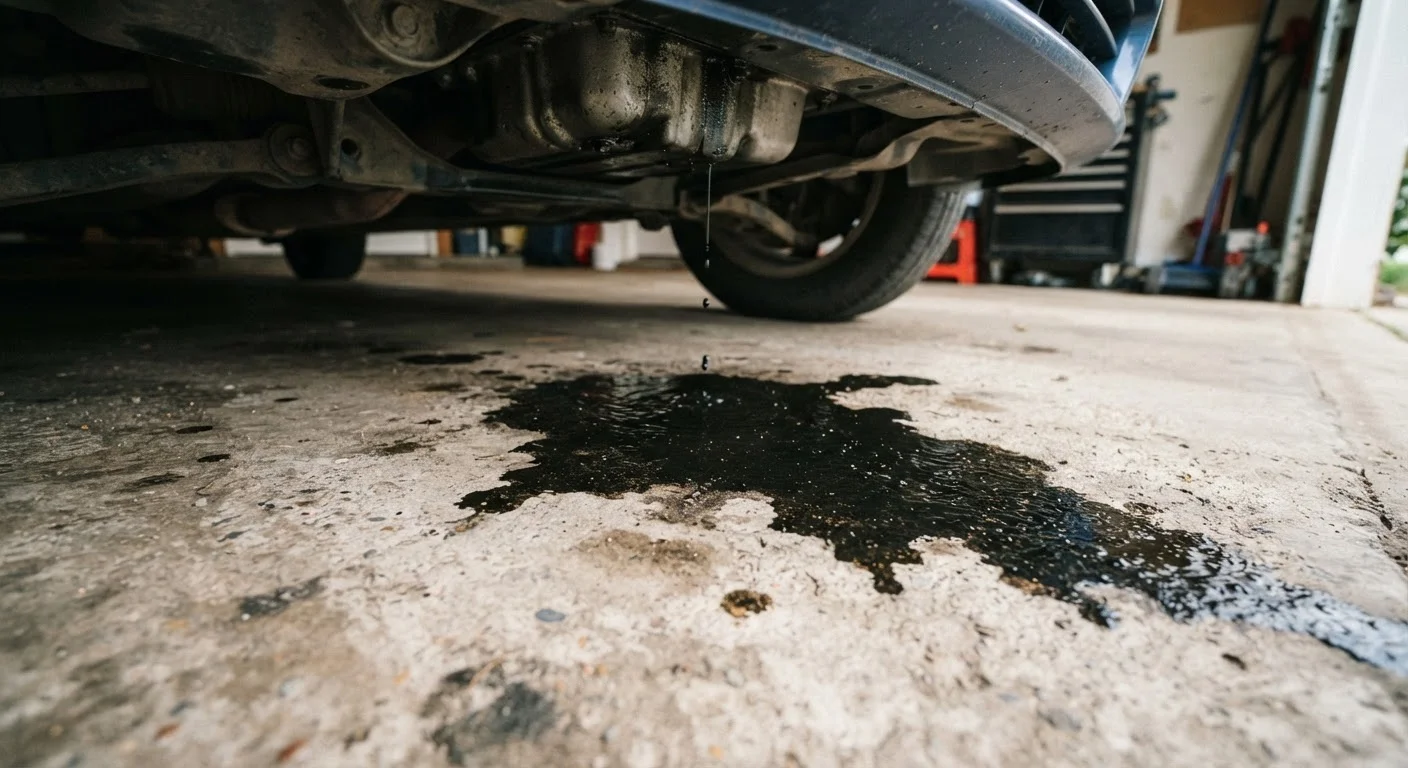
Photo credit: AdvisorHQ.net | Informative Website
In this article
A slow drip can seem harmless, but oil leaks escalate in predictable ways. Learn the mechanics behind why early attention matters.
Key Takeaways
- A slow oil leak rarely stays slow - pressure, heat, and degraded seals cause them to worsen over time.
- Low oil levels from an unaddressed leak can cause catastrophic engine damage within a relatively short period.
- Early inspection by a qualified mechanic typically costs far less than the repairs that result from waiting.
- Many drivers underestimate a leak because they don't see immediate symptoms - by the time they do, damage is done.
- Oil on hot engine components poses a genuine fire risk, making this a safety issue, not just a maintenance one.
Why a Small Leak Is Never Just a Small Leak
A single oil spot on your driveway is easy to dismiss. It's small, it's not causing any obvious performance issue, and the car seems to run fine. This reasoning - while understandable - is one of the most common and costly mistakes drivers make.
Engine oil serves several critical functions beyond simple lubrication. It reduces friction between moving metal parts, helps regulate engine temperature, and carries contaminants away from sensitive components. When oil level drops - even gradually - the engine works harder, runs hotter, and wears faster. The damage accumulates quietly, long before any warning light triggers.
What makes leaks particularly deceptive is that they tend to worsen under normal operating conditions. Engine heat softens rubber gaskets and seals over time. Oil pressure inside the engine pushes against any weak point. A pinhole leak in a valve cover gasket, for example, often grows larger as the gasket continues to degrade. What starts as a drip can become a steady seep within a few thousand miles. See our guide to routine maintenance habits for more on how small oversights compound into large bills.
Common Mistakes Drivers Make With Oil Leaks
Understanding where drivers go wrong helps you avoid the same traps. These mistakes are predictable - and entirely preventable.
Topping off oil without finding the source of the leak.
Why it happens: Adding oil feels like a fix, and the car runs normally afterward - so drivers assume the problem is managed.
Assuming no warning light means no serious problem.
Why it happens: Drivers reasonably trust dashboard indicators as their primary alert system, not realizing that oil pressure warnings often appear only after significant damage has begun.
Misidentifying the leak as something less serious, like condensation or power steering fluid.
Why it happens: Not all fluid spots look identical, and drivers without mechanical experience often lack a reference point for what engine oil actually looks like on pavement.
Delaying inspection because the car still drives normally.
Why it happens: The absence of noticeable symptoms - rough running, noise, or power loss - is taken as evidence that the situation is not urgent.
Using stop-leak additives as a long-term solution.
Why it happens: Aftermarket stop-leak products are inexpensive and widely marketed as easy fixes, making them appealing to drivers trying to avoid a shop visit.
The Real Risks: Engine Damage and Fire Hazard
Oil on Hot Exhaust Components Is a Fire Risk
Engine oil leaking onto exhaust manifolds, headers, or other high-temperature surfaces can ignite. If you detect a burning smell after driving or see smoke from the engine bay, stop driving the vehicle as soon as it is safe to do so and have it inspected immediately by a qualified mechanic. Do not dismiss this as a minor issue.
Engine damage from oil starvation is among the most expensive repairs in automotive maintenance. When oil level falls too low, metal components that depend on a continuous oil film - bearing surfaces, camshaft lobes, cylinder walls - begin to make direct metal-to-metal contact. The resulting wear can require a partial or full engine rebuild, a repair that frequently exceeds the market value of older vehicles.
There is also a fire risk that most drivers do not consider. Oil that leaks onto hot exhaust manifolds or other high-temperature components can ignite. This is not a remote hypothetical - it is a documented cause of engine bay fires. If you notice a burning smell after driving, or see smoke rising from under the hood, treat it as an urgent safety matter and have the vehicle inspected promptly by a qualified mechanic.
$4,000-$8,000+
Typical engine rebuild or replacement cost
Industry repair data consistently shows that engine rebuilds and replacements resulting from oil starvation rank among the most expensive repairs a driver can face.
1 qt per 1,000 mi
Oil consumption threshold warranting inspection
Many automotive engineers and mechanics consider consumption exceeding approximately one quart per 1,000 miles a signal that a leak or internal consumption issue needs professional evaluation.
For context on what you can reasonably handle yourself versus when to bring in a professional, this breakdown of DIY car maintenance limits is a useful reference.
What Early Action Actually Looks Like
Addressing an oil leak early does not necessarily mean an expensive repair. Many leaks originate from components that are relatively inexpensive to replace - valve cover gaskets, drain plug washers, and oil pan gaskets are common culprits. Catching these early, before oil loss becomes significant and before surrounding components are contaminated or heat-damaged, keeps repair costs manageable.
The practical steps are straightforward: check your oil level monthly using the dipstick, note whether the level drops between changes, and look under your car after it has been parked for several hours. A fresh oil stain - amber to dark brown, oily to the touch - warrants a mechanic's inspection. Do not wait for a dashboard warning light; by design, many oil pressure warnings only illuminate when the situation is already critical.
It is also worth questioning common assumptions about what counts as a maintenance emergency. Separating car maintenance myths from evidence can help you prioritize correctly rather than either panicking over minor issues or dismissing genuinely urgent ones.
This article is for general informational purposes. For diagnosis and repair of any vehicle issue, consult a qualified, licensed mechanic. Do not attempt repairs involving engine components without appropriate training and tools.

Author
Cars & Driving Editorial Team
Cars & Driving Editorial Team is the collective byline for our editorial team and contributor network. Articles published under this byline or an editorial pen name are researched, written, and reviewed according to our editorial standards for clarity, consistency, and independence before publication.
View all articles →