
DIY Car Maintenance: Where It Makes Sense and Where to Stop
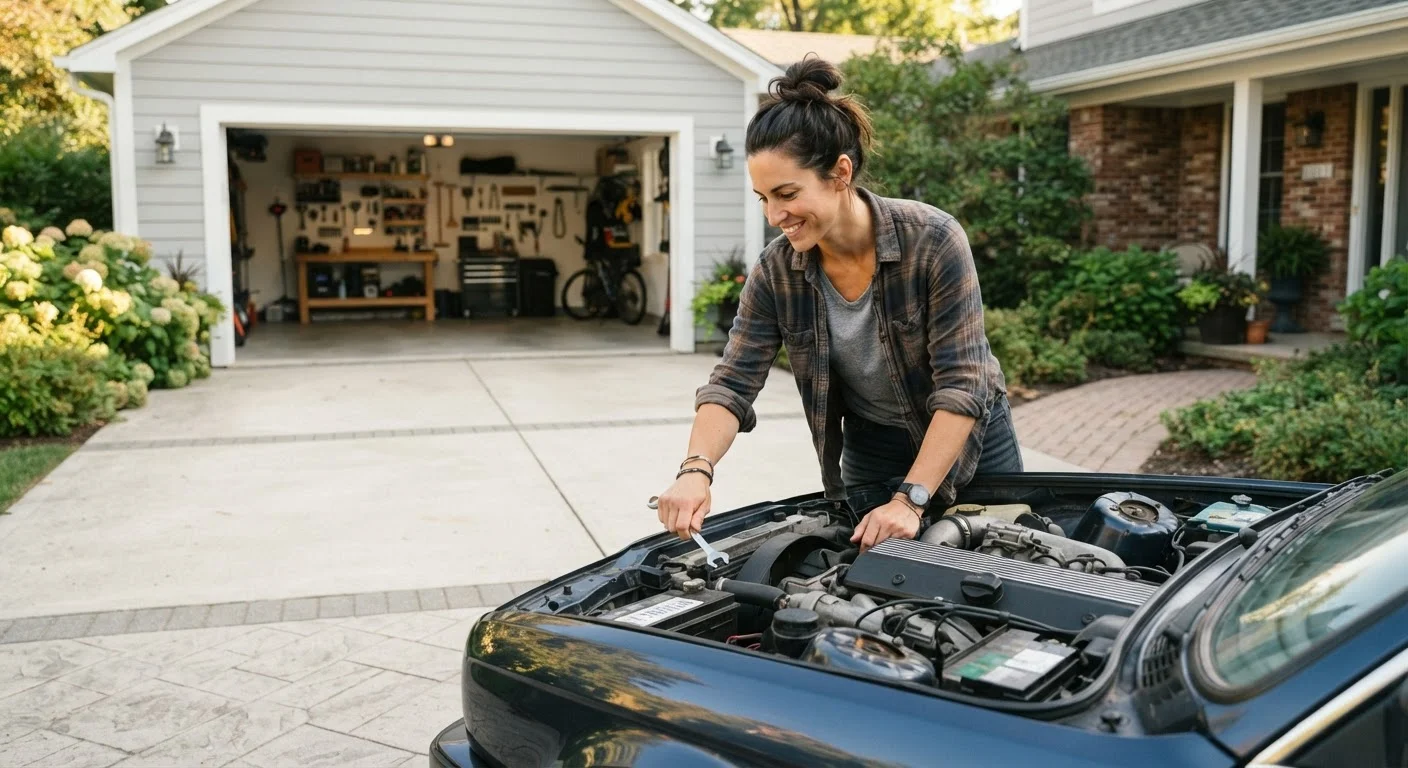
Photo credit: AdvisorHQ.net | Informative Website
In this article
Some maintenance tasks are genuinely manageable at home. Others carry real risk. Here's how to tell the difference confidently.
Key Takeaways
- Many routine maintenance tasks - like air filter swaps and wiper replacements - are genuinely safe for home mechanics.
- Brake system work, suspension repairs, and fuel system jobs carry serious safety risks and typically require a qualified mechanic.
- Your owner's manual is the most reliable guide for what your specific vehicle needs and when.
- DIY maintenance done correctly can reduce costs, but mistakes on complex systems can create larger, more expensive problems.
- Documenting every service you perform at home protects your vehicle's value and helps mechanics understand its history.
Reduces routine service costs meaningfully
Tasks like air filter replacements or wiper swaps cost a fraction of shop labor rates when done at home. Over time, handling several minor tasks yourself can add up to noticeable savings.
Builds genuine familiarity with your vehicle
Regularly inspecting your own car makes you more likely to notice early warning signs - unusual sounds, fluid levels dropping, uneven tire wear - before they become expensive repairs.
Gives you control over parts and materials used
When you source your own components, you can verify they meet your vehicle manufacturer's specifications rather than relying on whatever a shop has in stock.
Flexible timing on your own schedule
Home maintenance doesn't require an appointment or waiting room time. You can address a minor issue on a weekend morning rather than arranging transportation around a shop visit.
Builds transferable mechanical confidence
Successfully completing simple tasks creates a reliable foundation for understanding how your vehicle works - useful even when you ultimately decide to use a professional.
Mistakes on critical systems create serious safety risk
Errors in brake, steering, or suspension work can have immediate and dangerous consequences on the road. These are not systems where learning by trial and error is acceptable.
Upfront tool costs can eliminate savings
A proper jack, jack stands, torque wrench, and specialty sockets add up quickly. For a one-time job, renting or borrowing tools is smarter than buying equipment you'll rarely use.
Incorrect work may void warranty coverage
On newer vehicles, improperly performed maintenance - or using non-approved fluids and parts - can complicate warranty claims. Check your warranty terms before proceeding.
Diagnosis requires knowledge beyond the repair itself
Identifying what actually needs fixing is often harder than performing the fix. Without diagnostic experience, it's easy to replace the wrong component and miss the underlying cause.
Improper disposal of fluids carries legal and environmental risk
Used motor oil, coolant, and brake fluid cannot simply be poured down a drain. Many jurisdictions require disposal at designated collection points, and non-compliance can carry fines.
What DIY Maintenance Actually Involves
DIY car maintenance covers a wide spectrum, from pulling out a cabin air filter to replacing brake pads. The key is understanding that not all tasks carry the same risk profile or require the same tools. For most everyday drivers, the realistic DIY zone sits firmly in the realm of inspections and simple component swaps.
Tasks like replacing windshield wiper blades, swapping engine air filters, topping off fluids (coolant, washer fluid, power steering fluid), and changing a flat tire with a spare are low-risk procedures that most owners can handle with basic tools and a careful read of their owner's manual. Oil changes fall in a middle zone - straightforward in principle, but requiring proper jack stands, the correct oil specification, and responsible disposal of used oil.
Before attempting any task, consult your vehicle's owner's manual. It specifies fluid types, torque settings, and service intervals unique to your car. For a broader look at what each service interval actually does, see your car's maintenance schedule explained.
The Genuine Advantages of Home Maintenance
When it's appropriate, doing your own maintenance carries real benefits beyond just saving money.
Reduces routine service costs meaningfully
Tasks like air filter replacements or wiper swaps cost a fraction of shop labor rates when done at home. Over time, handling several minor tasks yourself can add up to noticeable savings.
Builds genuine familiarity with your vehicle
Regularly inspecting your own car makes you more likely to notice early warning signs - unusual sounds, fluid levels dropping, uneven tire wear - before they become expensive repairs.
Gives you control over parts and materials used
When you source your own components, you can verify they meet your vehicle manufacturer's specifications rather than relying on whatever a shop has in stock.
Flexible timing on your own schedule
Home maintenance doesn't require an appointment or waiting room time. You can address a minor issue on a weekend morning rather than arranging transportation around a shop visit.
Builds transferable mechanical confidence
Successfully completing simple tasks creates a reliable foundation for understanding how your vehicle works - useful even when you ultimately decide to use a professional.
~$100
Typical shop labor charge per hour
Labor rates at independent and dealer service centers commonly range from $80 to $150 per hour depending on region and shop type, according to automotive industry reporting.
30%
Share of vehicle breakdowns from neglected maintenance
Industry data from roadside assistance providers consistently attributes a significant share of vehicle breakdowns to maintenance that was delayed or skipped.
Perhaps the most underappreciated benefit is familiarity with your own vehicle. Owners who regularly inspect their cars - checking fluid levels, examining tire wear, looking under the hood - often catch developing problems earlier than those who only see their vehicle at annual service appointments. That early-detection habit matters. For context on why small issues left unattended become costly ones, see how oil leaks escalate.
Where DIY Maintenance Runs into Real Trouble
The disadvantages of DIY maintenance are most significant when drivers overestimate their skill level or underestimate a job's complexity.
Mistakes on critical systems create serious safety risk
Errors in brake, steering, or suspension work can have immediate and dangerous consequences on the road. These are not systems where learning by trial and error is acceptable.
Upfront tool costs can eliminate savings
A proper jack, jack stands, torque wrench, and specialty sockets add up quickly. For a one-time job, renting or borrowing tools is smarter than buying equipment you'll rarely use.
Incorrect work may void warranty coverage
On newer vehicles, improperly performed maintenance - or using non-approved fluids and parts - can complicate warranty claims. Check your warranty terms before proceeding.
Diagnosis requires knowledge beyond the repair itself
Identifying what actually needs fixing is often harder than performing the fix. Without diagnostic experience, it's easy to replace the wrong component and miss the underlying cause.
Improper disposal of fluids carries legal and environmental risk
Used motor oil, coolant, and brake fluid cannot simply be poured down a drain. Many jurisdictions require disposal at designated collection points, and non-compliance can carry fines.
Brake system work is the most commonly cited example of where amateur repairs carry genuine danger. Incorrect installation of brake pads or calipers can cause brake failure - a safety outcome with serious consequences. Similarly, work on fuel systems introduces fire risk, and suspension or wheel alignment adjustments done incorrectly affect vehicle stability in ways that may not be immediately obvious but become dangerous at highway speeds.
It's also worth noting that some modern vehicles - particularly hybrids and EVs - contain high-voltage components that require specialized training and equipment to handle safely. Standard mechanical knowledge does not transfer to high-voltage systems.
Hybrid and EV Safety: A Hard Stop
Hybrid and fully electric vehicles contain high-voltage battery systems - often operating at 200 to 800 volts - that require specialized training and insulated tools to work near safely. This is not a gap that general mechanical experience fills. Unless you hold relevant certified training, any work near the high-voltage system should be handled exclusively by a technician qualified for that vehicle type.
A Practical Framework for Deciding
Before starting any job yourself, run through these four questions honestly:
- Do I have the right tools? Some tasks require specific equipment - a torque wrench for lug nuts, a jack rated for your vehicle's weight, or an OBD-II scanner to read fault codes. Improvising with the wrong tools introduces new risks.
- Do I understand what could go wrong? Look up the procedure in detail before starting. If the failure modes described are ones you can't detect or correct mid-task, that's a signal to defer to a professional.
- Is this safety-critical? Brakes, steering, and tires directly determine whether you can control your vehicle. Treat these with extra caution.
- Can I verify the result? A replaced air filter is easy to confirm visually. A brake bleed or wheel alignment is not - you may need a professional check afterward anyway.
When you do complete maintenance yourself, record every detail: date, mileage, parts used, and any observations. Good maintenance records protect resale value and help any mechanic who works on your vehicle later. And if you ever need to understand what a shop is recommending, reading a mechanic's estimate without getting lost can help you evaluate the advice with more confidence.

Author
Cars & Driving Editorial Team
Cars & Driving Editorial Team is the collective byline for our editorial team and contributor network. Articles published under this byline or an editorial pen name are researched, written, and reviewed according to our editorial standards for clarity, consistency, and independence before publication.
View all articles →