
Blind Spot Awareness: What Mirrors Miss and How to Fill the Gap
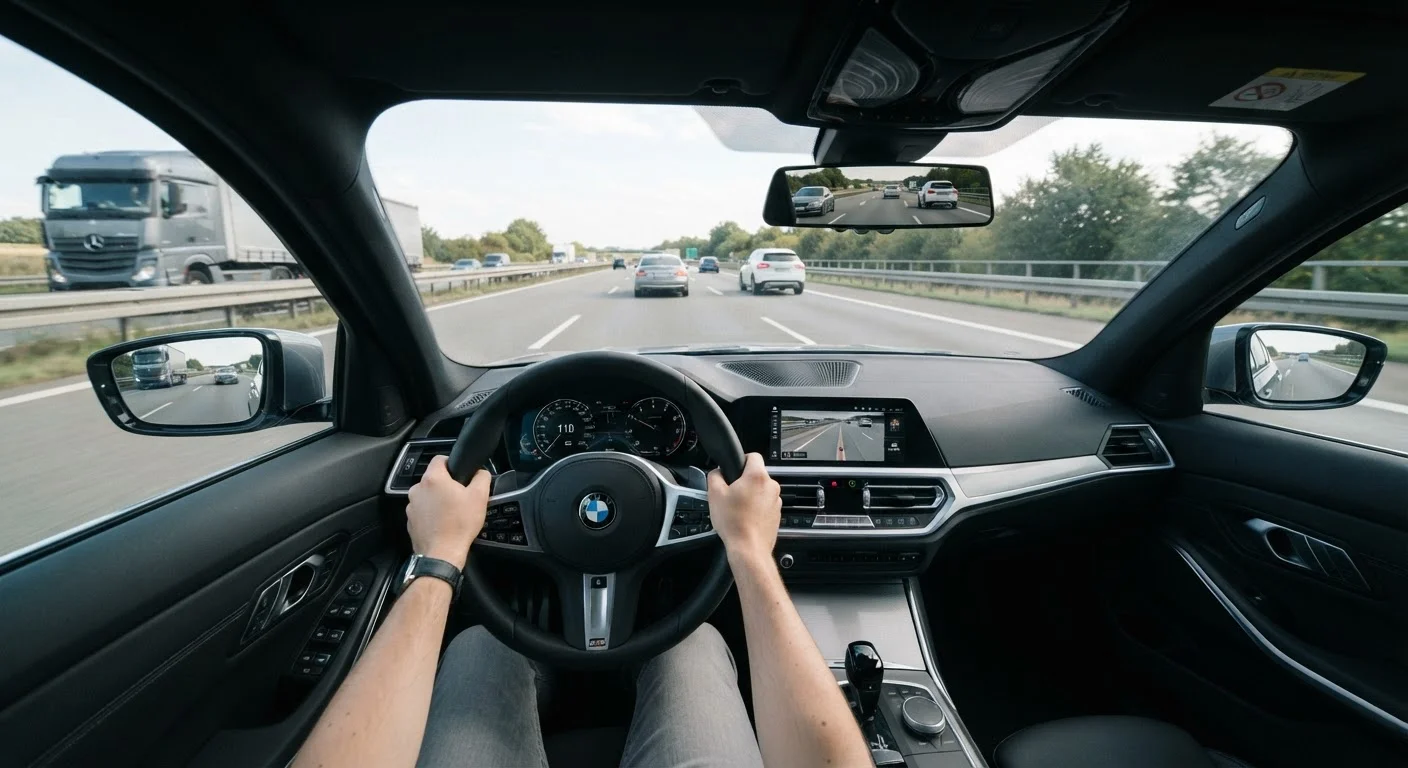
Photo credit: AdvisorHQ.net | Informative Website
In this article
Even properly adjusted mirrors leave coverage gaps. Understand where blind spots form in different vehicles and how to check them reliably.
Key Takeaways
- All vehicles have blind spots that no mirror configuration can fully eliminate.
- Blind spot size and location vary significantly by vehicle type, body style, and seating position.
- A brief shoulder check - not mirror glancing - is the only reliable way to clear a blind spot before changing lanes.
- Proper mirror adjustment reduces blind spot size but cannot replace an active head check.
- Blind spot monitoring systems assist but should not replace driver awareness habits.
Why Mirrors Always Leave a Gap
Mirrors work by reflecting light from a fixed angle. Because your eyes are positioned in one place and the mirrors are mounted at specific points on the vehicle, there is always a cone-shaped zone on each side of the car that no mirror can redirect into your line of sight. Physics, not product quality, creates this limitation.
The size of that zone depends on several factors: the vehicle's overall width, the placement and size of the side mirrors, the height of the roofline, and the thickness of the pillars surrounding the windows. A compact sedan typically has a smaller blind spot than a full-size pickup or an SUV with a high beltline. Drivers who switch vehicle types - even temporarily - are at elevated risk because they carry assumptions from their previous vehicle that no longer apply.
Mirror adjustment can shrink the blind zone but not close it. Night driving conditions compound the problem further, since vehicles in blind spots become even harder to detect in reduced light. Understanding this limitation is the foundation for everything that follows.
Side mirrors (driver and passenger)
Primary tools for monitoring adjacent lanes and approaching traffic from the rear.
Rearview mirror
Provides a central view of traffic directly behind the vehicle.
Blind spot monitoring system (if equipped)
Provides supplemental electronic alerts when a vehicle enters a designated blind zone.
What Electronic Aids Can and Cannot Do
Blind spot monitoring (BSM) systems, now common on many vehicles, use radar sensors mounted at the rear corners of the vehicle to detect objects in adjacent zones and alert the driver - typically through a light in the mirror housing or an audible chime. When functioning correctly, they provide a useful supplemental signal, particularly on long highway drives when attention can drift.
However, BSM systems have documented limitations. They may not reliably detect narrow objects like motorcycles or cyclists at certain angles. They can be affected by dirt, ice, or damage to the sensor housing. They are calibrated to detect vehicles at a specific relative speed, which means a fast-approaching car can sometimes enter the alert zone and pass through it before a warning is processed. For these reasons, BSM is best understood as an additional layer - not a substitute for the shoulder check sequence described in the steps above.
Technology Does Not Replace Shoulder Checks
Blind spot monitoring systems use radar or cameras to detect vehicles, but they have known limitations - motorcycles, bicycles, and fast-approaching vehicles may not always trigger alerts. Always supplement any electronic aid with a physical shoulder check before making a lane change. Relying solely on technology creates a false sense of security that has contributed to real collisions.
Wet road conditions can also affect sensor performance and overall vehicle control during lane changes, making the manual habits described in this guide even more important in adverse weather.
Applying Blind Spot Awareness in Real Traffic
Blind spot habits matter most in the moments just before a lateral move - a lane change, a merge, or a turn from a wide road. But awareness also applies passively: knowing where other drivers' blind spots are helps you avoid spending time in those zones unnecessarily.
When following a large truck, for example, if you cannot see the truck's side mirrors, the driver likely cannot see you. The same logic applies to any vehicle - positioning yourself where you can see the driver's mirror reflection is a reasonable indicator that you are visible to them. This is particularly relevant when managing following distance on multi-lane roads.
Use the Flat-Mirror Adjustment Method
Position each side mirror so the rear corner of your vehicle is just barely out of frame - not centered in the mirror as many drivers do. This reduces the overlap between mirror coverage and your forward field of view, expanding the area each mirror monitors. Combined with a shoulder check, this adjustment minimizes uncovered zones considerably.
Revisit your mirror setup periodically, especially after the seat position has been changed, after another driver has used the vehicle, or after any mirror has been folded and reopened. A single repositioned mirror can reintroduce a coverage gap you had previously eliminated.
Large Vehicles Have Much Larger Blind Spots
SUVs, trucks, and vans have significantly larger blind spots than sedans, particularly at the rear and along the passenger side. If you've recently switched from a smaller car to a larger vehicle, recalibrate your checking habits accordingly - the gap in coverage is greater than intuition suggests.

Author
Cars & Driving Editorial Team
Cars & Driving Editorial Team is the collective byline for our editorial team and contributor network. Articles published under this byline or an editorial pen name are researched, written, and reviewed according to our editorial standards for clarity, consistency, and independence before publication.
View all articles →