
What Your Following Distance Is Actually Telling Other Drivers
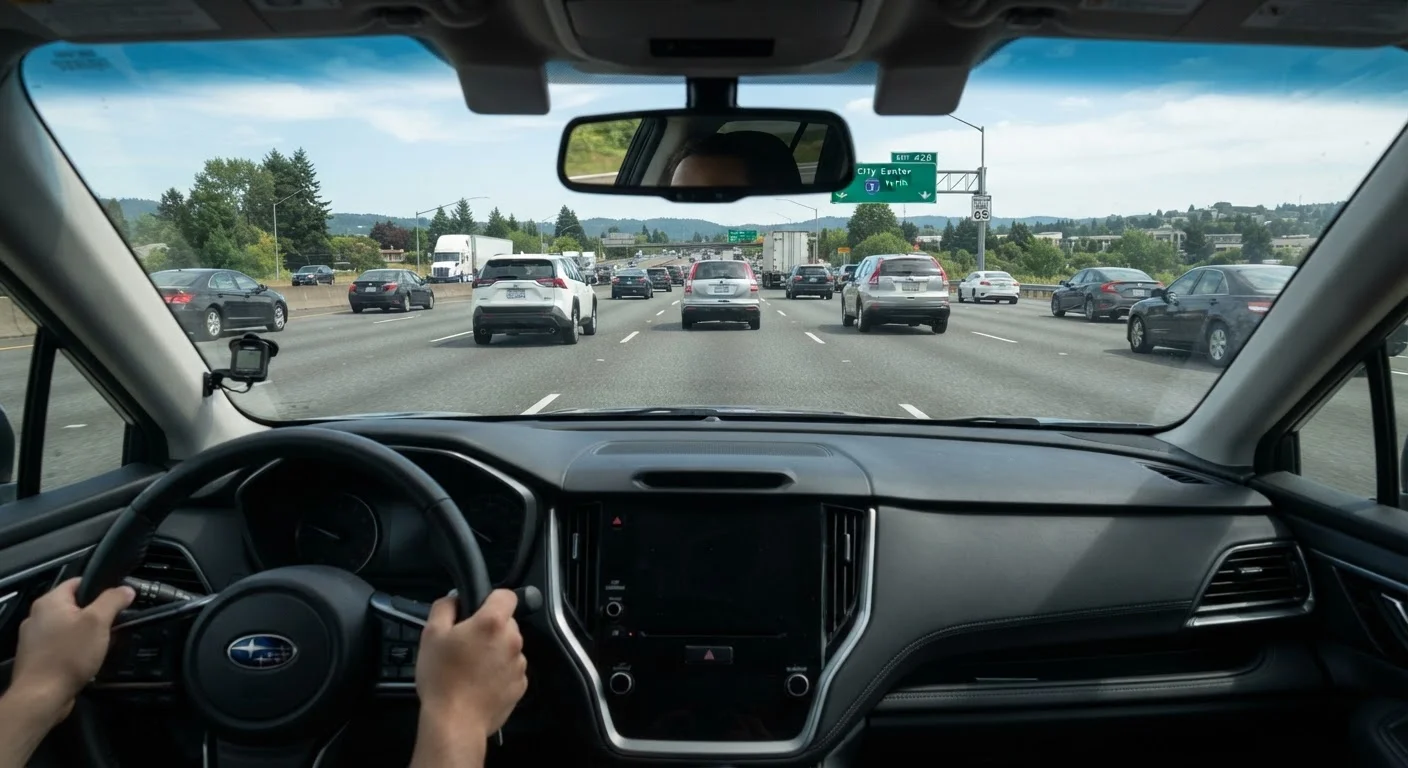
Photo credit: AdvisorHQ.net | Informative Website
In this article
Following distance isn't just a safety buffer — it communicates intent. Learn what proper spacing looks like and why it matters in real traffic.
Key Takeaways
- Three seconds of following distance is the widely recommended minimum under normal road conditions.
- Tailgating communicates aggression and pressure, even when that isn't your intent.
- A large following distance signals attentiveness and gives you more options in an emergency.
- Weather, speed, and vehicle type all affect how much gap is actually safe.
- Other drivers adjust their behavior based on how closely you follow them.
The Signal You're Sending Without Knowing It
Every choice you make behind the wheel communicates something to the drivers around you. Speed, lane position, turn signal use - and yes, how closely you follow the car ahead. Following distance is one of the most readable signals in traffic, and most drivers never think about what they're broadcasting.
When you maintain a comfortable gap, surrounding drivers read that as calm, attentive, and predictable. When you crowd the vehicle ahead, you signal impatience, pressure, or distraction - even if you feel perfectly composed. That perception changes how other drivers behave around you. A driver being tailgated may brake suddenly out of frustration, slow down to enforce space, or change lanes unpredictably. The gap you keep isn't just about your stopping ability; it shapes the entire traffic dynamic around your vehicle.
Understanding where defensive driving ends and aggression begins starts with recognizing that following too closely - regardless of intent - reads as aggressive to others on the road.
The Three-Second Rule and Why It Works
Traffic safety educators and traffic engineers converge on the three-second rule as the practical baseline for following distance. The logic is straightforward: perception takes time, decision-making takes time, and braking takes time. Those three stages stack. A three-second gap gives a typical driver enough runway to complete all three before reaching the point where the vehicle ahead stopped.
What the rule accounts for is human reaction time - approximately 1.5 seconds on average under normal alertness - combined with the mechanical reality of braking systems that don't stop a vehicle instantly. The three seconds are not generous padding; they represent a realistic minimum.
~1.5 sec
Average driver perception-reaction time
The National Highway Traffic Safety Administration (NHTSA) cites approximately 1.5 seconds as the average reaction time used in stopping-distance calculations for alert drivers.
29%
Of all crashes are rear-end collisions
According to NHTSA crash data, rear-end collisions consistently represent roughly 29% of all reported traffic crashes in the United States, making them the most common crash type.
Speed changes the equation in feet, not in seconds. That's precisely why the rule is time-based. At 30 mph, three seconds is about 132 feet. At 70 mph, it's over 300 feet. Fixing the measurement in time rather than distance makes the rule usable across all speed environments without a calculator.
Conditions that extend your effective stopping distance - wet pavement, worn tires, a heavy load, reduced visibility at night - require extending that buffer further. See our guide to night driving perception for how darkness specifically affects your ability to judge speed and distance ahead.
What Different Following Distances Actually Communicate
Distance speaks. Here's what different gaps signal to the drivers around you:
- Under one second: Tailgating. Universally read as aggression or inattention. Creates genuine danger and places legal liability on the following driver in most crash scenarios.
- One to two seconds: Common on busy roads but still insufficient. Feels normal in heavy traffic but leaves almost no margin for unexpected stops.
- Three to four seconds: The recommended standard. Communicates attentiveness. Gives you options - time to brake, steer around an obstacle, or warn drivers behind you.
- Five or more seconds: Appropriate in adverse conditions or when following large vehicles like semi-trucks whose stopping distances are significantly longer than passenger cars.
A driver on a freeway maintains a steady three-second gap behind a pickup truck. When the truck suddenly brakes for debris in the lane, the driver has enough time to smoothly decelerate without swerving.
In stop-and-go highway traffic, a driver keeps closing the gap to prevent other vehicles from merging, leaving less than one car length ahead at 45 mph.
A driver following a city bus on an urban street leaves five seconds of distance, even though other cars are closer behind the bus.
A larger gap also has a downstream effect on traffic flow. Research in traffic engineering consistently shows that drivers who maintain adequate following distance contribute to smoother overall flow - the accordion-effect slowdowns common on congested highways are frequently caused by drivers following too closely and over-braking in response to small speed changes ahead.
Experienced drivers often let following distance slip as familiarity with the road builds overconfidence. Recognizing this pattern is the first step to correcting it.
Practical Ways to Maintain Your Buffer
Knowing the standard is one thing; maintaining it in real traffic requires deliberate habit. A few approaches help:
- Use the three-second count consistently. Pick a fixed roadside marker each time you want to check your gap. Make it a routine, not a one-time exercise.
- Resist the urge to close gaps when someone merges in front of you. Simply ease back and re-establish your buffer. Fighting for position creates the exact conditions that lead to rear-end collisions.
- Increase distance proactively before conditions change. If rain is starting, a construction zone is ahead, or traffic is becoming erratic, add distance before you feel pressure to brake hard.
- Account for your vehicle's stopping characteristics. Larger or heavier vehicles - trucks, SUVs with roof loads, vehicles towing trailers - require more distance than their drivers often assume.
Speed limits don't always reflect safe travel speeds for the conditions present, and the same logic applies directly to following distance. The legal minimum and the genuinely safe distance are not always identical.
Reset Your Gap After a Merge
When another vehicle merges into the space you've left, resist the instinct to immediately close back in behind them. Simply ease off the accelerator briefly to re-establish a three-second gap. This prevents the 'accordion effect' where one sudden braking action cascades backward through traffic.
Frequently Asked Questions

Author
Cars & Driving Editorial Team
Cars & Driving Editorial Team is the collective byline for our editorial team and contributor network. Articles published under this byline or an editorial pen name are researched, written, and reviewed according to our editorial standards for clarity, consistency, and independence before publication.
View all articles →