
Buying New vs. Used: How the Financial Trade-offs Really Stack Up
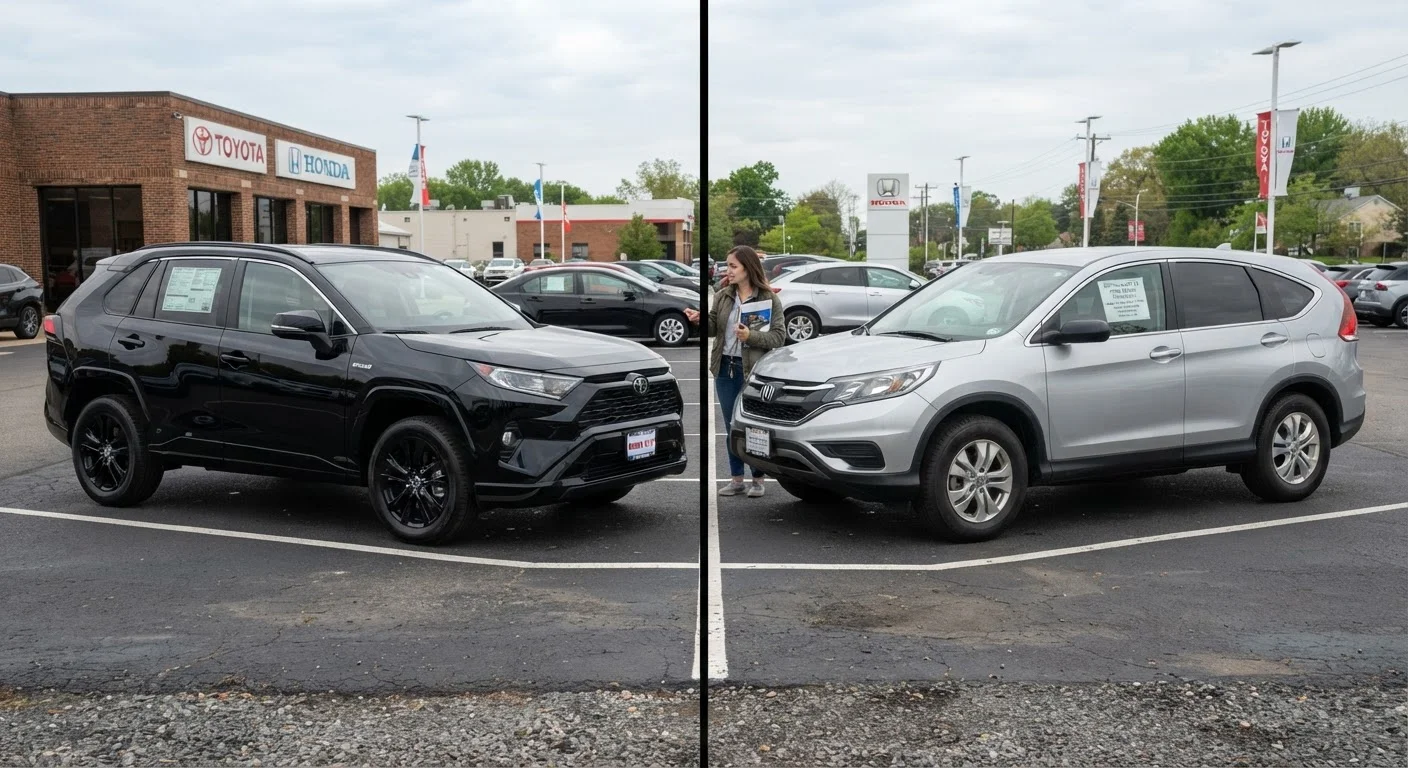
Photo credit: AdvisorHQ.net | Informative Website
In this article
New cars offer warranties and latest features; used cars cost less upfront. See how each option compares across price, depreciation, and risk.
Key Takeaways
- New cars depreciate roughly 15-25% in their first year, making used vehicles a financially efficient entry point for many buyers.
- Manufacturer warranties on new vehicles can offset repair costs, but certified pre-owned programs extend similar protections to qualifying used cars.
- Interest rates on used car loans are typically higher than new car loan rates, partially eroding the used car's sticker-price advantage.
- Total cost of ownership - insurance, maintenance, financing, and depreciation - matters far more than purchase price alone.
- Neither option is universally superior; the right choice depends on your budget, driving habits, and risk tolerance.
The Depreciation Reality Every Buyer Should Understand
Depreciation is the single largest financial force at work in any vehicle purchase, yet it rarely appears as a line item in a sales negotiation. A new vehicle typically loses between 15% and 25% of its value within the first 12 months of ownership, and roughly 50% within the first five years, though the exact figures vary by make, model, and market conditions.
When you buy used, you're allowing the original owner to absorb that steepest part of the depreciation curve on your behalf. A three-year-old vehicle that cost $40,000 new might be available for $25,000-$28,000 - representing thousands of dollars in transferred loss that you never have to recover. That structural advantage is the core of the financial case for buying used.
The counterargument is longevity. If you purchase a new car and drive it for 12 or more years, the depreciation cost-per-year shrinks considerably. Buyers who trade in or sell every three to five years feel the depreciation hit most acutely. Understanding the full cost of car ownership - not just the sticker - is the essential first step before deciding which path makes sense for you.
| Criterion | New Car | Used Car |
|---|---|---|
| Purchase price | Higher - full market value | Lower - post-depreciation value |
| First-year depreciation risk | Buyer absorbs 15-25% drop | Previous owner absorbed steepest drop |
| Loan interest rates | Generally lower rates | Generally higher rates |
| Warranty coverage | Full manufacturer warranty included | Varies; CPO extends some coverage |
| Insurance premiums | Typically higher | Typically lower |
| Technology & safety features | Latest available systems | Depends on model year |
| Repair uncertainty | Low during warranty period | Higher; inspection recommended |
| Vehicle history transparency | Complete - zero prior use | Requires title/history research |
Financing, Insurance, and the Hidden Cost Offsets
The purchase price is only the opening figure. How you finance a vehicle, and what it costs to insure, significantly affects which option delivers better long-term value.
Loan rates: Lenders generally offer lower interest rates on new vehicles than on used ones, reflecting the lower credit risk tied to a vehicle with full value as collateral. The rate differential can range from one to several percentage points. On a multi-year loan, that gap compounds - partially offsetting the used car's lower principal. For a detailed look at how loan structures compare, see how loans, leases, and cash purchases compare.
Insurance: New cars typically cost more to insure. Comprehensive and collision premiums are tied to the vehicle's replacement value, so a newer, more expensive car carries higher premiums. A used vehicle with a lower market value may qualify for reduced comprehensive and collision coverage, which can produce meaningful annual savings.
Warranties and maintenance: New vehicles come with manufacturer warranties - typically three years or 36,000 miles bumper-to-bumper and five years or 60,000 miles powertrain, though terms vary by manufacturer. This coverage transfers repair risk back to the manufacturer during the critical early years. Used vehicles outside warranty coverage shift that risk to the buyer, making a pre-purchase inspection by a qualified mechanic an important step before any used-car transaction.
~20%
Average new car value lost in year one
Industry estimates from sources including Edmunds and automotive valuation services consistently place first-year depreciation in the 15-25% range for most mainstream vehicles.
1-3%
Typical rate gap between new and used auto loans
Federal Reserve consumer credit data and lender surveys have historically shown used-vehicle loan rates running higher than new-vehicle rates, though the spread varies by lender and credit profile.
~50%
Value lost over first five years of new car ownership
Automotive data firms estimate that the average new vehicle retains roughly half its original value after five years, with significant variation by brand and model.
Making the Decision: Matching the Numbers to Your Situation
Neither new nor used is universally the smarter financial choice. The decision hinges on how you weight several personal variables: your available down payment, how long you plan to keep the vehicle, your tolerance for repair uncertainty, and how much you value current technology and safety features.
Buyers who drive high annual mileage - 20,000 miles or more per year - often find that a new vehicle's warranty covers the riskiest mechanical period more completely. Buyers who drive fewer miles, or who have the mechanical knowledge to evaluate a used vehicle's condition, frequently come out ahead financially by purchasing a two-to-four-year-old model.
Certified pre-owned (CPO) programs represent a middle path: manufacturer-inspected used vehicles with extended warranty coverage, typically available at prices between standard used and new. They don't eliminate the used-car depreciation advantage entirely, but they do reduce repair uncertainty substantially.
If you're weighing other ownership structures beyond buying outright, leasing has its own distinct trade-offs worth considering alongside this comparison. And for a complete view of costs from purchase through eventual sale, the long-term car ownership cost overview puts each factor in broader context.
This article is for general informational purposes only and does not constitute financial or purchasing advice. Costs, rates, and terms vary by market, lender, and individual circumstances. Consult qualified professionals before making significant financial decisions.

Author
Cars & Driving Editorial Team
Cars & Driving Editorial Team is the collective byline for our editorial team and contributor network. Articles published under this byline or an editorial pen name are researched, written, and reviewed according to our editorial standards for clarity, consistency, and independence before publication.
View all articles →