
Persistent Myths About Auto Insurance That Cost Drivers Money
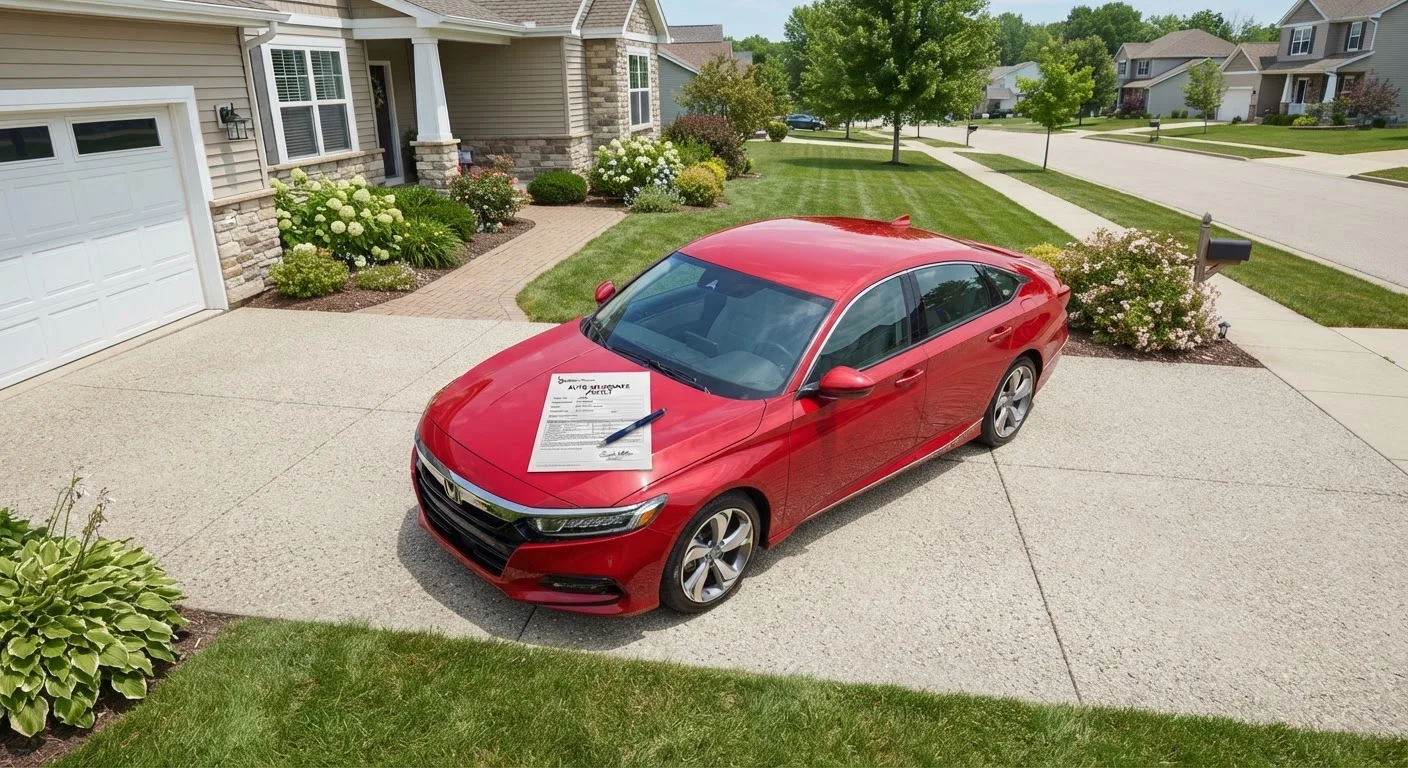
Photo credit: AdvisorHQ.net | Informative Website
In this article
Red cars aren't rated higher. Your credit score does matter. We separate widespread auto insurance myths from how policies actually work.
Key Takeaways
- Vehicle color, including red, plays no role in determining your auto insurance premium.
- Your credit-based insurance score is a significant rating factor in most U.S. states.
- Minimum state-required liability coverage often falls far short of real-world accident costs.
- Filing a small claim can raise your premium more than simply paying out of pocket.
- Your personal auto policy typically does not cover vehicles used for business or rideshare.
Why Auto Insurance Myths Are More Than Harmless Folklore
Misconceptions about auto insurance don't just lead to awkward dinner-table debates - they steer real financial decisions. A driver who believes red cars cost more to insure might pass up a vehicle they'd love for no reason. A driver who assumes state minimum coverage is adequate may face devastating out-of-pocket costs after a serious accident. Understanding how policies actually work is one of the most practical things a car owner can do.
The myths below are among the most widespread in the U.S. Each one has a measurable cost, either in money paid unnecessarily, protection forgone, or decisions made on faulty assumptions. For a broader look at the variables that actually shape what you pay, see our guide on what factors determine your auto insurance premium.
Myth
Red cars cost more to insure because insurers charge a premium for that color.
Fact
Vehicle color is not a rating factor for any major U.S. auto insurer. Premiums are based on the make, model, body style, age, and engine size - not paint.
This myth is remarkably durable, but it has no basis in how insurance is actually underwritten. Insurers never ask for your vehicle's color on an application. What they do ask about is the vehicle identification number (VIN), which encodes information about the car's make, model, trim level, and safety features - all of which affect repair costs and theft rates. A red Honda Civic and a silver Honda Civic of the same year and trim will carry identical base rates from the same insurer.
Myth
Your credit score has nothing to do with your car insurance rate.
Fact
In most U.S. states, insurers use a credit-based insurance score as a significant rating factor. Drivers with lower scores typically pay more.
Insurers use a specialized calculation called a credit-based insurance score - distinct from the credit score lenders use - because research across large claim populations has shown a statistical correlation between certain credit patterns and the likelihood of filing a claim. As of this writing, only a handful of states (including California, Hawaii, and Massachusetts) prohibit or restrict its use. Everywhere else, maintaining healthy credit habits can meaningfully affect your premium. This is one reason why broader credit literacy pays off beyond borrowing - see our guide on credit myths that cost people real money for related context.
Myth
State minimum liability coverage is enough to protect you financially after an accident.
Fact
State minimums set a legal floor, not a financially adequate one. A serious accident can produce costs that far exceed minimum limits, leaving you personally liable for the remainder.
Every state requires drivers to carry at least some liability coverage, but those minimums were often established years or decades ago and have not kept pace with medical and vehicle costs. A single hospitalization from a moderate collision can run into six figures. If your liability limits are exhausted, the injured party can pursue your personal assets - savings, property, future wages - to recover the difference. Many financial advisers recommend carrying significantly higher limits than the state requires. Understanding what liability coverage actually does is essential before deciding on a limit.
Myth
Filing a claim is always the right move - that's what you pay premiums for.
Fact
Filing a claim, especially a small one, can trigger a rate increase at renewal that costs more over time than simply paying the expense yourself.
Insurers track claims history, and at-fault claims in particular can raise your premium for three to five years depending on your insurer and state. For minor fender-benders or small property damage where the cost is close to or below your deductible, many drivers find it more economical to handle repairs out of pocket and preserve a claims-free record. Before filing, it's worth estimating the repair cost against your deductible and the realistic rate impact at renewal. There is no universal rule - the right answer depends on the severity of the incident, your current rate, and your insurer's surcharge schedule.
Myth
Your personal auto policy covers you when you drive for a rideshare service or delivery platform.
Fact
Standard personal auto policies typically exclude coverage during commercial or rideshare use. A coverage gap almost always exists without a rideshare endorsement or commercial policy.
When you log into a rideshare or delivery app, you enter a gray zone that most personal policies explicitly exclude. Rideshare companies typically provide some liability coverage while a passenger is in the vehicle, but the period between accepting a ride and picking up a passenger is often poorly covered by both the platform and your personal insurer. Drivers who regularly work for these platforms should ask their insurer about a rideshare endorsement, which extends personal coverage to fill that gap, or investigate commercial auto options. Operating without appropriate coverage during a paid trip could mean a denied claim at the worst possible moment.
What Actually Matters When Insurers Set Your Rate
Once the myths are cleared away, the real picture of insurance pricing comes into focus. Insurers rely on actuarial data - statistical patterns across millions of policyholders - to estimate the likelihood and cost of a future claim. The factors they weight most heavily include your driving record, ZIP code, vehicle make and model, annual mileage, age and driving experience, and, in most states, a credit-based insurance score.
~38%
Drivers who say they carry only minimum required coverage
Industry survey data suggests a substantial share of U.S. drivers rely on state minimum limits, which frequently fall short of actual accident costs.
3-5 years
Typical period an at-fault claim affects your premium
Most insurers apply a surcharge following an at-fault claim for three to five policy renewal cycles, depending on state regulation and insurer practice.
Coverage type and deductible levels also have a direct and controllable effect on your premium. Choosing a higher deductible - the amount you pay out of pocket before insurance pays - lowers your monthly cost but increases your exposure in a claim. That trade-off is worth understanding clearly before you adjust it. Our detailed breakdown of liability, collision, and comprehensive coverage explains exactly what each type protects and where the gaps are.
If credit scoring surprises you as a rating factor, it's worth noting that similar misunderstandings surround credit more broadly - our piece on credit myths that cost people real money is a useful companion read.
This article is for general informational purposes only and does not constitute personalized insurance, financial, or legal advice. Coverage terms, rating factors, and regulations vary by insurer and by state. Always read your actual policy documents and consult a licensed insurance agent or adviser for guidance specific to your situation.

Author
Cars & Driving Editorial Team
Cars & Driving Editorial Team is the collective byline for our editorial team and contributor network. Articles published under this byline or an editorial pen name are researched, written, and reviewed according to our editorial standards for clarity, consistency, and independence before publication.
View all articles →