
What Really Happens When You Miss a Credit Card Payment
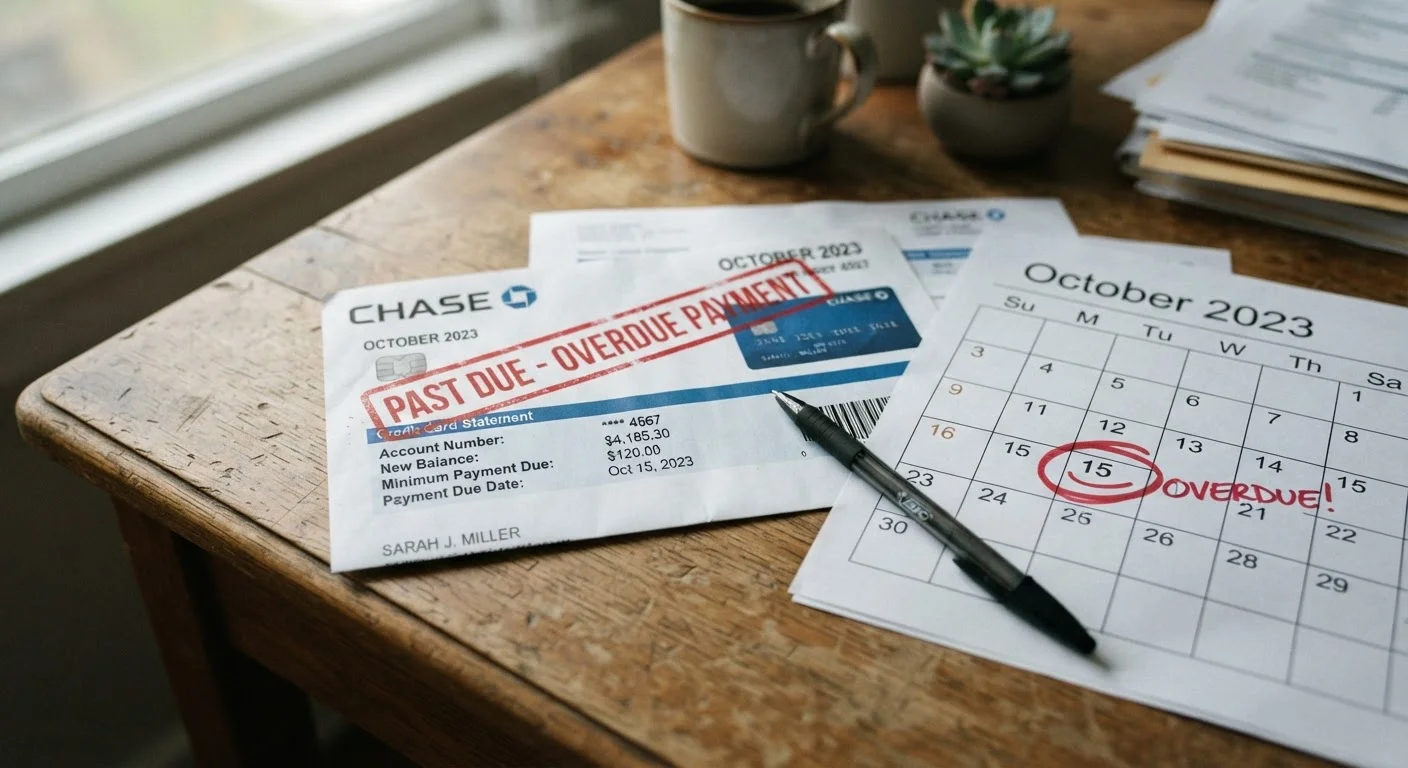
Photo credit: AdvisorHQ.net | Informative Website
In this article
Late fees, penalty APRs, and credit score drops don't all hit at once. Here's the actual timeline and what can still be done.
Key Takeaways
- A late fee typically hits immediately, but your credit score isn't affected until a payment is 30 days past due.
- A penalty APR - often significantly higher than your standard rate - can be triggered after a missed payment.
- One missed payment reported to credit bureaus can noticeably lower your credit score, especially if your history was clean.
- Calling your issuer quickly can sometimes result in a waived fee or avoided credit report entry.
- Payments missed by 90+ days risk charge-off, which has severe and long-lasting credit consequences.
- Getting current as fast as possible limits the total damage - time matters in every stage of this process.
The First 29 Days: Fees, But No Credit Damage Yet
The moment your payment due date passes without at least the minimum payment received, your issuer can charge a late fee. Under current federal rules, late fees are capped at set amounts for most issuers, though the exact figure depends on your card agreement - commonly ranging from $25 to $40. This fee is added directly to your balance, increasing what you owe.
What most people don't realize: during this window, your credit score is not yet affected. Credit bureaus are generally not notified until a payment is a full 30 days past due. That means you have a short but real opportunity to pay and avoid the most lasting consequence. If this is your first late payment, calling your issuer now - and paying immediately - gives you the best chance of having the fee waived through a goodwill request.
Act Before 30 Days Pass
If you've just missed a payment, contact your issuer right away and pay as much as you can - even the minimum. Bringing the account current before the 30-day mark can prevent the delinquency from being reported to credit bureaus entirely. Many issuers will also waive a first-time late fee if you ask promptly and have a clean payment history.
Some issuers may also place a hold on new purchases or reduce your available credit line during this period. Check your account terms and monitor your account closely.
Day 30 and Beyond: Credit Score Impact and Penalty Rates
Once a payment is 30 days late, your issuer is permitted to report the delinquency to the three major credit bureaus - Equifax, Experian, and TransUnion. This is when real credit damage begins. Payment history is the most heavily weighted factor in most credit scoring models, accounting for roughly 35% of a FICO score. To understand exactly how this fits into the bigger picture, see the five factors that shape your credit score.
The score drop from a single reported late payment varies based on your existing credit profile, but can be substantial - particularly for someone who previously had a strong score with no negative marks. At the same time, some issuers activate a penalty APR - a significantly elevated interest rate applied to your existing and future balances. Not all cards carry penalty rates, but if yours does, your cardholder agreement will describe the trigger conditions and the rate applied. For a plain-language breakdown of terms like APR and charge-off, the credit and debt glossary for first-time borrowers is a useful reference.
Not All Cards Have Penalty APRs
Some credit cards - particularly certain credit union cards and cards marketed to consumers building credit - do not carry penalty APRs. Review your cardholder agreement to confirm whether yours does, and what conditions trigger it. The CARD Act requires this information to be disclosed clearly in your terms.
60 to 90+ Days: Escalating Consequences and Charge-Off Risk
Each additional 30-day cycle that passes without payment adds another derogatory mark to your credit file and another late fee to your balance. At 60 days past due, the credit score damage compounds and your issuer may restrict card use or escalate collections contact.
At 90 days, the situation becomes significantly more serious. Issuers may charge off the account - internally writing it off as a loss and often selling the debt to a third-party collections agency. A charge-off doesn't erase the debt; you still owe it, now potentially to a different collector. Charge-offs remain on credit reports for up to seven years and are among the most damaging entries a report can carry.
If your balance was already growing due to interest before the missed payment, compounding charges can make recovery significantly harder. This dynamic - where fees and interest outpace payments - is explored in why borrowers end up deeper in debt despite making payments.
Getting current as quickly as possible - even partially - and communicating with your issuer or collector can sometimes halt the escalation. If you're in this situation, a nonprofit credit counselor (look for NFCC-member agencies) can help you understand your options. This article is general financial information and does not constitute personalized financial or legal advice - consider consulting a licensed financial professional for guidance specific to your circumstances.
Frequently Asked Questions

Author
Finance Editorial Team
Finance Editorial Team is the collective byline for our editorial team and contributor network. Articles published under this byline or an editorial pen name are researched, written, and reviewed according to our editorial standards for clarity, consistency, and independence before publication.
View all articles →