
Key Skincare Ingredients and What They're Actually For
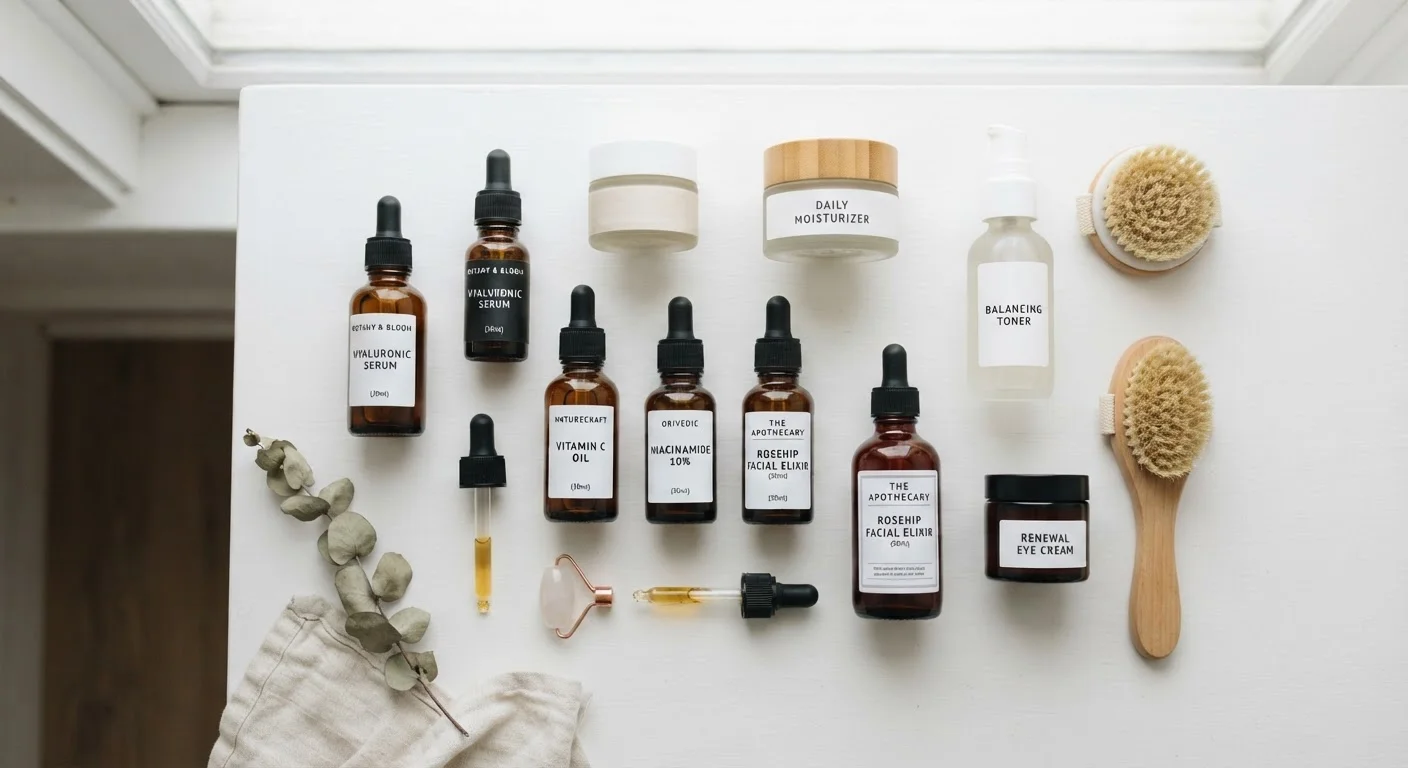
Photo credit: AdvisorHQ.net | Informative Website
In this article
A plain-English reference guide to common active and functional skincare ingredients — what they do, how they work, and who they suit.
Why Ingredients Matter More Than Marketing
Walk down any skincare aisle and you'll find packaging packed with claims - brightening, age-defying, barrier-restoring. But the real story is always on the ingredient list. Knowing which actives do what work cuts through noise and helps you choose products that actually suit your skin's needs.
This reference guide covers the most commonly used skincare ingredients by category, explaining the science behind each one in plain language. For guidance on decoding ingredient list formatting and INCI names, including concentration order and red flags, see our companion guide. If you want to understand how these ingredients fit into a daily routine, building a simple skincare routine from scratch is a helpful next step.
Active ingredient
An ingredient included in a formula specifically to produce a measurable change in the skin - such as exfoliating, hydrating, or stimulating collagen. Actives are distinct from base or functional ingredients that support texture and stability.
Humectant
A substance that draws water molecules toward itself from the surrounding environment or deeper skin layers. Common humectants include hyaluronic acid and glycerin.
Occlusive
An ingredient that forms a physical barrier on the skin's surface to reduce transepidermal water loss (TEWL). Occlusives work best when applied over a humectant or slightly damp skin.
Cell turnover
The natural process by which new skin cells form in the deeper layers and migrate to the surface, eventually shedding. Many actives, including retinoids and AHAs, are used to support or accelerate this process.
Transepidermal water loss (TEWL)
The passive evaporation of water through the skin's outer layers into the surrounding air. A compromised skin barrier increases TEWL, leading to dryness and sensitivity.
Niacinamide
A form of vitamin B3 used in skincare for its ability to support barrier function, reduce redness, and improve uneven skin tone. It is generally well-tolerated across skin types.
Retinoid
A class of compounds derived from vitamin A that influence skin cell behavior. Retinoids range from mild over-the-counter retinol to potent prescription-only formulations.
BHA (Beta-hydroxy acid)
An oil-soluble chemical exfoliant, most commonly salicylic acid, that can penetrate into pores. BHAs are often recommended for oily or acne-prone skin types.
Exfoliating Acids: AHAs and BHAs
Chemical exfoliants work by loosening the bonds that hold dead skin cells on the surface - no scrubbing required.
- Alpha-hydroxy acids (AHAs) - including glycolic acid and lactic acid - are water-soluble and work primarily on the skin's surface. They're commonly used to improve texture, fade uneven tone, and support cell turnover. Lactic acid is generally considered gentler and can also attract moisture, making it suitable for drier skin types.
- Beta-hydroxy acids (BHAs) - most notably salicylic acid - are oil-soluble, meaning they can penetrate into pores. This makes BHAs well-suited for oily or acne-prone skin. Salicylic acid also has mild anti-inflammatory properties.
Both AHAs and BHAs increase sun sensitivity, so applying SPF daily is particularly important when using them. Tailoring your routine to your skin type can help determine which exfoliant category makes the most sense for you.
| AHA examples | Glycolic acid, lactic acid, mandelic acid |
| BHA examples | Salicylic acid (most common) |
| Typical AHA/BHA use frequency | 2-3 times per week for most beginners |
| Sun protection when using exfoliants | Daily broad-spectrum SPF recommended |
| Best skin types for BHAs | Oily, acne-prone, congested |
| Best skin types for AHAs | Normal to dry, textured, uneven tone |
Hydration and Barrier Ingredients
Keeping skin properly hydrated requires both attracting water and sealing it in. Several ingredient categories serve these complementary functions.
- Humectants draw moisture into the skin. Hyaluronic acid is the most widely recognized - it can hold many times its weight in water. Glycerin is another well-established humectant that appears in a broad range of formulations. Niacinamide (vitamin B3) is a versatile ingredient that supports the skin's moisture barrier, helps even skin tone, and may reduce the appearance of enlarged pores.
- Emollients and occlusives form a layer that slows water loss. Squalane (derived from plants or sharks historically, now most often olive-derived), shea butter, and petrolatum all function in this category. Understanding how the skin barrier works helps explain why these ingredients matter for overall skin health.
Retinoids: The Most Researched Anti-Aging Actives
Retinoids are derivatives of vitamin A and represent one of the most extensively studied ingredient categories in dermatology. They work by binding to receptors in skin cells and influencing how those cells behave - supporting collagen production, accelerating cell turnover, and helping to fade hyperpigmentation over time.
- Retinol is the most common over-the-counter retinoid. It requires conversion in the skin before it becomes active, making it milder than prescription options but slower-acting.
- Retinal (retinaldehyde) is one conversion step closer to the active form and is generally considered more potent than retinol but still available without a prescription.
- Prescription retinoids (such as tretinoin) are stronger, require a healthcare provider's guidance, and are outside the scope of general skincare education.
Retinoids commonly cause dryness, flaking, and temporary irritation when introduced - often called the retinoid adjustment period. Starting at a low concentration and using them every few nights helps most people adjust. Retinoids are not recommended during pregnancy; consult a healthcare professional before use if this applies to you.
This article is for informational purposes only and does not constitute medical or dermatological advice. Consult a licensed healthcare professional for personalized guidance, especially for persistent skin concerns or before using active ingredients during pregnancy or with existing skin conditions.

Author
Health & Beauty Editorial Team
Health & Beauty Editorial Team is the collective byline for our editorial team and contributor network. Articles published under this byline or an editorial pen name are researched, written, and reviewed according to our editorial standards for clarity, consistency, and independence before publication.
View all articles →