
Reading a Skincare Ingredient List Without Getting Lost
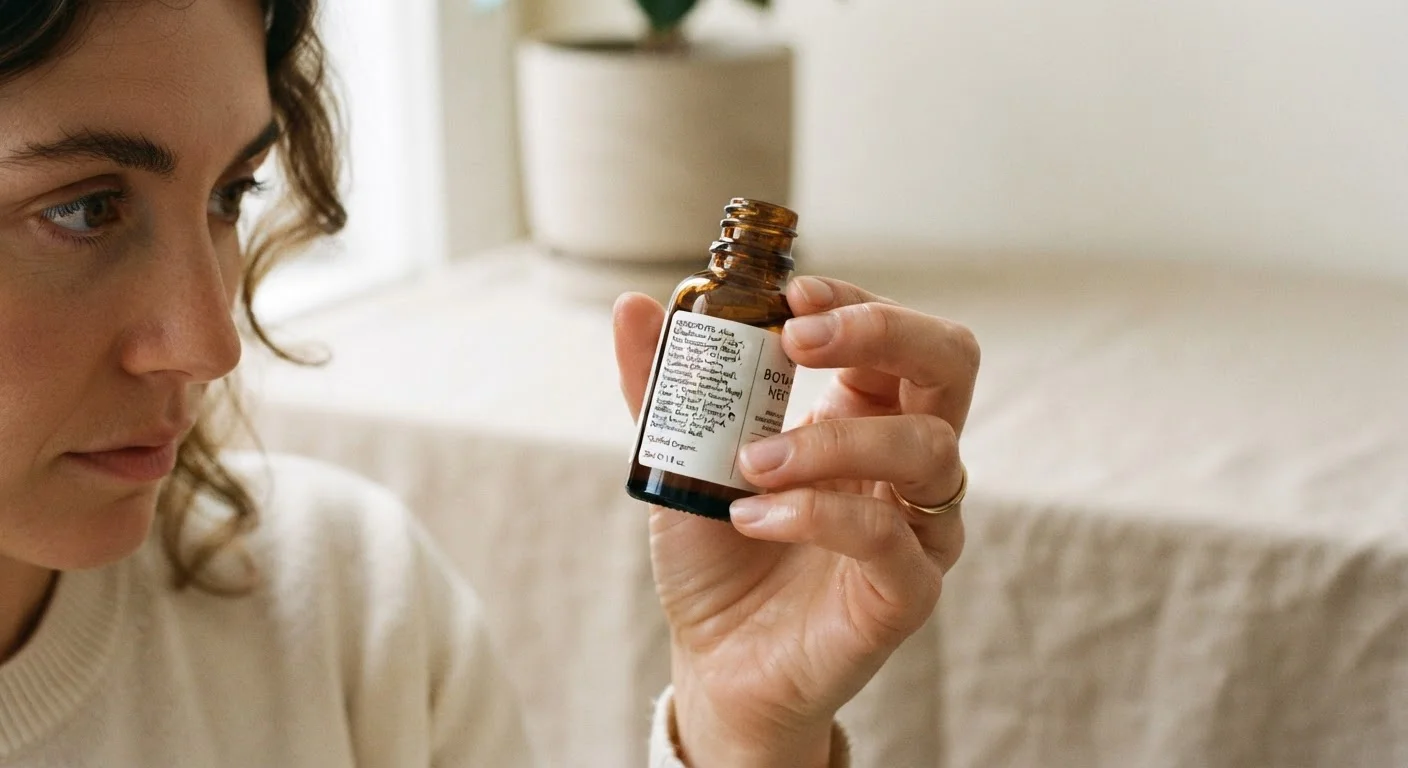
Photo credit: AdvisorHQ.net | Informative Website
In this article
Ingredient lists can look like chemistry homework. Here's a practical guide to decoding INCI names, order of concentration, and red flags.
Key Takeaways
- Ingredients are listed from highest to lowest concentration - position matters for evaluating a product.
- INCI names are standardized scientific terms; learning a handful unlocks most labels.
- Actives near the bottom of a long list may be present in concentrations too low to be effective.
- Fragrance and certain preservatives are among the most common sensitizers to watch for.
- No single ingredient makes or breaks a formula - context and concentration both matter.
Why Ingredient Lists Look So Intimidating
Pick up almost any moisturizer and the ingredient list reads like a graduate chemistry exam - Cyclopentasiloxane, Niacinamide, Phenoxyethanol. The scientific naming convention is deliberate: INCI standardization means a product sold in the US, the EU, and Japan uses the same ingredient names, making global safety assessment possible. That's genuinely useful for regulators and researchers, even if it's alienating for shoppers.
The good news is that you don't need to decode every word. Understanding a handful of rules - concentration order, name patterns, and a few common categories - lets you extract the information that actually matters to your skin and your goals. For a broader look at what label claims like "hypoallergenic" or "dermatologist-tested" do and don't mean, our plain-language label guide is a useful companion.
What you will need
How to Read Any Ingredient List Step by Step
Product label or packaging
The primary source of ingredient information you'll be reading and decoding.
Magnifying glass or phone camera zoom
Many ingredient lists are printed in very small type; zooming in prevents misreading.
INCI ingredient reference (book or reputable database)
Helps translate unfamiliar scientific names into plain-English descriptions.
Locate the full INCI ingredient list
In the US, the FDA requires cosmetic products to display ingredients using INCI names - International Nomenclature of Cosmetic Ingredients. These are standardized scientific or Latin botanical names used worldwide. Look for the heading Ingredients: on the back or bottom of the packaging. If a product only lists marketing terms like "botanical blend" without naming each component, that's incomplete labeling worth noting.
Understand the order of concentration
US cosmetic regulations require ingredients to be listed in descending order of concentration - the ingredient present in the greatest amount comes first. Water (Aqua) leads most water-based products for exactly this reason. This order matters: an active ingredient listed near the end of a 30-ingredient list is present at a very low concentration, possibly below the threshold associated with its studied effects.
The one exception: ingredients present at 1% or less may be listed in any order after the higher-concentration ingredients. Manufacturers sometimes take advantage of this, so a long tail of ingredients at the bottom doesn't necessarily indicate ranked concentrations.
Decode common INCI name patterns
A few patterns make INCI names easier to parse:
- Water: Listed as Aqua or Water (Aqua).
- Plant-derived ingredients: Often appear as Latin botanical names, e.g., Aloe Barbadensis Leaf Juice for aloe vera.
- Alcohols: Cetyl Alcohol and Cetearyl Alcohol are fatty alcohols that act as emollients - very different from Alcohol Denat., which is drying at high concentrations.
- Acids: Glycolic Acid, Salicylic Acid, Lactic Acid - the INCI name often matches the common name here.
- Esters and silicones: Ingredients ending in -ate (e.g., Ethylhexyl Palmitate) are often esters; those ending in -cone or -siloxane are silicones.
Bookmarking a reputable INCI reference database removes most of the guesswork. Our plain-English ingredient reference covers the most common actives and what they do.
Identify your personal watch-list ingredients
Everyone's skin is different. Build a short personal list of ingredients you know you react to, or want to avoid. Common sensitizers reported in dermatology literature include:
- Fragrance (Parfum or Fragrance) - a catch-all term that can include dozens of undisclosed compounds. For a deeper look, see our article on fragrance in skincare.
- Essential oils such as Citrus Limon Peel Oil or Lavandula Angustifolia Oil - natural but potentially irritating.
- Preservatives like certain parabens or Methylisothiazolinone (MI) - effective at preventing contamination but associated with sensitization in some individuals.
Scanning for your personal watch-list before buying is a faster task than reading the entire list from scratch each time.
Evaluate the formula as a whole, not ingredient by ingredient
A single ingredient rarely determines a product's performance. How ingredients interact - their combined pH, vehicle (the base they're suspended in), and relative concentrations - shapes real-world results. A vitamin C serum, for example, requires a specific low pH to remain stable and effective; that context doesn't appear on the label but matters enormously.
When you've decoded the list, ask: Does the formula have a sound base? Are the actives I care about present at a meaningful position? Are there any known sensitizers I want to avoid? If you're building a routine from scratch, our guide to starting a no-overwhelm skincare routine explains how these considerations fit into everyday product choices.
Focus on the First Five Ingredients
Roughly 80 percent of a formula's weight typically sits in the first five or six ingredients. If the ingredient you care about most - whether that's hyaluronic acid, niacinamide, or a gentle cleanser base - doesn't appear in that zone, its presence may be more marketing than function. This quick scan takes seconds and tells you a great deal.
This Is Education, Not Medical Advice
The guidance below helps you understand label language as an informed consumer. It is not a substitute for advice from a dermatologist or other qualified healthcare professional. If you have a skin condition, known allergies, or persistent reactions, consult a professional before changing your routine.
Ingredient Apps Aren't Always Accurate
Third-party apps that rate ingredients can be a useful starting point, but many use blunt scoring systems that ignore concentration, formula pH, or how ingredients interact. Treat their ratings as a conversation starter, not a verdict. Cross-check with reliable databases such as the National Library of Medicine's PubChem or published dermatology resources when accuracy matters.
Once you've worked through these steps a few times, the process becomes second nature. Most experienced skincare consumers settle into a routine of scanning the first five to eight ingredients, checking their personal watch-list, and moving on - the full deep-dive is only necessary when a product is brand new to them or their skin has reacted unexpectedly.
Understanding ingredient lists also makes it easier to compare formulas and recognize when a product's marketing language doesn't match what's actually inside. If you're curious how products interact once you're applying them, see our article on why product layering order matters for the logic behind sequencing.
This article provides general skincare education and is not intended as medical or dermatological advice. If you have a skin condition, allergies, or concerns about specific ingredients, consult a qualified dermatologist or healthcare professional.

Author
Health & Beauty Editorial Team
Health & Beauty Editorial Team is the collective byline for our editorial team and contributor network. Articles published under this byline or an editorial pen name are researched, written, and reviewed according to our editorial standards for clarity, consistency, and independence before publication.
View all articles →