
The Science Behind Your Skin Barrier
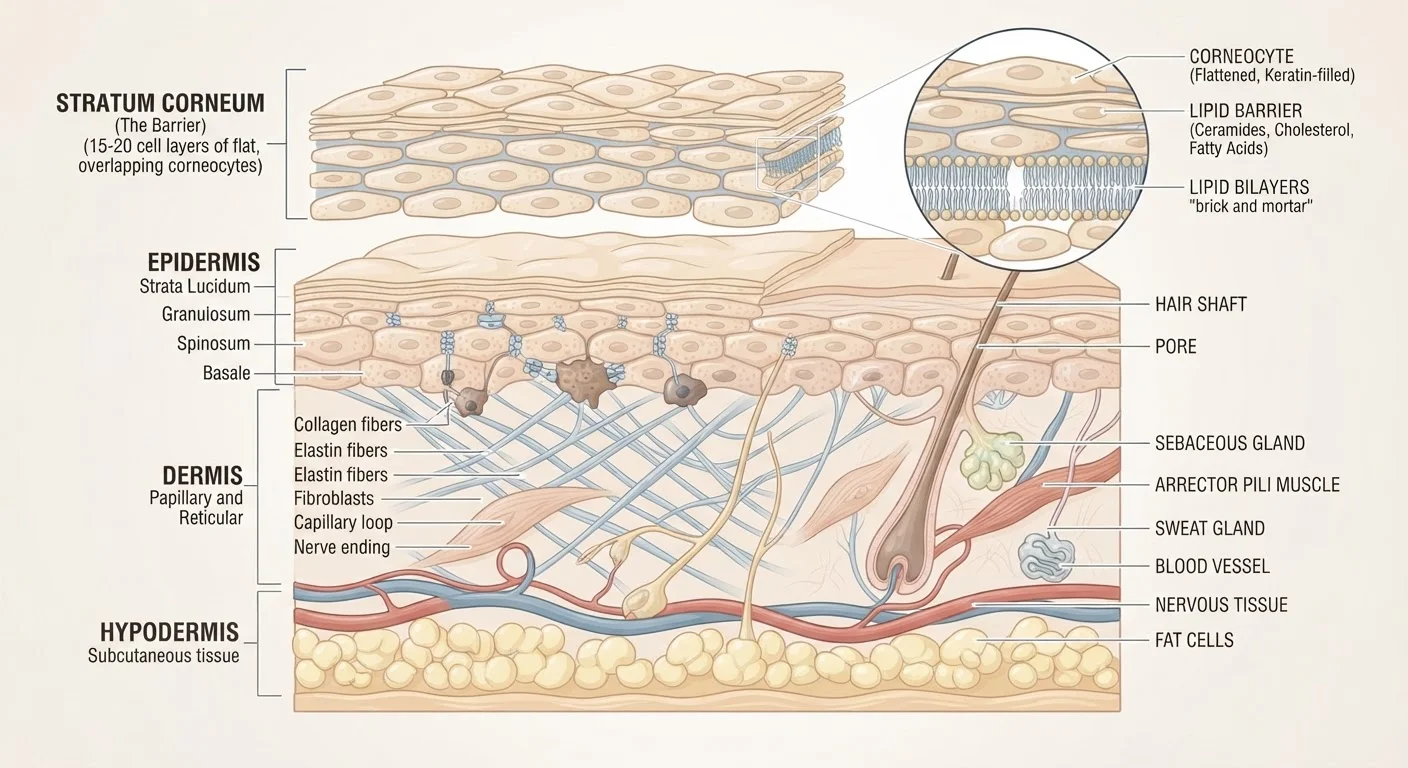
Photo credit: AdvisorHQ.net | Informative Website
In this article
Learn what the skin barrier actually is, how it works, and why keeping it intact is the foundation of any effective skincare routine.
Key Takeaways
- The skin barrier is your body's first line of defense against environmental stressors and moisture loss.
- Ceramides, cholesterol, and fatty acids form the lipid matrix that holds the barrier together.
- Over-cleansing, harsh exfoliants, and low humidity are among the most common causes of barrier damage.
- Redness, tightness, and increased sensitivity are early warning signs of a compromised barrier.
- Gentle, consistent habits - not aggressive routines - are the foundation of a healthy skin barrier.
What the Skin Barrier Actually Is
Your skin is composed of multiple layers, but the one that does the most active protective work is the outermost: the stratum corneum. This layer is made up of flattened, dead skin cells called corneocytes, packed tightly together and surrounded by a lipid matrix - a mixture of ceramides, cholesterol, and free fatty acids. Dermatologists often describe this structure as a "brick and mortar" model: the cells are the bricks, and the lipids are the mortar sealing the gaps.
This architecture is not passive. The lipid matrix is carefully organized to create a selective barrier - one that allows the skin to retain water while preventing pathogens, allergens, and pollutants from entering deeper tissue. When this structure is intact, skin tends to look and feel balanced: neither excessively oily nor tight and dry.
It is worth noting that the stratum corneum is not static. Skin cells continuously shed from the surface and are replaced from below in a process called desquamation. Supporting this cycle is part of what healthy skincare habits accomplish.
Why Barrier Integrity Matters
A functioning skin barrier is the prerequisite for virtually everything else in skincare. Without it, active ingredients penetrate too aggressively, moisture evaporates faster than it can be replenished, and the skin becomes a less effective defense against environmental stressors.
~50%
Of barrier lipids are ceramides
Research published in dermatological literature consistently identifies ceramides as the dominant lipid in the stratum corneum, making them a key target for barrier repair formulations.
2-4 weeks
Typical surface cell turnover cycle
The stratum corneum renews itself roughly every two to four weeks in healthy adults, though this cycle slows with age, affecting barrier resilience.
~30%
Water content of a healthy stratum corneum
Dermatological research indicates that the stratum corneum maintains around 30% water content under normal conditions; levels below this threshold are associated with visible dryness and barrier stress.
Transepidermal water loss (TEWL) is the scientific measure of how much water escapes through the skin. Elevated TEWL is a reliable indicator of barrier disruption. Research consistently links high TEWL with conditions including eczema, psoriasis, and contact dermatitis - but it also shows up in otherwise healthy skin that has been over-exfoliated or stripped by harsh cleansers.
Understanding barrier function also reframes how we think about "sensitive skin." In many cases, what reads as inherent sensitivity is actually an acquired state - a barrier that has been gradually eroded by routine choices. Signs that your routine is working against you can be subtle at first, making early recognition genuinely useful.
Common Causes of Skin Barrier Damage
The barrier is resilient, but it can be compromised by a surprisingly wide range of everyday factors:
- Over-cleansing or using harsh surfactants: Stripping the skin of its natural oils removes the lipids that hold the barrier together.
- Aggressive exfoliation: Both physical scrubs and high-concentration acids can thin the stratum corneum faster than it regenerates.
- Low humidity environments: Dry air - common in winter or air-conditioned spaces - accelerates TEWL.
- Fragrance and alcohol in products: Both are well-documented irritants that can trigger inflammatory responses and degrade barrier lipids over time.
- Sun exposure without protection: UV radiation damages skin cells at multiple levels, including the surface barrier.
When in Doubt, Simplify Your Routine
If your skin is red, tight, or suddenly reactive, resist the urge to add more products. Stripping back to a gentle cleanser, a basic moisturizer with ceramides, and daily SPF gives the barrier space to recover. Reintroduce actives one at a time, with at least two weeks between additions.
Introducing too many active ingredients simultaneously - common when building a new routine - is another frequent culprit. Retinoids, exfoliating acids, and vitamin C are all effective when used thoughtfully, but layering them without adequate recovery time can push the barrier past its threshold. Building a routine matched to your skin type helps reduce this risk.
How to Support a Healthy Skin Barrier
Barrier repair does not require an elaborate regimen - in fact, simplification is usually the first recommendation when the barrier is visibly stressed. Core principles supported by dermatological research include:
- Cleanse gently: Use a mild, pH-balanced cleanser that removes surface debris without stripping lipids. Lukewarm water is preferable to hot.
- Moisturize strategically: Products containing ceramides, niacinamide, and humectants like hyaluronic acid address the lipid matrix and help retain water at the surface. Apply while skin is slightly damp for better absorption.
- Use SPF daily: Broad-spectrum sunscreen is one of the most evidence-backed tools for preserving long-term barrier integrity alongside preventing UV-related skin changes.
- Introduce actives gradually: Space out new ingredients and pay attention to how your skin responds before adding more steps.
For those new to building a consistent approach, starting with a simple, foundational routine is a practical first step. Understanding which ingredients serve which purpose also helps - our plain-English ingredient guide covers the most common actives and what the evidence says about them.
This article is for general informational and educational purposes only and does not constitute medical or dermatological advice. If you are experiencing persistent skin symptoms, consult a qualified healthcare professional or dermatologist.
Frequently Asked Questions

Author
Health & Beauty Editorial Team
Health & Beauty Editorial Team is the collective byline for our editorial team and contributor network. Articles published under this byline or an editorial pen name are researched, written, and reviewed according to our editorial standards for clarity, consistency, and independence before publication.
View all articles →