
Why Layering Skincare Products in the Wrong Order Undermines Results
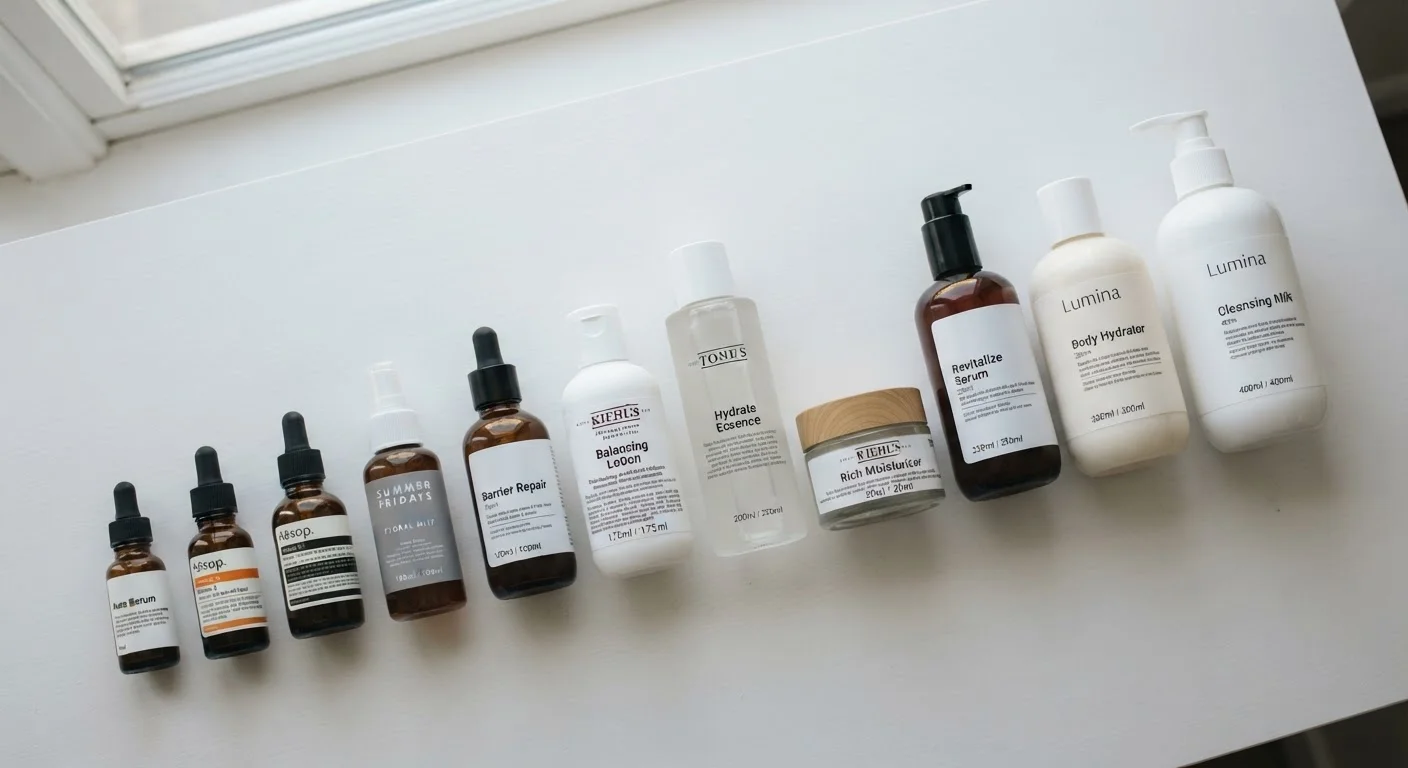
Photo credit: AdvisorHQ.net | Informative Website
In this article
Applying products out of sequence can block absorption or cause irritation. Here's what goes wrong and the logic behind the right order.
Key Takeaways
- Product order determines how well active ingredients penetrate and function on your skin.
- A general rule: apply thinnest to thickest consistency, water-based before oil-based.
- Mixing certain active ingredients out of sequence can cause irritation or neutralize their effects.
- Moisturizer applied before serum can create a barrier that blocks the serum from absorbing.
- SPF should always be the final step in a morning routine to remain effective.
Why Sequence Is a Science, Not a Preference
Skincare layering isn't an arbitrary ritual - it's rooted in basic chemistry and skin biology. The outermost layer of skin, the stratum corneum, acts as a selective barrier. It allows smaller, lighter molecules to pass through more readily than larger ones. When products are applied in the wrong order, heavier formulas can physically block lighter actives from reaching the skin cells where they're meant to work.
The general framework dermatologists and estheticians recommend: start with the lowest-viscosity (thinnest) products and build toward thicker, more occlusive ones. Water-based formulas go before oil-based, since oils repel water - applying an oil serum before a water-based treatment means that treatment largely stays on the surface rather than penetrating. For anyone building a routine from scratch, this sequence is the single most impactful principle to understand.
~20%
Skin surface absorption rate for most topical actives
Research published in dermatology literature suggests that a significant portion of topically applied actives never penetrate past the stratum corneum, making application conditions - including order - a meaningful factor.
pH 3-4
Optimal pH range for L-ascorbic acid Vitamin C
Cosmetic chemistry literature consistently identifies this narrow pH window as necessary for L-ascorbic acid stability and skin penetration, illustrating why order and formulation awareness matter.
The Most Common Layering Mistakes
Even experienced skincare users make ordering errors - often without realizing it, because the effects are subtle and cumulative. Below are the mistakes that most consistently undermine results.
Applying moisturizer before serum.
Why it happens: Moisturizers feel like a base layer, so many people apply them first intuitively. Their thicker texture creates a misconception that serums should go on top.
Using facial oil before a water-based serum or treatment.
Why it happens: Oils feel nourishing and are often marketed as multi-purpose, leading users to apply them early in the routine without considering their occlusive properties.
Applying SPF before moisturizer or other treatments.
Why it happens: Some people treat SPF as just another skincare product rather than a topical that must sit on the surface to form a protective film.
Mixing incompatible actives in the same step without separation.
Why it happens: It's tempting to streamline a routine by mixing products in the palm before applying, or stacking them immediately without any wait time.
Applying exfoliating acids after retinoids in the same session.
Why it happens: Users building ambitious routines sometimes stack multiple actives, assuming more ingredients means faster results.
Skipping toner or essence before serums when damp application is needed.
Why it happens: Toners are often seen as optional or old-fashioned, so they're dropped without understanding that some serums - especially hyaluronic acid formulas - perform better when applied to slightly damp skin.
Ingredient Interactions That Make Order Even More Critical
Some active ingredients have conflicting pH requirements that layering order can help manage. Vitamin C (as L-ascorbic acid) functions optimally at a low pH - around 3.5. Niacinamide, a B3 derivative, works at a higher pH range. Applied directly on top of each other without time between them, some formulations may interact in ways that reduce efficacy or cause temporary flushing in sensitive skin. If your routine includes both, applying Vitamin C first and allowing it to absorb for a few minutes before continuing is a widely recommended practice among skincare professionals.
Retinoids also benefit from strategic placement. Because they're potent, applying a moisturizer before a retinol or retinoid formula - a technique sometimes called "buffering" - can reduce irritation without eliminating the active's effectiveness. This is especially relevant for those new to retinoids, though it may also slightly reduce potency, so the approach should be adjusted based on individual tolerance. If you notice persistent redness or sensitivity, our guide on signs your routine may be damaging your skin can help you distinguish normal adjustment from genuine irritation.
Combining Strong Actives Without Guidance
Retinoids, chemical exfoliants, and high-concentration Vitamin C are each individually effective - but layering multiple high-potency actives in the same routine, especially out of order, substantially raises the risk of irritation, redness, and skin barrier damage. If you're new to an active ingredient, introduce one at a time and allow your skin to adjust before adding another. When in doubt, consult a dermatologist.
For anyone who wants to understand why certain ingredients appear where they do in a formulation, learning to read an ingredient list adds another layer of informed decision-making to your routine.
This article is for general informational purposes only and does not constitute medical or dermatological advice. Consult a qualified dermatologist or healthcare provider for guidance specific to your skin concerns or conditions.

Author
Health & Beauty Editorial Team
Health & Beauty Editorial Team is the collective byline for our editorial team and contributor network. Articles published under this byline or an editorial pen name are researched, written, and reviewed according to our editorial standards for clarity, consistency, and independence before publication.
View all articles →