
The Pros and Cons of Going Fully Minimalist at Home
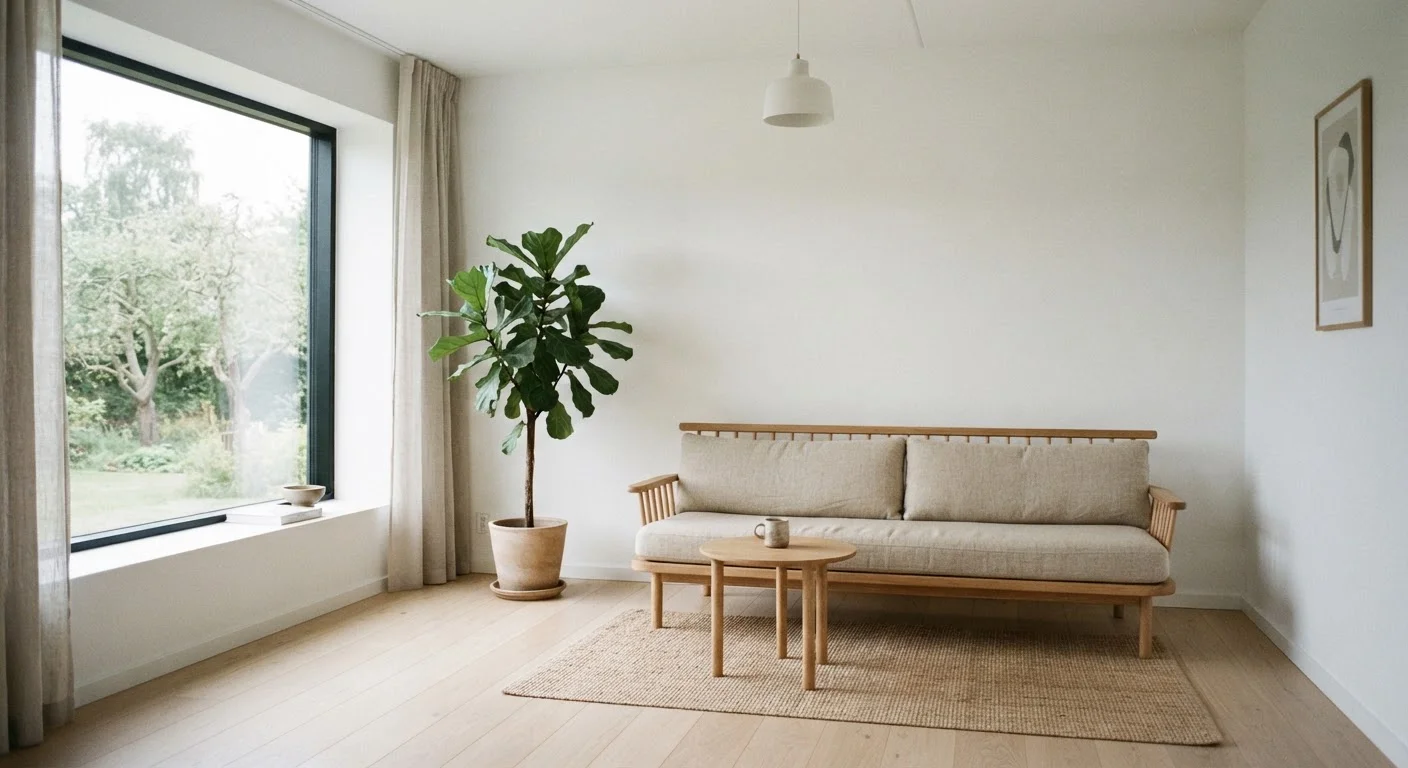
Photo credit: AdvisorHQ.net | Informative Website
In this article
Minimalism promises clarity and calm, but it comes with real trade-offs. A balanced look at what's genuinely gained — and what's harder than it sounds.
Key Takeaways
- Full minimalism reduces decision fatigue and can lower household stress noticeably.
- Decluttering deeply takes significant time and emotional energy, especially at first.
- Living with less works best when all household members are on board.
- A moderate approach often delivers most of the benefits with fewer daily sacrifices.
- Minimalism is a spectrum - there is no single correct standard to hit.
Less visual clutter reduces daily stress levels
Environmental psychology research links cluttered spaces to elevated stress hormones and reduced focus. A pared-back environment gives the brain fewer competing stimuli to process.
Cleaning and upkeep become noticeably faster
Fewer objects mean fewer surfaces to dust, fewer things to reorganize, and less time spent on routine household tasks each week.
Easier to find and access what you actually own
When possessions are reduced to genuinely used items, searching for things - keys, tools, documents - takes seconds rather than minutes.
Encourages more intentional spending habits
Living minimally tends to create a natural pause before purchases, which can reduce impulse buying and lower the accumulation of items that go unused.
Creates a calmer, more flexible living environment
Sparse spaces are easier to reconfigure for different uses and tend to feel more adaptable, which is particularly valuable in smaller homes.
The initial decluttering process is demanding
Sorting through years of accumulated belongings takes substantial time and emotional energy, particularly when items carry sentimental value or belong to multiple people.
Difficult to maintain in shared or family households
Partners, children, and roommates may not share the same minimalist goals, making consistent standards hard to establish without causing conflict.
Risk of over-editing practical or backup items
Removing genuinely useful tools, spare parts, or supplies in the name of minimalism can mean costly repurchasing later - undermining both the financial and environmental rationale.
Can feel cold or impersonal if taken too far
Extreme sparseness strips a home of personality and warmth. Many people find that some objects - art, books, mementos - are central to feeling at home.
Ongoing discipline required to prevent backsliding
Without consistent habits like regular audits or a one-in, one-out rule, clutter tends to gradually return - especially after holidays, moves, or life changes.
What 'Fully Minimalist' Actually Means at Home
Minimalism in the home context means intentionally reducing possessions to only what you genuinely use or find meaningful. Fully minimalist - as opposed to simply tidier - goes further: it questions every item, resists accumulation as a default, and often redesigns storage, furniture choices, and buying habits around the principle of less.
That's meaningfully different from a weekend declutter. It involves revisiting nearly every room and category of belongings, sometimes multiple times. For some households it also means confronting the emotional weight attached to objects - gifts, keepsakes, and things kept out of guilt rather than use. Understanding why clutter feels so overwhelming can help frame why this process is harder than it looks on the surface.
Before weighing the trade-offs, it helps to recognize that minimalism is a spectrum. There is no universal threshold - what feels spare to one person feels liberating to another.
The Real Advantages of Paring Back
The case for minimalism isn't just aesthetic. Research in environmental psychology consistently links visual clutter with elevated cortisol levels and reduced ability to concentrate. Fewer objects means fewer surfaces to clean, fewer decisions about where things belong, and less time spent searching for misplaced items.
Less visual clutter reduces daily stress levels
Environmental psychology research links cluttered spaces to elevated stress hormones and reduced focus. A pared-back environment gives the brain fewer competing stimuli to process.
Cleaning and upkeep become noticeably faster
Fewer objects mean fewer surfaces to dust, fewer things to reorganize, and less time spent on routine household tasks each week.
Easier to find and access what you actually own
When possessions are reduced to genuinely used items, searching for things - keys, tools, documents - takes seconds rather than minutes.
Encourages more intentional spending habits
Living minimally tends to create a natural pause before purchases, which can reduce impulse buying and lower the accumulation of items that go unused.
Creates a calmer, more flexible living environment
Sparse spaces are easier to reconfigure for different uses and tend to feel more adaptable, which is particularly valuable in smaller homes.
There's also a maintenance dividend. Households with fewer possessions typically spend less time on weekly cleaning and tidying. That time compounds meaningfully over months and years. For those who already rely on structured home organization systems, minimalism reduces the volume those systems need to manage.
Finally, many people report a shift in how they shop and consume after going minimalist. Buying intentionally - rather than habitually - tends to reduce both expenditure and the low-grade guilt that comes with unused purchases.
The Genuine Drawbacks Worth Considering
Going fully minimalist is not without real costs. The initial phase - sorting, donating, selling, and deciding - is time-consuming and emotionally draining. For households with children, aging relatives, or partners who don't share the same enthusiasm, friction is almost inevitable.
The initial decluttering process is demanding
Sorting through years of accumulated belongings takes substantial time and emotional energy, particularly when items carry sentimental value or belong to multiple people.
Difficult to maintain in shared or family households
Partners, children, and roommates may not share the same minimalist goals, making consistent standards hard to establish without causing conflict.
Risk of over-editing practical or backup items
Removing genuinely useful tools, spare parts, or supplies in the name of minimalism can mean costly repurchasing later - undermining both the financial and environmental rationale.
Can feel cold or impersonal if taken too far
Extreme sparseness strips a home of personality and warmth. Many people find that some objects - art, books, mementos - are central to feeling at home.
Ongoing discipline required to prevent backsliding
Without consistent habits like regular audits or a one-in, one-out rule, clutter tends to gradually return - especially after holidays, moves, or life changes.
There's also a practical risk: over-editing. Letting go of items that turn out to be genuinely useful - tools, spare parts, backup supplies - can mean repurchasing them later, which defeats both the financial and environmental case for minimalism. Strict minimalism can also create a sense of sterility that some people find cold rather than calming, particularly in bedrooms and shared family spaces.
In shared living situations, imposing a minimalist standard on others rarely works without resentment. Systems that accommodate different standards are almost always necessary - see organizing shared spaces with different standards for practical approaches to that challenge.
Making Minimalism Stick Without Going to Extremes
The households that sustain minimalism long-term tend to adopt ongoing maintenance rules rather than relying on periodic purges. The one-in, one-out principle - replacing an item only when an equivalent leaves - is one of the most durable habits. Maintenance rules that keep homes tidy are what separate a one-time declutter from a lasting shift.
Minimalism Doesn't Require a Blank Slate
A common misconception is that going minimalist means white walls, bare shelves, and almost no furniture. In practice, the most sustainable version of minimalism is personal - it means keeping what genuinely serves you and letting go of what doesn't. You can own bookshelves full of books and still be living minimally if every book is one you value. The goal is intentionality, not austerity.
It's also worth separating the goal from the aesthetic. The point of minimalism - for most people - is reduced stress and easier daily life, not a particular visual standard. Holding on to a few comfort objects or hobby supplies that genuinely add value doesn't undermine the philosophy; it refines it.
If the all-or-nothing commitment feels too steep, consider starting with a single high-impact area - a home office, kitchen counters, or a wardrobe - before extending the approach further. The psychological payoff from one well-edited space often provides the motivation to continue without the overwhelm of a whole-home overhaul at once.
40%
Of household items rarely or never used
Organizational researchers commonly cite estimates suggesting a large proportion of typical household possessions go unused for months or years at a time.
~1hr/day
Average time spent searching for items at home
Productivity studies have found that time lost searching for misplaced belongings adds up significantly over the course of a year for the average household.

Author
Home & Garden Editorial Team
Home & Garden Editorial Team is the collective byline for our editorial team and contributor network. Articles published under this byline or an editorial pen name are researched, written, and reviewed according to our editorial standards for clarity, consistency, and independence before publication.
View all articles →