
Shared Living Spaces and Organization: Balancing Systems When Everyone Has Different Standards
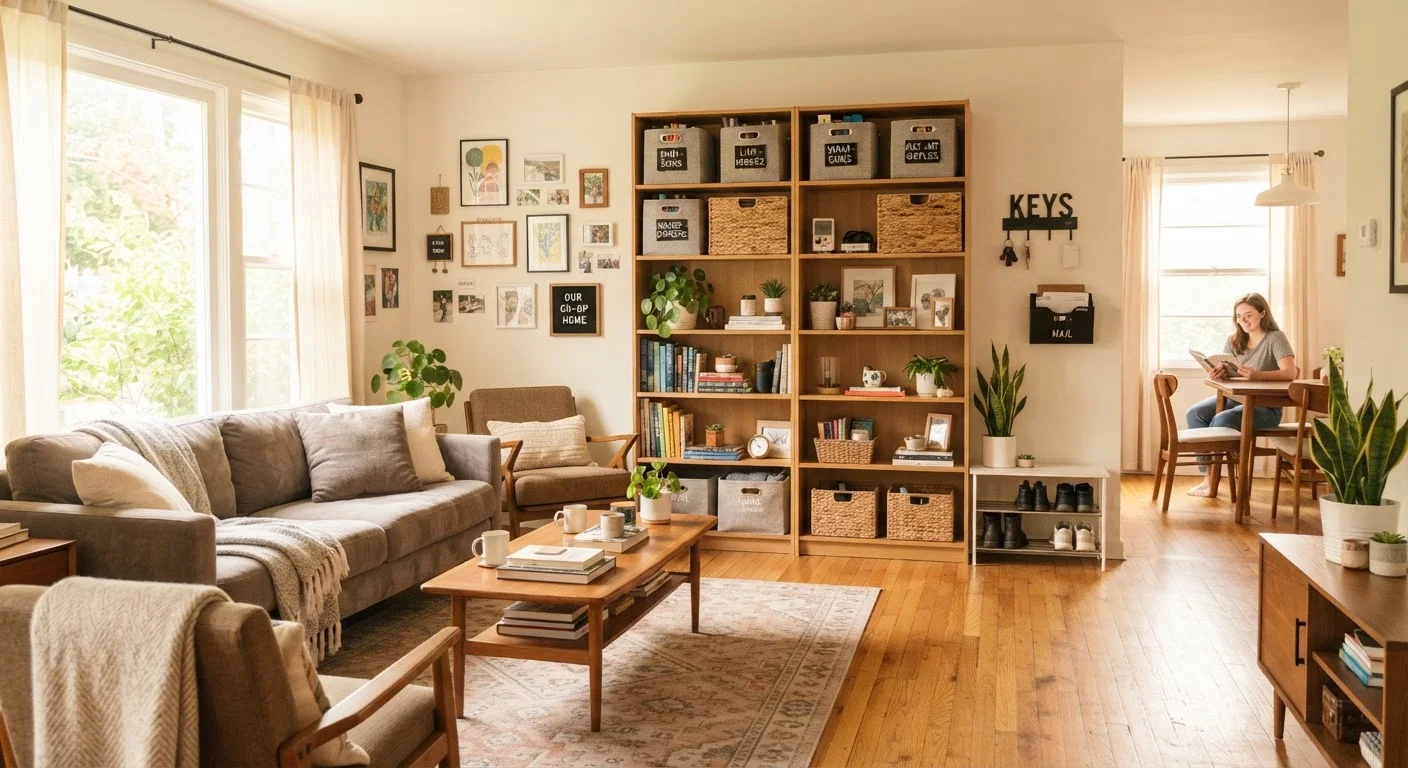
Photo credit: AdvisorHQ.net | Informative Website
In this article
Getting organized in a home shared by different people — partners, kids, roommates — requires systems that bend without breaking. Here's how to build them.
Key Takeaways
- Shared households need flexible organization systems, not one rigid approach imposed on everyone.
- Identifying each person's natural habits is the foundation of a system that actually sticks.
- Shared zones need clear, agreed-upon rules; private zones should remain each person's domain.
- Visual cues like labels and color-coding reduce friction without requiring constant reminders.
- Regular, brief household check-ins prevent small organization disagreements from becoming big conflicts.
Why One System Rarely Fits Everyone
Living with other people - whether that's a partner, kids, or roommates - means inheriting a mix of organization habits, tolerances for clutter, and ideas about what "tidy" even means. A system that feels intuitive to one person can feel arbitrary and exhausting to another. This mismatch is one of the most common reasons well-intentioned organization efforts quietly collapse within weeks.
The solution isn't to find the one perfect system and enforce it. It's to design shared structures that are flexible enough to accommodate real differences while still keeping common areas functional. If you're starting from scratch, the foundational principles of home organization are worth reviewing before building any shared system on top of them.
The steps below walk through a practical process for mapping your household's habits, negotiating shared standards, and building systems that don't require everyone to become a different person.
What you will need
Building Your Shared System: Step by Step
Follow these steps in order. Each one builds on the last, so skipping ahead - especially past the habit-mapping stage - tends to produce systems that look good but don't hold up in daily life.
Map Each Person's Natural Habits
Before proposing any system, observe how each household member actually behaves - not how they think they behave. Where do bags land when someone walks in? Where do dishes sit before being washed? Where does mail accumulate?
Write these patterns down without judgment. The goal is to understand the path of least resistance for each person so you can design systems that work with those tendencies rather than constantly fighting them.
Separate Shared Zones from Private Zones
Not every space in a home needs shared standards. Establish a clear distinction between communal areas (living room, kitchen, bathrooms) where agreed-upon rules apply, and private areas (individual bedrooms, personal desks) where each person's own standards govern.
This boundary does significant psychological work: it tells everyone that the goal isn't total uniformity, just functional cooperation in shared spaces. It also removes the resentment that builds when one person feels their private space is being policed. Zone-based organization applies well here - dividing rooms by activity rather than ownership often makes shared spaces easier to maintain.
Agree on the Minimum Standard, Not the Ideal
In mixed-standard households, the most common mistake is one person (usually the more organization-oriented one) setting the bar at their personal ideal. This sets up everyone else to constantly feel like they're failing.
Instead, negotiate the minimum acceptable state for each shared area. What does the kitchen counter need to look like before it's genuinely functional? What's the threshold for the living room before guests would be uncomfortable? Minimum standards are easier to maintain and easier to agree on.
Build in Visual Cues and Low-Effort Storage
Systems that require people to remember where everything goes tend to fail. Visual cues - labels, color-coding, open bins - reduce the mental load of maintaining order. If the right place to put something is obvious at a glance, compliance improves without reminders.
Match storage solutions to actual behavior: if someone always drops items on a particular surface, place a tray or basket there to contain the habit rather than eliminate it. Underused spaces already in your home can often absorb household clutter without adding new furniture. For homes where floor space is limited, vertical storage options can meaningfully expand capacity without expanding the footprint.
Schedule Brief, Regular Check-Ins
Set a recurring time - monthly works for most households - to review what's functioning and what needs adjustment. Keep it short and solution-focused. The system should evolve as the household does.
Use these check-ins to address friction before it becomes habit. If a particular storage solution isn't being used, that's information: either the location is wrong, the container is inconvenient, or the category itself needs rethinking.
Start With One Room, Not the Whole House
Trying to redesign organization across an entire home at once is overwhelming and rarely sticks. Pick the shared space that causes the most daily friction - usually the kitchen or entryway - and build your system there first. A working model in one room is far more persuasive than a theoretical plan for every room.
Keeping the System Running Over Time
Even a well-designed shared system will drift without occasional maintenance. Habits shift, households change, and what worked for two people may need adjustment when a third moves in or a child hits a new developmental stage.
Brief monthly or seasonal check-ins - 10 to 15 minutes, no agenda beyond "what's working and what isn't" - can catch small friction points before they become entrenched resentments. These conversations work best when they're framed around the system rather than around individual behavior. "The mail pile keeps growing" is easier to problem-solve than "you never deal with your mail."
When systems start slipping, it's usually a sign of a design problem, not a character flaw. Recurring clutter in specific spots is often a symptom of a storage solution that doesn't match how people actually move through that space. Similarly, simple maintenance rules like one-in, one-out can prevent the gradual volume creep that overwhelms shared storage. For items that cycle in and out of use seasonally, a seasonal rotation system keeps communal areas from absorbing items that don't belong there year-round.
Avoid Assigning Systems Unilaterally
Organization systems imposed by one person without input from others tend to generate quiet resistance, even when the system is objectively efficient. If people weren't part of designing it, they're less likely to maintain it. Bring everyone into the design process, even briefly - it meaningfully increases the chance the system holds.

Author
Home & Garden Editorial Team
Home & Garden Editorial Team is the collective byline for our editorial team and contributor network. Articles published under this byline or an editorial pen name are researched, written, and reviewed according to our editorial standards for clarity, consistency, and independence before publication.
View all articles →