
Home Organization From the Ground Up: A Practical Starting Point for Beginners
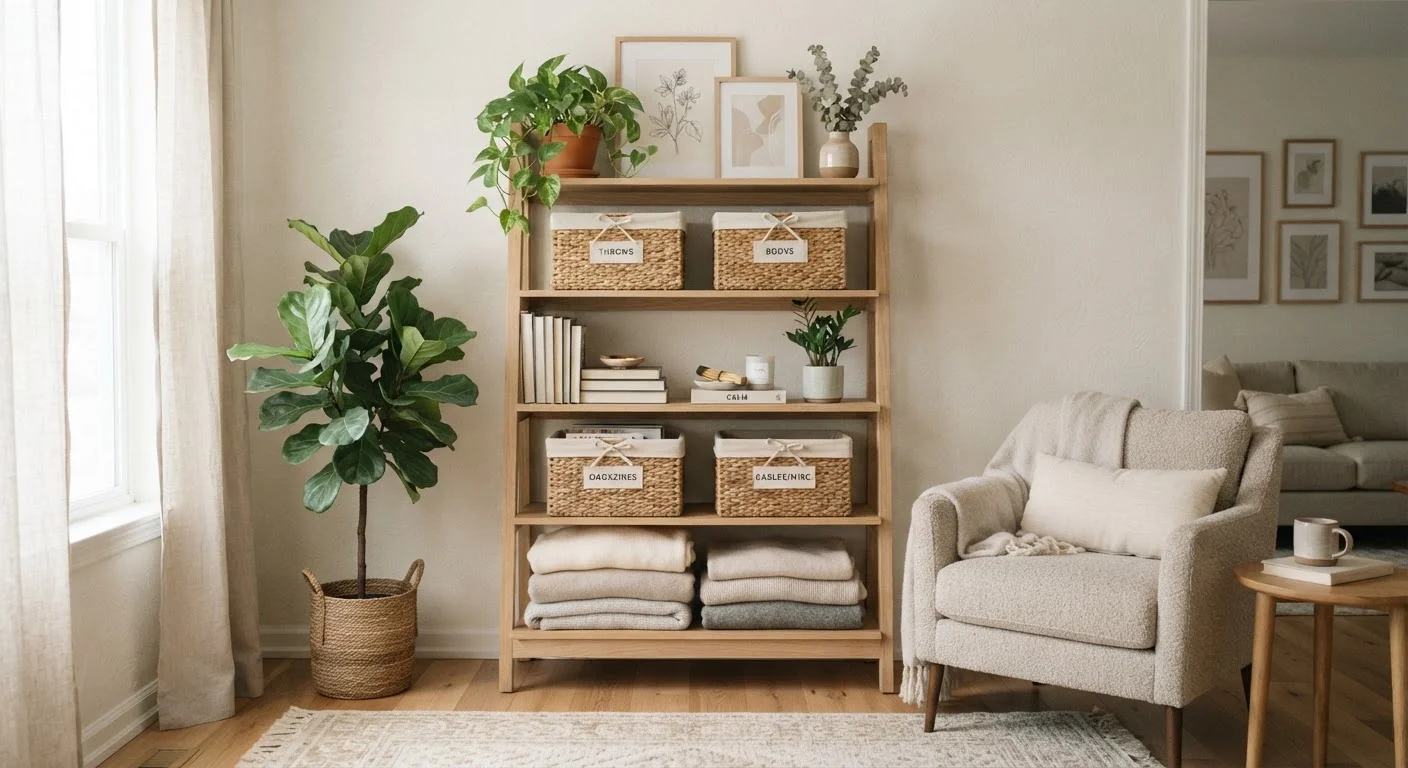
Photo credit: AdvisorHQ.net | Informative Website
In this article
New to getting organized? This guide covers the core principles, room-by-room priorities, and realistic habits that make order sustainable long-term.
Key Takeaways
- Start with one small area - early wins build momentum and confidence.
- Effective organization is about function, not aesthetics or buying more storage.
- High-traffic rooms like kitchens and entryways yield the most immediate daily benefit.
- Sustainable organization depends on habits, not one-time decluttering sessions.
- Systems need to fit your actual life - rigid perfection leads to backsliding.
Why Organization Feels Overwhelming at First
If you've stood in the middle of a cluttered room and had no idea where to start, you're not alone. The feeling isn't a character flaw - it's a predictable response to a task that lacks a clear entry point. Most people try to organize everything at once, which leads to pulling out more than they can process and abandoning the project entirely.
The good news is that home organization doesn't require a personality overhaul or a weekend marathon. It's a practical skill, and like any skill, it gets easier once you understand the underlying logic. Before diving into specific rooms or methods, it helps to get familiar with the basic vocabulary. Our plain-language reference for home organization terms is a useful starting point if you encounter concepts that feel unfamiliar.
Decluttering
The process of removing items from a space that you no longer need, use, or want - always the first step before organizing begins.
Designated home
A specific, consistent location assigned to a category of items so they can always be found and returned to the same place.
Zone
A section of a room or storage area dedicated to a particular type of activity or item, such as a 'cooking zone' near the stove.
Decision fatigue
Mental exhaustion that comes from making too many choices in a row, which is a common reason organizing sessions stall or lead to poor decisions.
Negative space
Intentional empty space in a room or on a shelf that keeps a space from feeling crowded and makes it easier to find and put away items.
Core Principles That Make Any System Work
Regardless of the room or method you use, effective organization rests on a few consistent principles:
- Everything needs a home. If an item doesn't have a designated place, it will migrate to whatever surface is nearby. Assigning a specific location for every category of item is the foundation of any working system.
- Frequency determines placement. Items you use daily should be the easiest to reach. Things used monthly can go higher up or further back. Rarely used items belong in deep storage.
- Like with like. Group similar items together - all batteries in one place, all cleaning supplies in one zone. This eliminates the scattered-object problem and makes restocking intuitive.
- Declutter before you organize. Sorting and storing items you don't actually need is one of the most common time wasters in home organization. Always reduce first, then arrange what remains.
These principles apply equally whether you're tackling a junk drawer or an entire garage. They're also explored further in our article on why kitchen organizing often doesn't hold.
Start with a 15-minute timer
If you're not sure where to begin, set a timer for 15 minutes and work on a single drawer or shelf. Stopping at the timer - with that one area complete - is a legitimate win. Momentum from small finished tasks is a more reliable motivator than motivation you have to summon from scratch.
Where to Start: Room-by-Room Priorities
Not all rooms are created equal when it comes to the impact of organization. Prioritize by daily use and friction:
Entryway
This is the first and last space you interact with every day. A functional entryway - with clear spots for keys, bags, shoes, and outerwear - reduces the frantic searching that derails mornings. Even a small hook rail and a single basket can make a substantial difference.
Kitchen
The kitchen is typically the highest-traffic room in any home. Focus on three zones: food storage (pantry or cabinets), cooking tools (near the stove), and cleaning supplies (under the sink or nearby). Keep countertops as clear as possible - they're working surfaces, not storage.
Bedroom
Clothing and personal items tend to accumulate quickly. A basic closet sort - dividing items into keep, donate, and discard - often reveals that storage isn't the problem; volume is. Address quantity before investing in additional organizers.
Bathroom
Small spaces benefit most from vertical use. Drawer dividers, tiered shelf inserts, and over-door organizers make a disproportionate impact in bathrooms without requiring renovation.
If your home needs broader improvements beyond organization, our beginner's guide to home improvement projects covers how to scope and approach physical changes safely.
Building Habits That Stick
The gap between a one-time tidy and a persistently organized home is habit. A space can be perfectly arranged and still revert to chaos within two weeks if no maintenance behaviors are in place. The most effective habits are small, frequent, and tied to existing routines:
- The one-in, one-out rule: When a new item enters the home, something comparable leaves. This prevents gradual re-accumulation.
- Reset windows: A 10-minute reset at the end of each evening - putting stray items back in their designated homes - prevents disorder from compounding.
- Sunday prep scan: A brief weekly walk-through to identify anything drifting out of place catches small problems before they become large ones.
These habits don't require extra time so much as intention. Pair them with something you already do - brewing coffee, watching the evening news - and they become automatic faster. For households where multiple people share the same spaces, systems need an extra layer of flexibility. Our guide on organizing shared living spaces explores how to build systems that work for everyone without constant enforcement.
Common Beginner Mistakes to Avoid
Most early organizing attempts fail not from lack of effort but from a few predictable missteps:
- Buying storage first. Containers bought before decluttering almost always end up the wrong size, shape, or quantity. Sort first; shop second.
- Aiming for perfection. A system that requires perfect execution to function will break the moment life gets busy. Design for real behavior, not ideal behavior. Our article on the pros and cons of minimalism offers a grounded look at where high-standard systems sometimes overcorrect.
- Skipping labels. Memory is unreliable under stress. Labels - even handwritten ones - remove the mental load of remembering where things go and make it easier for others in the household to maintain the system.
- Organizing everything at once. Tackling too much at once leads to decision fatigue and abandoned mid-project messes. Work in defined, completable sessions.
Progress in organization tends to be nonlinear - expect some backsliding, especially early on. What matters is returning to the system rather than waiting until conditions are perfect to restart. Treat each session as a complete unit of work, not just a step toward a distant finish line.
Avoid the 'organizing for photos' trap
Organizing systems inspired by social media images often prioritize visual uniformity over practical function. Matching containers and perfectly labeled jars look appealing but may not suit how your household actually moves and uses things. A system that works for your life is always more valuable than one that photographs well.
Frequently Asked Questions

Author
Home & Garden Editorial Team
Home & Garden Editorial Team is the collective byline for our editorial team and contributor network. Articles published under this byline or an editorial pen name are researched, written, and reviewed according to our editorial standards for clarity, consistency, and independence before publication.
View all articles →