
Why Your Kitchen Drawers Fill Back Up Two Weeks After Organizing
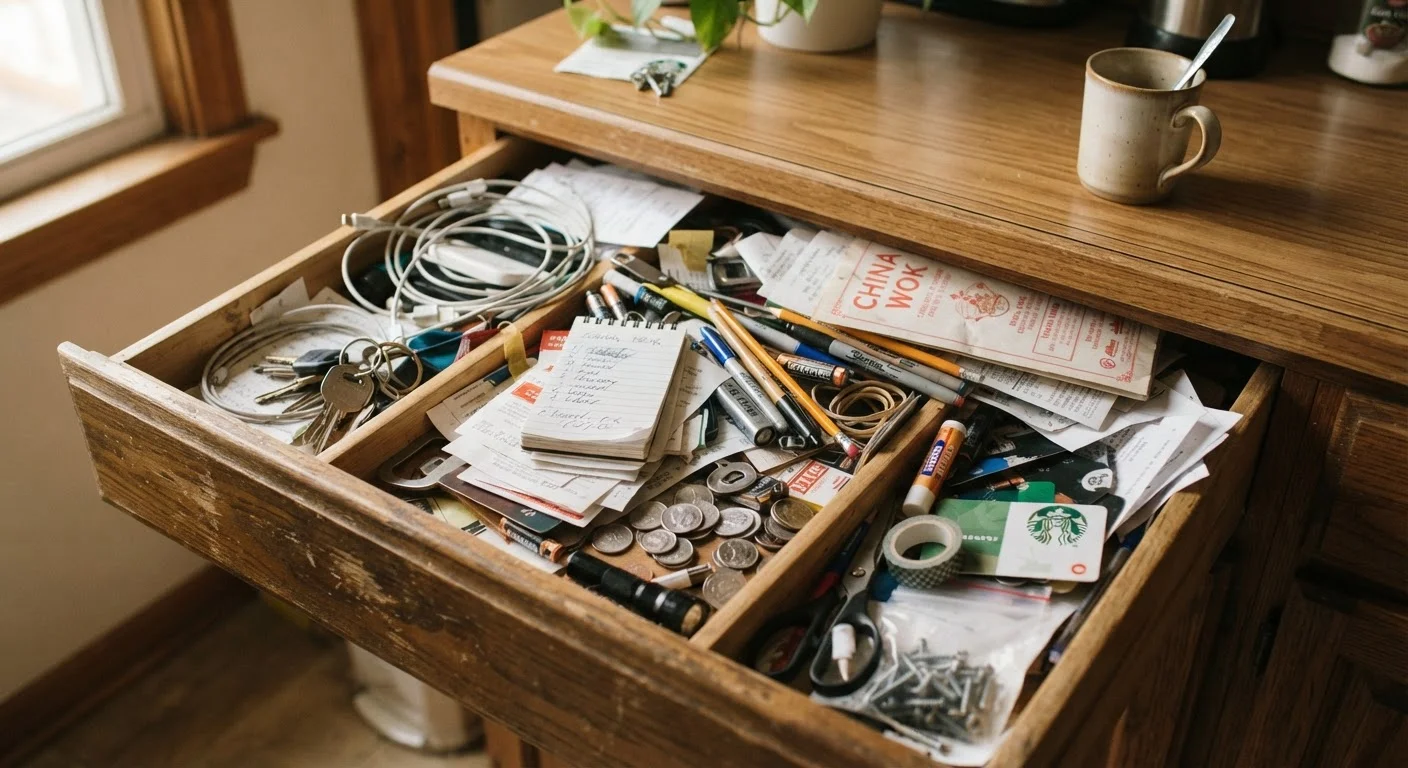
Photo credit: AdvisorHQ.net | Informative Website
In this article
If your kitchen keeps reverting to chaos, the organizing system — not your habits — is likely the problem. Here's what usually goes wrong and how to fix it.
Key Takeaways
- Kitchen drawers revert to chaos when the organizing system doesn't match how you actually use the space.
- Buying containers before decluttering is one of the most common and costly organizing mistakes.
- A good system requires almost no willpower - it should make the right behavior the easiest behavior.
- Organizing for an idealized version of your habits, rather than your real ones, guarantees failure.
- Maintenance rules - not a single big purge - are what keep drawers functional long-term.
Why Organizing Rarely Sticks the First Time
You spend a Saturday afternoon emptying your kitchen drawers, sorting everything into neat sections, and maybe adding a few dividers. It looks great. Then, two weeks later, it looks exactly like it did before. Sound familiar?
The frustrating truth is that this cycle almost never reflects a personal failing. It reflects a system that wasn't designed to hold up under the pressure of real daily life. As we cover in depth in common organizing myths, the idea that organized people are simply more disciplined is one of the most persistent and damaging misconceptions in home organization.
Effective kitchen organization isn't about willpower - it's about designing a system so intuitive that using it correctly is the path of least resistance. When a system fails, it's almost always because it was built on assumptions about how the space should be used rather than how it is used.
The System Is the Problem, Not You
If your kitchen drawer reverts to clutter within two weeks every single time, that is diagnostic information - it means the system has a structural flaw, not that you lack discipline. Sustainable organization is built around actual behavior patterns, not aspirational ones. Redesigning the system to fit your real life is far more effective than trying to force your habits to fit the system.
The Mistakes That Cause Drawers to Revert
Most recurring drawer chaos can be traced to a handful of predictable missteps. Each one feels reasonable in the moment but creates conditions for rapid backslide. Understanding why they happen is the first step to designing around them.
Organizing around what you wish you did rather than what you actually do.
Why it happens: People set up systems during a motivated, aspirational mindset - imagining they'll hand-wash delicate tools or always return items to exact slots. Real daily habits are messier and faster.
Buying containers and dividers before decluttering.
Why it happens: The planning phase feels productive, and organizing products are visually appealing. It's easier to shop than to make hard decisions about what to keep.
Giving every item a home except the things that actually land in the drawer.
Why it happens: Organizers focus on the items they value or use intentionally, forgetting to assign a place for the random, low-category items - twist ties, rubber bands, batteries - that accumulate daily.
Making it harder to put things away than it is to drop them anywhere.
Why it happens: Overly specific organizers with tiny compartments or lids create friction. When returning an item takes more effort than just setting it down, people default to setting it down.
Treating a one-time organizing session as a permanent fix.
Why it happens: The effort of a big clean-out feels like it should last. But households change - new items arrive, habits shift - and drawers need a small recurring reset to stay functional.
Don't Organize Before You Declutter
Arranging items neatly into bins and dividers before removing what doesn't belong guarantees you'll run out of space quickly. Clutter returns fast when there's simply too much stuff for the available space. Always remove unnecessary items first - then size and place your organizers around what genuinely remains.
If you're newer to thinking systematically about home spaces, starting with core organization principles before tackling individual drawers will give you a stronger foundation to build from.
Building a System That Holds
Once you've corrected the structural mistakes, the goal is to create a system that almost runs itself. That means three things: right-sized storage, honest categorization, and a lightweight maintenance habit.
Right-sized storage means containers that fit what you actually own - not what looks tidy on a shelf. Measure your drawer interior and your item groups before purchasing anything.
Honest categorization means organizing around how items are used together, not how they're related conceptually. A garlic press and a citrus zester may both be 'gadgets,' but if you reach for one daily and the other monthly, they shouldn't compete for the same front-of-drawer space.
Lightweight maintenance is what separates a system that lasts from one that doesn't. The one-in, one-out principle and similar maintenance rules are specifically designed to prevent the gradual accumulation that undoes a well-designed system. A five-minute reset every few weeks - not a full reorganization - is all most drawers need to stay functional.
If your household includes multiple people with different habits, it's worth reading about organizing shared spaces with different standards, since a system that only one person understands will rarely survive contact with real household life.

Author
Home & Garden Editorial Team
Home & Garden Editorial Team is the collective byline for our editorial team and contributor network. Articles published under this byline or an editorial pen name are researched, written, and reviewed according to our editorial standards for clarity, consistency, and independence before publication.
View all articles →