
Garden Watering Methods and the Tradeoffs Each One Involves
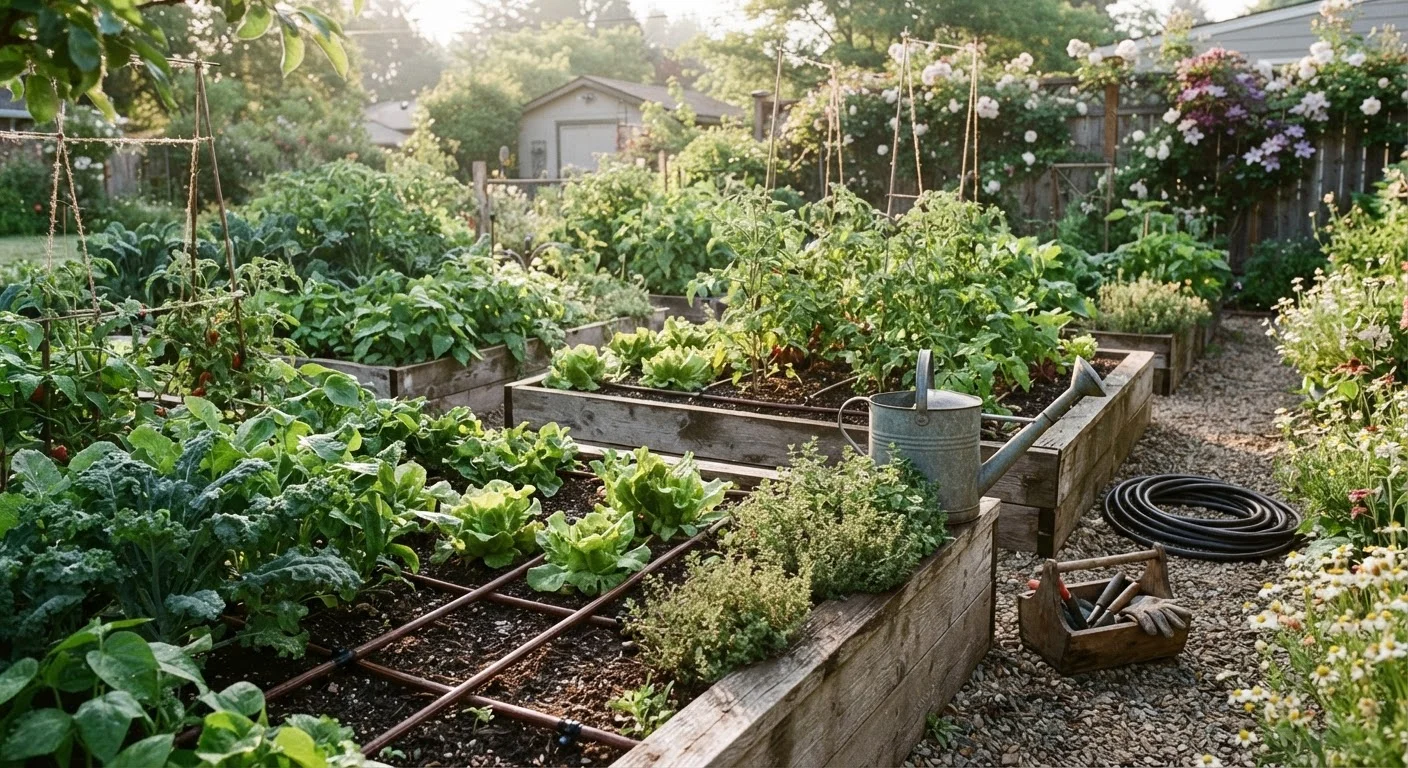
Photo credit: AdvisorHQ.net | Informative Website
In this article
From drip irrigation to soaker hoses to hand-watering — each approach has real advantages and drawbacks depending on your setup.
Key Takeaways
- No single watering method is ideal for every garden layout, plant type, or climate.
- Drip irrigation delivers water directly to roots, reducing evaporation and fungal disease risk.
- Hand-watering offers maximum control but demands consistent time and attention from the gardener.
- Soaker hoses are a low-cost middle ground but can degrade and clog over time.
- Overhead sprinklers cover large areas easily but waste more water and can promote leaf disease.
- Matching your method to your soil, plants, and schedule matters more than any single factor.
Delivers water directly to roots, minimizing waste
Drip irrigation targets the root zone rather than surrounding soil or foliage, which can significantly reduce water use compared to overhead methods.
Reduces fungal disease by keeping foliage dry
Because water stays at soil level, leaves and stems stay dry, lowering the risk of common fungal issues like powdery mildew and blight.
Timers allow consistent, automated watering
Drip systems and soaker hoses pair well with inexpensive hose-end timers, maintaining consistent soil moisture even when you're away from home.
Hand-watering offers close observation of plant health
Regular close contact with your plants during watering helps you catch early signs of pest activity or disease before problems escalate.
Sprinklers cover large lawn and garden areas quickly
For broad, open planting areas or lawns, overhead sprinklers deliver water to wide footprints with minimal setup or repositioning.
Drip systems require upfront planning and installation
Mapping emitter placement, cutting tubing, and configuring pressure regulators takes time and some technical understanding before your first use.
Soaker hoses degrade and clog over time
Most soaker hoses are made from recycled rubber or plastic that becomes brittle after several seasons, and mineral deposits can reduce flow unevenly along the hose.
Overhead sprinklers waste water through evaporation
Water sprayed into the air - especially in warm or windy conditions - can evaporate before reaching the soil, reducing efficiency meaningfully compared to root-zone methods.
Hand-watering is time-intensive and inconsistent
Keeping pace with a large garden's moisture needs by hand is difficult, and brief or shallow watering sessions often fail to penetrate to root depth.
Wet foliage from sprinklers increases disease pressure
Splashing water on leaves and stems creates conditions that favor fungal diseases, particularly on susceptible crops like tomatoes, cucumbers, and roses.
No method works perfectly for all plant types
Seedlings need surface moisture that drip emitters may not provide; mature shrubs need deep infrequent watering that soaker hoses may not deliver efficiently.
Why Your Watering Method Matters More Than You Might Think
Water delivery isn't just a logistics question - it directly affects plant root development, disease pressure, weed growth, and your water bill. Wet foliage encourages fungal problems. Water applied far from roots is largely wasted. And inconsistent watering stresses plants at critical growth stages.
Most gardeners settle into a routine without fully comparing their options. Understanding the tradeoffs of each approach helps you make a deliberate choice rather than an accidental one. If you're also planning which plants to grow, see our guide to balancing perennials and annuals - water needs vary considerably between the two.
Drip Irrigation: Precise but Requires Planning
Drip irrigation delivers water slowly and directly to the root zone through a network of tubes and emitters. It's widely regarded as one of the most water-efficient approaches for established garden beds.
Delivers water directly to roots, minimizing waste
Drip irrigation targets the root zone rather than surrounding soil or foliage, which can significantly reduce water use compared to overhead methods.
Reduces fungal disease by keeping foliage dry
Because water stays at soil level, leaves and stems stay dry, lowering the risk of common fungal issues like powdery mildew and blight.
Timers allow consistent, automated watering
Drip systems and soaker hoses pair well with inexpensive hose-end timers, maintaining consistent soil moisture even when you're away from home.
Hand-watering offers close observation of plant health
Regular close contact with your plants during watering helps you catch early signs of pest activity or disease before problems escalate.
Sprinklers cover large lawn and garden areas quickly
For broad, open planting areas or lawns, overhead sprinklers deliver water to wide footprints with minimal setup or repositioning.
The downsides are real, though. Installation takes planning, especially around irregular bed shapes. Emitters can clog with mineral deposits or soil debris and require periodic flushing. Rodents and garden tools can damage tubing. And if you rearrange your garden - common with annual planting - you may need to reconfigure the whole system.
Drip systems also don't work well on their own for seeds or transplants that need consistent surface moisture in their first weeks. Gardeners often supplement with hand-watering during establishment.
Soaker Hoses: A Practical Middle Ground
Soaker hoses are porous tubes that seep water slowly along their entire length. They cost far less than a full drip system, require no emitters, and can be snaked through beds relatively easily.
Drip systems require upfront planning and installation
Mapping emitter placement, cutting tubing, and configuring pressure regulators takes time and some technical understanding before your first use.
Soaker hoses degrade and clog over time
Most soaker hoses are made from recycled rubber or plastic that becomes brittle after several seasons, and mineral deposits can reduce flow unevenly along the hose.
Overhead sprinklers waste water through evaporation
Water sprayed into the air - especially in warm or windy conditions - can evaporate before reaching the soil, reducing efficiency meaningfully compared to root-zone methods.
Hand-watering is time-intensive and inconsistent
Keeping pace with a large garden's moisture needs by hand is difficult, and brief or shallow watering sessions often fail to penetrate to root depth.
Wet foliage from sprinklers increases disease pressure
Splashing water on leaves and stems creates conditions that favor fungal diseases, particularly on susceptible crops like tomatoes, cucumbers, and roses.
No method works perfectly for all plant types
Seedlings need surface moisture that drip emitters may not provide; mature shrubs need deep infrequent watering that soaker hoses may not deliver efficiently.
For small to medium beds, a soaker hose connected to a basic timer offers a surprisingly hands-off watering solution. They work especially well in raised beds, which have defined layouts that don't change much season to season. Gardeners growing food in compact spaces - whether containers, raised beds, or vertical setups - may find soaker hoses a natural fit alongside other strategies covered in our guide to growing food in small spaces.
Overhead Sprinklers: Wide Coverage, Bigger Water Use
Oscillating and rotary sprinklers - whether portable or built into an in-ground system - cover large areas quickly. For lawns and wide open planting areas, they remain a practical choice.
Up to 50%
Water saved with drip vs. overhead irrigation
The U.S. Environmental Protection Agency notes that drip irrigation can use up to 50% less water than conventional overhead watering systems in landscape settings.
30-50%
Outdoor water use attributed to irrigation in U.S. homes
According to the EPA's WaterSense program, landscape irrigation accounts for roughly one-third or more of residential water use, with significant amounts lost to inefficient application.
The tradeoffs are significant in a garden context, however. Water lands on foliage, which increases the risk of fungal diseases like powdery mildew and blight - a particular concern for tomatoes, squash, and roses. Much of the water also evaporates before reaching roots, especially during warm afternoons. Sprinklers work best when run early in the morning so foliage dries before evening.
In-ground sprinkler systems add convenience and automation but come with substantial upfront cost and typically require professional installation and winterization in cold climates.
Hand-Watering: Control at the Cost of Time
A watering can or handheld hose wand gives you direct control over exactly where water goes and how much each plant receives. For gardeners who enjoy the hands-on nature of tending plants, hand-watering also doubles as an opportunity to closely observe plant health - spotting early signs of pest damage or disease before they spread.
Watering Depth Matters as Much as Frequency
Plants benefit more from infrequent deep watering than from frequent shallow applications. Shallow watering encourages roots to stay near the surface, making plants more vulnerable to drought stress. A simple way to check: push a finger or narrow dowel several inches into the soil after watering to see how far moisture has actually penetrated. Aim for at least 6 inches of moist soil for most vegetables and perennials.
The obvious limitation is time. Hand-watering a large or densely planted garden consistently enough to maintain even soil moisture is demanding, and it's easy to underwater during hot spells or busy periods. Inconsistent moisture causes problems like blossom end rot in tomatoes and tip burn in lettuce. Hand-watering also tends to be less precise than it feels - it's easy to water the surface without penetrating to the depth roots actually need.

Author
Home & Garden Editorial Team
Home & Garden Editorial Team is the collective byline for our editorial team and contributor network. Articles published under this byline or an editorial pen name are researched, written, and reviewed according to our editorial standards for clarity, consistency, and independence before publication.
View all articles →