
Growing Food in Small Spaces: Containers, Raised Beds, and Vertical Gardens
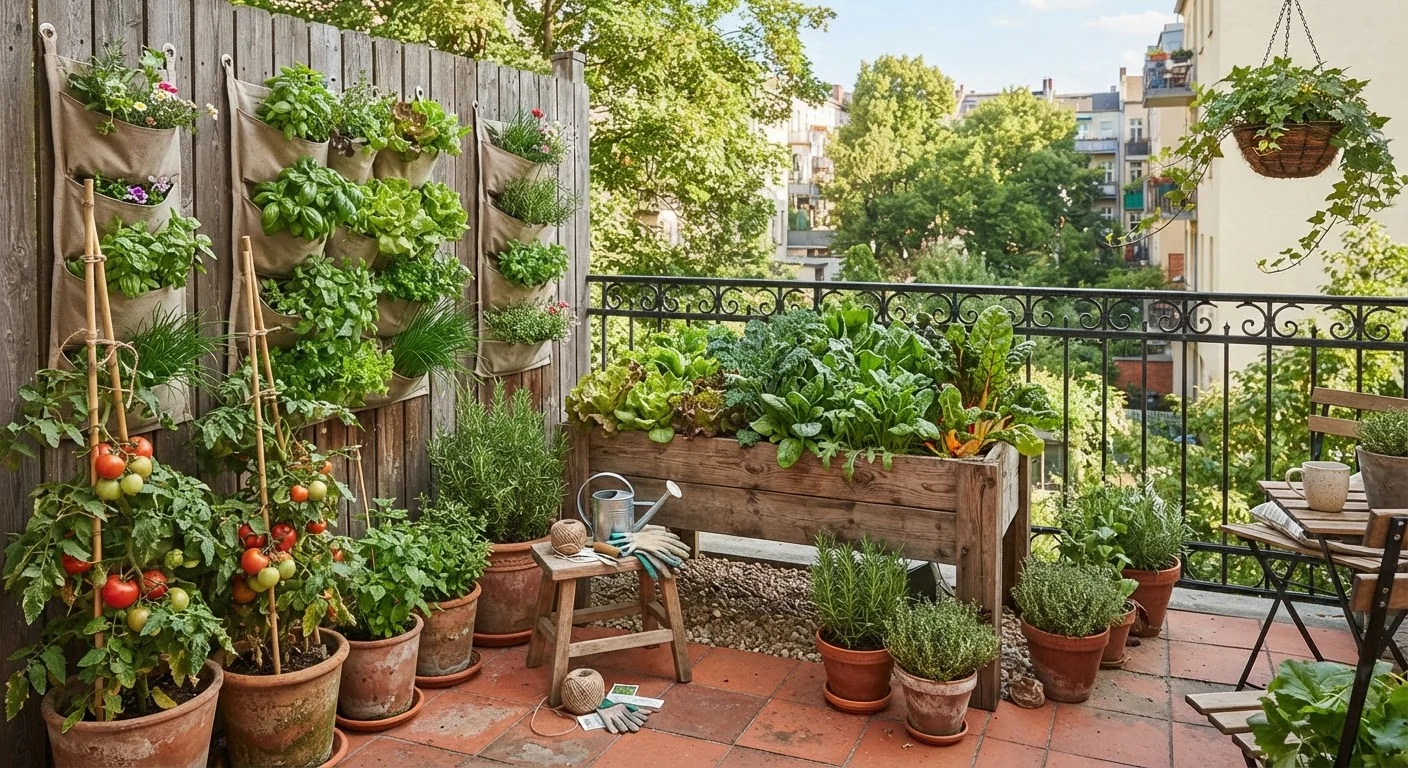
Photo credit: AdvisorHQ.net | Informative Website
In this article
Limited yard space doesn't mean giving up on homegrown food. Learn how containers, raised beds, and vertical setups make it possible.
Key Takeaways
- Containers, raised beds, and vertical setups each suit different space constraints and growing goals.
- Soil quality is the single biggest factor in small-space gardening success.
- Compact and dwarf plant varieties are specifically bred for limited spaces.
- Consistent watering matters more in containers because they dry out faster than ground soil.
- Vertical growing can triple the productive area of a small footprint.
- Starting simple-with two or three crops-builds skills before scaling up.
Why Small-Space Food Growing Works
Millions of Americans live without expansive backyards, yet that doesn't have to mean foregoing homegrown vegetables, herbs, or fruit. Containers, raised beds, and vertical gardens shift the equation from how much land do I have to how well can I use what I have. This change in thinking opens up balconies, patios, driveways, rooftops, and even sunny indoor windowsills as productive growing areas.
Small-space methods also offer real practical advantages over traditional in-ground gardening: you control the soil from day one, watering is more targeted, and weeds are far easier to manage. If you're entirely new to food growing, our guide to starting a vegetable garden from scratch lays out the core planning principles that apply across all three formats covered here.
80%
U.S. population living in urban areas
The U.S. Census Bureau reports that roughly 80% of Americans live in urban settings, making space-efficient food growing increasingly relevant.
3x
Potential yield increase from vertical growing
Horticultural extension programs note that vertical training of vining crops can yield up to three times more produce per square foot of ground space versus sprawl growing.
6-8 hrs
Daily sunlight most vegetables need
Most edible crops require a minimum of six to eight hours of direct sunlight daily; site assessment before setting up any growing system is critical.
Container Gardening: Flexibility in Every Pot
Containers are the most accessible entry point. A single five-gallon bucket can produce a full season of cherry tomatoes; a window box keeps fresh herbs within arm's reach of the kitchen. The key variables are size, drainage, and material.
- Size: Deeper-rooted crops like tomatoes, peppers, and eggplant need at least 12-14 inches of soil depth. Shallow-rooted crops like lettuce, radishes, and most herbs do well in 6-8 inches.
- Drainage: Every container must have drainage holes. Waterlogged roots are the leading cause of container plant failure.
- Material: Terracotta breathes well but dries fast. Plastic retains moisture longer and weighs less - helpful on balconies where load matters. Fabric grow bags offer excellent aeration and are easy to store off-season.
Group containers together to reduce moisture loss and create a microclimate that's slightly more humid and sheltered - plants generally perform better in clusters than in isolation.
Before buying any container, check your balcony or rooftop's load-bearing capacity - a large container filled with moist soil can weigh well over 100 pounds. When in doubt, choose lightweight fabric grow bags and a perlite-heavy potting mix.
Weight limits on elevated structures are a real safety concern that's easy to overlook when planning an outdoor container garden.
Color-code your containers by watering need: group drought-tolerant herbs together separately from water-hungry tomatoes and cucumbers. This makes your watering rounds faster and reduces the risk of over- or under-watering mixed plantings.
Inconsistent watering is among the top causes of poor yields in container setups; grouping by need removes guesswork from a daily routine.
Raised Beds: Controlled Soil, Better Yields
A raised bed is essentially a large, open-bottomed container built directly on your growing surface. Standard dimensions - roughly 4 feet wide by 8 feet long - allow you to reach the center from either side without stepping in, which preserves soil structure. Height typically runs 6 to 12 inches for most vegetables; 18 inches or more is helpful if the underlying ground is compacted or contaminated.
Because you fill raised beds entirely with purchased or blended soil, you sidestep the most common in-ground problems: poor drainage, clay compaction, and soil-borne pathogens. A well-built raised bed can remain productive for many years with seasonal topdressing of compost. Our guide to composting at home explains how to make that amendment yourself from kitchen and yard waste, which keeps input costs low over time.
Cedar and redwood are naturally rot-resistant lumber choices. Untreated pine is less expensive but will degrade faster. Avoid railroad ties or pressure-treated wood that uses older chemical preservatives near edible crops - when in doubt, use food-safe liner fabric on the interior walls.
Vertical Gardens: Growing Up Instead of Out
A fence, wall, or trellis can multiply your growing area dramatically without claiming more floor space. Vertical gardening takes several forms:
- Trellises and cages: Train vining crops - cucumbers, pole beans, small melons, peas - upward on a trellis or sturdy cage. This also improves airflow, which reduces fungal disease.
- Pocket planters: Fabric or felt wall-mounted pockets work well for herbs, strawberries, lettuce, and small greens. They dry out quickly, so daily watering checks are essential in warm weather.
- Tower planters: Stackable planters with side ports allow strawberries, herbs, and compact greens to grow in a tight column footprint.
- Pallet gardens: Repurposed wooden pallets (choose heat-treated, not chemically treated - look for the "HT" stamp) can be stood upright and filled with a soil mix for a rustic herb or salad wall.
The same principle of growing vertically applies in home organization contexts - if you're interested in how vertical thinking transfers to indoor storage, our guide to vertical vs. horizontal storage explores that parallel well.
Soil, Water, and Feeding Essentials
Soil is where most small-space growers succeed or fail. Never use straight garden soil in containers or raised beds - it compacts heavily and suffocates roots. Instead, use a high-quality potting mix for containers, or a blend of topsoil, compost, and coarse material (such as perlite or aged bark fines) for raised beds.
Build a Great Raised Bed Mix
A reliable all-purpose raised bed blend is roughly one-third quality topsoil, one-third compost, and one-third coarse amendment such as perlite or aged bark fines. This combination drains well, holds enough moisture between waterings, and delivers the organic matter that vegetable crops need to perform. Avoid filling beds entirely with compost - it settles dramatically and can be too rich for some crops.
Watering frequency is higher in containers than in-ground because limited soil volume dries out faster, especially in summer heat. A simple finger test - push your finger an inch into the soil; if it feels dry, water - beats any fixed schedule. Self-watering containers with built-in reservoirs are worth considering for anyone who travels or tends to forget.
Feed regularly, since frequent watering leaches nutrients from contained soil faster than ground beds. A balanced, slow-release granular fertilizer applied at planting, supplemented by a diluted liquid fertilizer every two to three weeks during active growth, keeps most vegetables well nourished without risk of overfeeding.
Choosing What to Grow
Not every vegetable suits a compact setup. Focus on crops with a proven track record in limited space:
- Reliable container crops
- Cherry tomatoes, peppers, eggplant, bush beans, cucumbers (with a trellis), lettuce, kale, spinach, Swiss chard, most herbs, radishes, green onions, and strawberries.
- Crops that need more room
- Corn, pumpkins, large winter squash, and indeterminate tomato varieties without aggressive pruning tend to overwhelm small setups.
Look for seed packet or plant tag language like compact, bush-type, dwarf, or patio - these descriptors signal varieties deliberately bred for small spaces. Succession planting - sowing a small batch of fast-maturing greens every two to three weeks rather than all at once - stretches your harvest season and keeps beds productive rather than sitting empty after a single flush.
If you're thinking about adding perennial edibles such as herbs, strawberries, or dwarf fruit, our guide to perennials versus annuals helps you weigh the long-term trade-offs of each approach.
Keeping Plants Healthy in Tight Quarters
Closely planted containers and vertical setups create conditions where pests and diseases can spread more quickly than in open ground. Good airflow - achieved by not overcrowding plants and by training vines upward - is your first defense. Remove yellowing or damaged leaves promptly to reduce disease pressure.
For pest management, physical approaches - row cover fabric, hand-picking, sticky traps - are often sufficient for small-scale growing and avoid unnecessary chemical exposure near edible crops. Our guide to garden pest control covers practical, lower-risk strategies in detail.
Finally, keep records. A simple notebook or phone note logging what you planted, when you fed, and what problems appeared helps you improve each season without relying on memory. Small-space gardening rewards attention to detail, and even one season of notes will meaningfully improve the next.

Author
Home & Garden Editorial Team
Home & Garden Editorial Team is the collective byline for our editorial team and contributor network. Articles published under this byline or an editorial pen name are researched, written, and reviewed according to our editorial standards for clarity, consistency, and independence before publication.
View all articles →