
Grass Seed vs. Sod: Which Makes More Sense for Your Lawn?
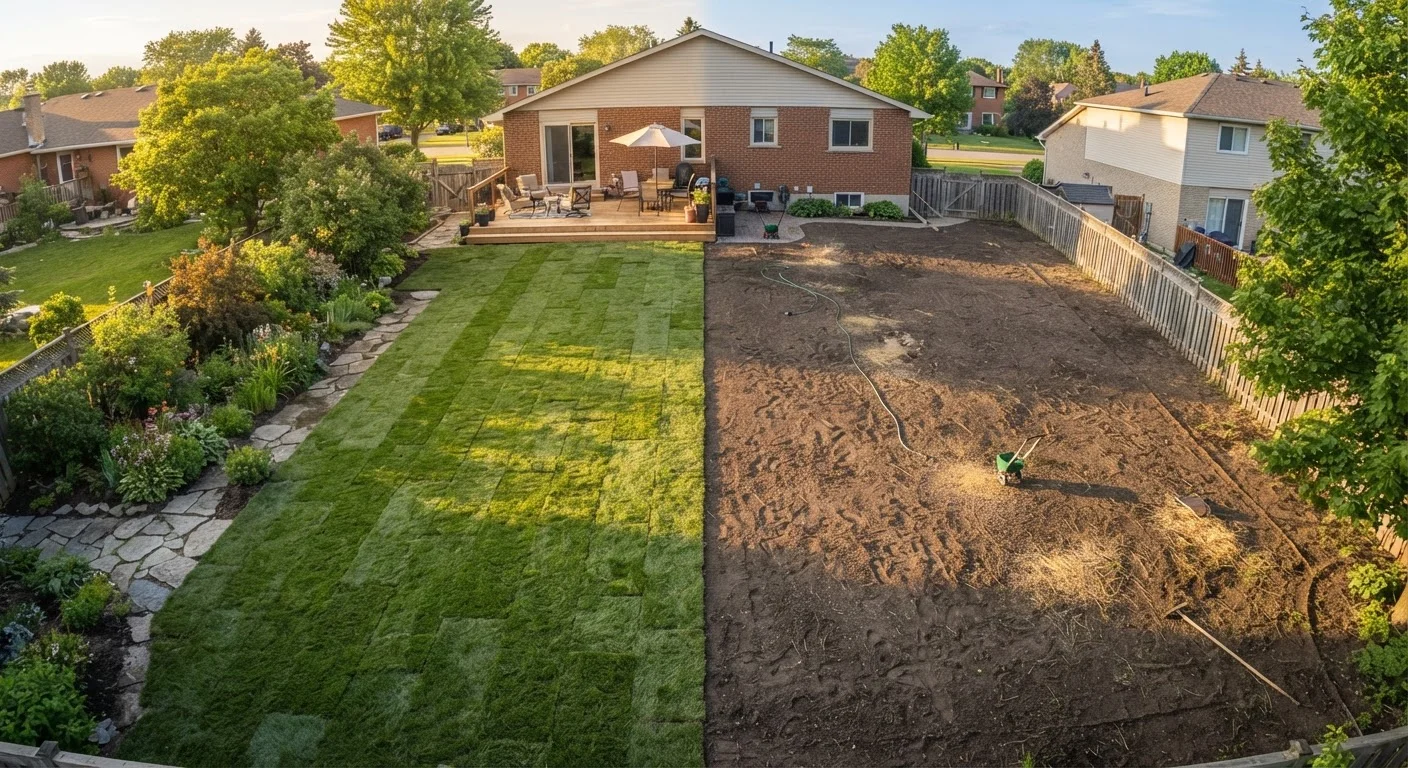
Photo credit: AdvisorHQ.net | Informative Website
In this article
Grass seed and sod both establish a lawn, but their cost, timing, and effort differ significantly. Here's how to think through the choice.
Key Takeaways
- Grass seed typically costs significantly less per square foot than sod, but requires more time to establish.
- Sod can be walked on within a few weeks; seed-grown lawns may take two to three months before they're traffic-ready.
- Timing matters: cool-season grasses seed best in fall, while sod can usually be laid in spring through early fall.
- Soil preparation is equally critical for both methods and should not be skipped.
- Seed offers a wider variety of grass species suited to local conditions; sod choices are more limited.
- Erosion-prone slopes or high-traffic areas are better suited to sod's immediate coverage.
Cost and Upfront Investment
Cost is often the first factor homeowners weigh. Grass seed typically runs between $0.05 and $0.30 per square foot depending on grass type and blend quality. Sod, by comparison, commonly costs $0.50 to $2.00 per square foot for the material alone - before you account for delivery or professional installation, which can add substantially to the total.
For a 2,000-square-foot lawn, the difference can mean spending a few hundred dollars on seed versus several thousand on sod. That gap makes seed the default choice for large, flat areas where patience is an option. Sod's cost becomes easier to justify for smaller, high-visibility spaces - a front yard, a play area - where immediate results carry real value.
| Criterion | Grass Seed | Sod |
|---|---|---|
| Average material cost | $0.05-$0.30 per sq ft | $0.50-$2.00 per sq ft |
| Time to usable lawn | 2-3 months | 2-3 weeks |
| Grass variety selection | Very broad | Limited to local supply |
| Erosion control | Poor until established | Immediate |
| Best installation season | Fall (cool-season) or late spring (warm-season) | Spring through early fall |
| Soil preparation required | Yes | Yes |
| Suitable for patching | Yes | Difficult |
Timeline and Establishment
Sod's biggest advantage is speed. A properly prepared and watered sod installation typically knits to the underlying soil within two to three weeks, after which light foot traffic is generally safe. Full root establishment - meaning the lawn can handle normal wear - usually takes about six to eight weeks.
Grass seed demands considerably more patience. Most cool-season grasses germinate in 7 to 21 days, but the lawn won't be traffic-ready for two to three months. During that window, foot traffic compacts vulnerable seedlings and dramatically reduces survival rates. If you have children or pets, enforcing that restriction realistically is worth thinking through before you commit to seed.
Timing also matters. Cool-season grasses (like fescue and bluegrass) germinate best when soil temperatures are between 50°F and 65°F - typically late summer through early fall. Warm-season grasses (like Bermuda and zoysia) prefer soil temperatures above 65°F, making late spring the preferred seeding window. Sod is more forgiving: it can generally be installed anytime the ground isn't frozen, though spring and early fall installations root fastest. To understand what else your soil may need before laying either seed or sod, see our guide on what lawn aeration does and when your yard needs it.
7-21 days
Typical grass seed germination window
Most grass species germinate within one to three weeks under proper soil temperature and moisture conditions.
2-3 weeks
Sod knitting time after installation
Under consistent watering and mild temperatures, sod roots typically bond to the subsoil within two to three weeks.
50°F-65°F
Ideal soil temp for cool-season grass seed
Cool-season grasses like fescue and Kentucky bluegrass germinate most reliably within this soil temperature range, generally achieved in early fall.
Effort, Maintenance, and Long-Term Health
Neither method succeeds without proper soil preparation. Whether seeding or sodding, you should remove existing weeds, loosen the top 4 to 6 inches of soil, and amend with compost if drainage or nutrition is poor. Skipping this step is the most common reason both methods fail.
After installation, seed requires more attentive watering - typically two to three light waterings per day to keep the surface moist until germination - while sod needs deep, less frequent watering to encourage roots to grow downward. Both benefit from starter fertilizer at planting time.
Over the long term, seed-grown lawns sometimes develop stronger, deeper root systems because the grass adapts to local soil conditions from day one. Sod roots adapt too, but they start in a growing medium that may differ from your native soil, occasionally creating a layering effect that impedes drainage. This isn't universal, but it's worth keeping in mind, especially on clay-heavy soils.
Lawn care doesn't stop at establishment. Practices like aeration, overseeding, and fertilization apply to both seeded and sodded lawns once they're mature. For a broader perspective on how long-term garden planning works alongside lawn decisions, our article on perennials vs. annuals offers useful context for thinking about recurring yard investment.
A Note on Local Climate and Grass Type
The right choice between seed and sod also depends heavily on what grass types perform well in your region. In the transition zone - roughly spanning the mid-Atlantic through the southern Plains - neither cool-season nor warm-season grasses thrive perfectly year-round, which can complicate both seeding schedules and sod availability. Before purchasing either, check with your local cooperative extension office for regionally tested grass variety recommendations. They provide free, research-backed guidance tailored to your county or climate zone.

Author
Home & Garden Editorial Team
Home & Garden Editorial Team is the collective byline for our editorial team and contributor network. Articles published under this byline or an editorial pen name are researched, written, and reviewed according to our editorial standards for clarity, consistency, and independence before publication.
View all articles →