
What Lawn Aeration Actually Does and When Your Yard Needs It
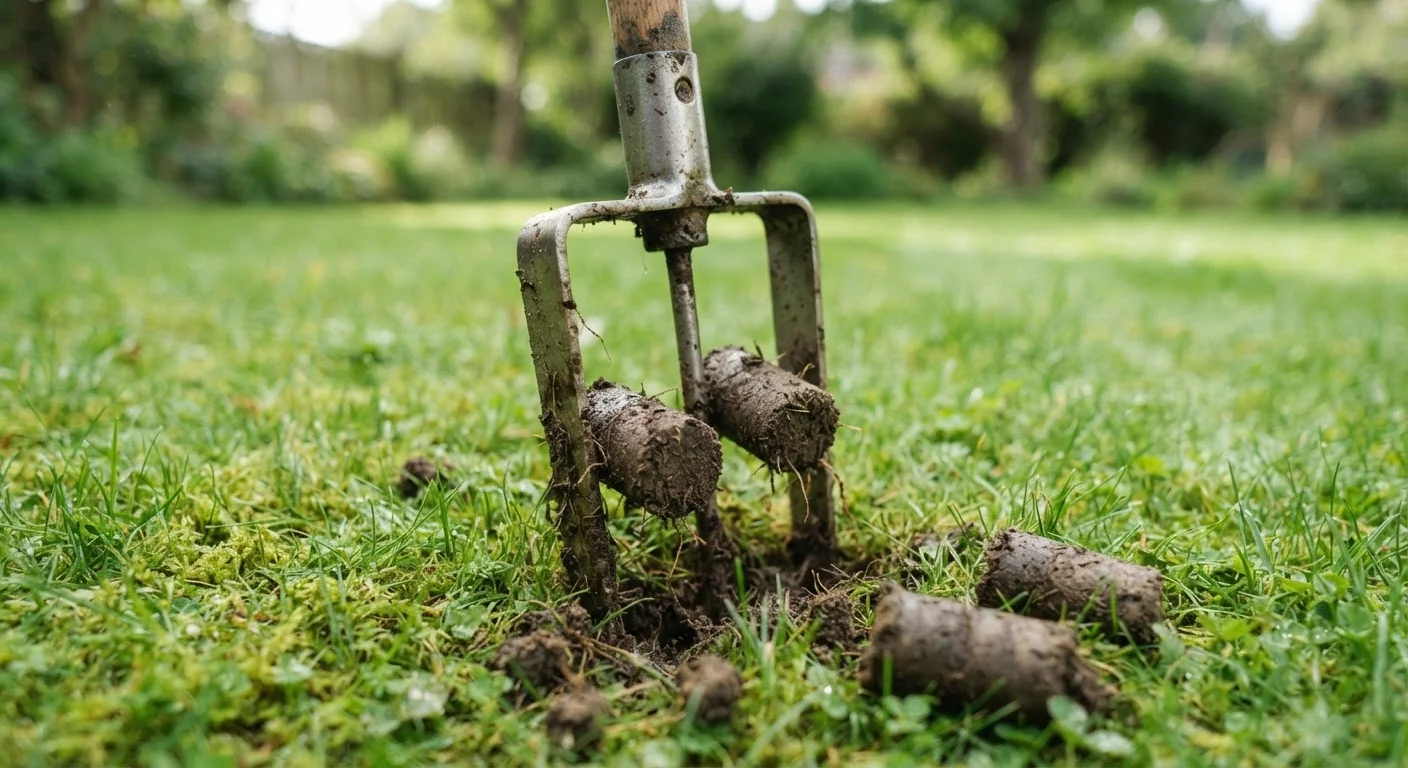
Photo credit: AdvisorHQ.net | Informative Website
In this article
Aeration loosens compacted soil so grass roots can breathe, but not every lawn needs it the same way. Here's what the process involves.
Key Takeaways
- Compacted soil prevents grass roots from getting the air, water, and nutrients they need to thrive.
- Core aeration is more effective than spike aeration because it removes soil rather than just displacing it.
- Cool-season grasses benefit most from fall aeration; warm-season grasses do better when aerated in late spring.
- Not every lawn needs annual aeration - high-traffic and clay-heavy yards need it more often.
- Overseeding immediately after aeration significantly improves seed-to-soil contact and germination rates.
What Happens Underground When Soil Gets Compacted
Healthy lawn soil is not just dirt - it is a complex structure with air pockets, channels for water movement, and space for roots to push through. When that structure gets compressed, everything suffers. Grass blades may still look green on the surface for a while, but the root system is quietly struggling.
Compaction happens gradually. Every pass of a lawn mower, every kids' game in the backyard, every heavy rainfall that beats down on bare soil tightens the particles together. Clay-heavy soils are especially prone to this because the fine particles pack densely with very little encouragement.
The result is a root zone where oxygen levels drop, water pools on the surface instead of soaking in, and roots cannot expand outward or downward to find nutrients. Understanding this process is the first step to recognizing why aeration works - it physically restores the open structure that plant roots depend on.
~½ inch
Maximum healthy thatch thickness before aeration helps
University cooperative extension guidelines generally note that thatch layers exceeding half an inch can block water and nutrients from reaching the root zone.
2-3 inches
Typical depth of core aeration tine penetration
Most standard core aerators are designed to pull plugs at this depth, targeting the primary root zone where compaction has the greatest impact on grass health.
1-2 weeks
Time for soil plugs to naturally decompose on the lawn surface
Plugs left on the surface break down relatively quickly with normal watering and weather, returning organic matter to the soil without any additional effort.
Core vs. Spike Aeration: What the Difference Means in Practice
Two main tools are used for lawn aeration, and they work very differently. A spike aerator pushes solid tines into the ground, creating narrow holes. While this sounds helpful, it actually compresses the soil sideways as it pushes in - which can worsen compaction around each hole.
A core aerator (also called a plug aerator) uses hollow tines that pull out small cylinders of soil, typically about half an inch in diameter and two to three inches deep. Those cylinders get deposited on the surface. What remains are genuine open channels leading from the surface down into the root zone.
For most homeowners dealing with real compaction, core aeration is the approach worth pursuing. The extracted plugs look messy for a week or two but break down on their own, adding organic matter back to the lawn as they decompose.
Overseed Right After Core Aeration
The open channels left by core aeration create near-perfect conditions for overseeding. Grass seed dropped onto a freshly aerated lawn falls into the holes and makes direct contact with loosened soil, which significantly improves germination rates compared to spreading seed on an undisturbed surface. Combine the two tasks in the same session to get the most from your effort.
How to Know If Your Lawn Actually Needs Aeration
Not every lawn needs aeration every year, so it helps to know what to look for. A few reliable signs suggest your soil has become too compacted:
- Water runoff after rain or irrigation - if puddles form quickly and water sheets off rather than soaking in, compaction is likely limiting absorption.
- Thinning or patchy grass in areas that get regular foot traffic, such as along pathways or near gates.
- Hard surface feel - push a screwdriver or pencil into the lawn. If you cannot push it in at least four inches without significant force, the soil is compacted.
- Visible thatch buildup exceeding about half an inch thick, which can form a barrier that blocks water and air.
You can also check how soil health factors like pH interact with compaction to get a fuller picture of what is happening beneath your lawn's surface.
Timing Aeration to Your Grass Type and Season
Timing matters considerably. The goal is to aerate when your grass is in its active growing phase so it can recover quickly and fill in the opened channels.
Cool-season grasses - such as Kentucky bluegrass, tall fescue, and ryegrass - grow most vigorously in spring and fall. Early fall is generally the best window, as the soil is still warm enough for root growth and the approaching cooler temperatures reduce heat stress during recovery.
Warm-season grasses - such as Bermuda, zoysia, and St. Augustine - thrive in summer heat. Late spring to early summer, once the grass is actively growing, is the preferred time for aeration.
Aerating during dormancy or peak summer heat can stress the lawn unnecessarily. For a month-by-month guide to fitting aeration into your broader lawn routine, see the seasonal lawn care calendar for timing across all four seasons.
Getting the Most from Aeration: Before and After Steps
Aeration works best as part of a short sequence of care, not a one-time fix performed in isolation.
Before aerating: Mow your lawn slightly shorter than usual, then water the area one to two days beforehand. Moist - but not waterlogged - soil allows tines to penetrate deeply. Mark any irrigation heads or shallow underground lines so the aerator does not damage them.
After aerating: Leave the soil plugs on the surface to break down naturally. This is an excellent time to overseed, as seeds fall directly into the open channels and make contact with loosened soil - significantly improving germination rates. Follow overseeding with fertilization suited to your grass type and a consistent watering schedule to support recovery.
Aeration is not a cure-all, but as part of a consistent lawn care routine, it gives your grass the foundation it needs to grow deep, resilient roots.
Frequently Asked Questions

Author
Home & Garden Editorial Team
Home & Garden Editorial Team is the collective byline for our editorial team and contributor network. Articles published under this byline or an editorial pen name are researched, written, and reviewed according to our editorial standards for clarity, consistency, and independence before publication.
View all articles →