
Mulch vs. Compost: Same Pile, Very Different Purposes
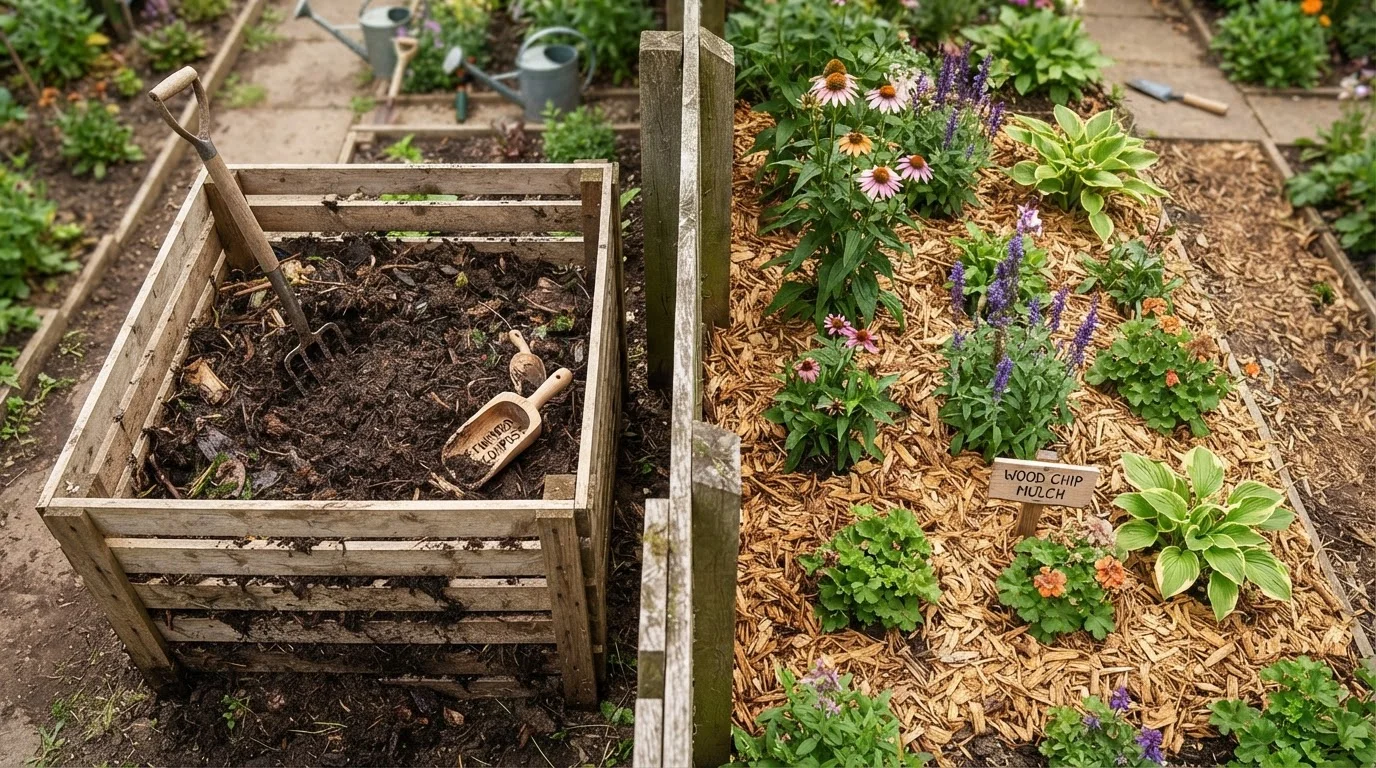
Photo credit: AdvisorHQ.net | Informative Website
In this article
Mulch and compost look similar but serve opposite roles in the garden. Here's a clear breakdown of when and how to use each one.
Key Takeaways
- Mulch sits on top of soil to protect it; compost is worked into soil to improve it.
- Compost is fully decomposed organic matter rich in nutrients; mulch can be partially decomposed or raw.
- Using mulch over bare compost helps prevent moisture loss and weed germination.
- Both materials can come from the same organic sources but are processed very differently.
- Applying the right material in the right way maximizes garden health without wasting effort.
What Each Material Actually Is
At a glance, a bag of mulch and a bin of finished compost can look almost identical - dark, crumbly, earthy. But they are fundamentally different materials with opposite jobs.
Compost is fully decomposed organic matter. Kitchen scraps, yard clippings, and leaves break down over weeks or months into a stable, nutrient-rich material often called "black gold" by gardeners. It is teeming with beneficial microorganisms and acts as a slow-release fertilizer when incorporated into soil. To learn how to make your own, see our guide to composting at home.
Mulch, by contrast, is not necessarily decomposed at all. Wood chips, shredded bark, straw, pine needles, and even gravel can all serve as mulch. What defines mulch is its function: it is applied as a surface covering, not mixed into the soil. Some mulch is organic and will slowly break down over a season, but that decomposition happens on top of the soil, not within it.
| Criterion | Mulch | Compost |
|---|---|---|
| Where it's applied | On top of soil surface | Mixed into soil |
| Primary purpose | Protect and insulate soil | Feed and improve soil |
| Decomposition state | Raw to partially decomposed | Fully decomposed |
| Nutrient contribution | Minimal to none | High - nutrients and microbes |
| Weed suppression | Yes - blocks sunlight | No - can encourage weeds |
| Moisture retention | Strong - slows evaporation | Moderate - improves soil structure |
| Typical depth applied | 2-4 inches | 1-3 inches, worked in |
| Best timing | After planting, spring and fall | Before planting or as top dressing |
How Each One Benefits Your Garden
Understanding what each material does helps you apply them at the right time and in the right place.
What Compost Does
- Adds nitrogen, phosphorus, potassium, and trace minerals to soil
- Improves drainage in heavy clay soils and water retention in sandy soils
- Introduces beneficial bacteria and fungi that break down nutrients for plant roots
- Raises or stabilizes soil pH over time depending on your starting conditions
What Mulch Does
- Reduces soil moisture loss by slowing evaporation from the surface
- Keeps soil temperature more consistent through hot summers and cold winters
- Blocks sunlight, which prevents most weed seeds from germinating
- Protects soil from compaction caused by heavy rain or foot traffic
25-50%
Reduction in soil water loss with mulch
Research from university cooperative extension programs commonly cites mulching as reducing soil moisture evaporation by 25-50% compared to bare soil.
3-6 months
Typical time to produce finished compost
Hot composting methods with regular turning can yield usable compost in as little as 3 months; cold, passive piles may take 6 months or longer.
A practical tip: apply 2-3 inches of compost to a planting bed and work it in shallowly, then top the whole area with 2-3 inches of mulch. You get the feeding benefit below and the protective benefit above - without the two materials competing.
Common Mistakes and How to Avoid Them
Many gardeners apply one when they need the other, or use too much of a good thing.
Mistake 1: Digging mulch into soil
Fresh wood chip mulch incorporated into soil can temporarily tie up nitrogen as it decomposes, leaving less available for plant roots. Keep mulch on the surface where it belongs.
Mistake 2: Spreading compost as a weed barrier
Compost is an ideal growing medium - which means weed seeds love it too. A layer of bare compost on the soil surface can actually encourage weeds. Top it with mulch to prevent this.
Mistake 3: Volcano mulching around trees
Piling mulch directly against a tree trunk traps moisture and can cause bark rot and pest problems. Keep mulch a few inches away from the base of any woody plant.
Mistake 4: Using unfinished compost
Compost that hasn't fully broken down can burn plant roots and may contain weed seeds or pathogens. Finished compost should smell earthy (not sour or like ammonia) and have no recognizable food scraps remaining.
Organic Mulch Will Eventually Decompose
Wood chips, shredded bark, and straw slowly break down over one to two seasons, adding a small amount of organic matter to the top of the soil over time. This is a bonus, not the main purpose. Plan to replenish organic mulch each year to maintain an effective protective layer. Inorganic mulches like gravel do not decompose but also do not contribute organic matter.
Whether you're designing a low-maintenance perennial border or a seasonal annual display, both compost and mulch play important supporting roles. See our comparison of perennials and annuals to plan a garden that fits your schedule.

Author
Home & Garden Editorial Team
Home & Garden Editorial Team is the collective byline for our editorial team and contributor network. Articles published under this byline or an editorial pen name are researched, written, and reviewed according to our editorial standards for clarity, consistency, and independence before publication.
View all articles →