
The Seasonal Lawn Care Calendar Every Homeowner Should Know
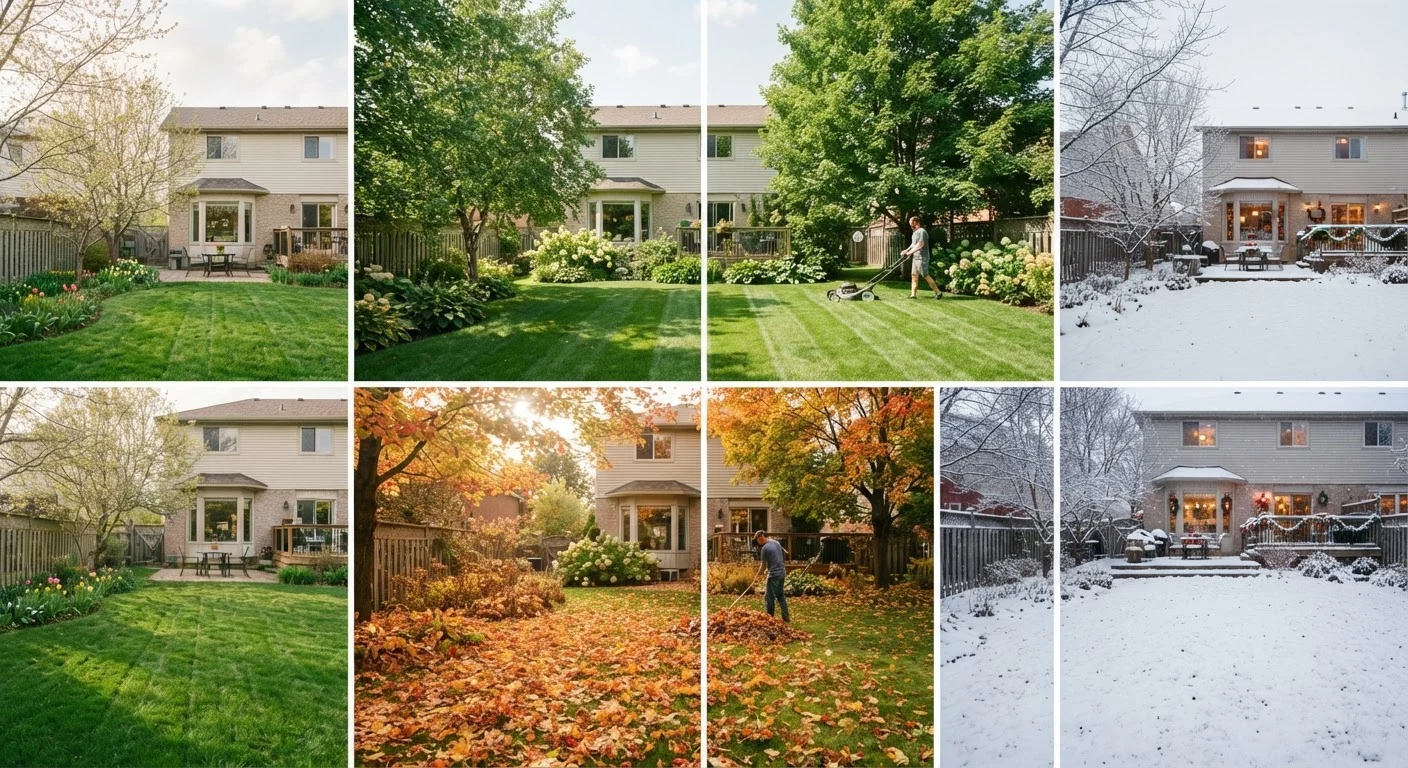
Photo credit: AdvisorHQ.net | Informative Website
In this article
A month-by-month reference for mowing, fertilizing, aerating, and watering your lawn across all four seasons.
Why a Seasonal Calendar Matters for Lawn Health
Most lawn problems - thin turf, persistent weeds, bare patches - trace back to tasks done at the wrong time of year, or skipped entirely. Grass has growth cycles tied to soil temperature and daylight, not just the calendar date. Working with those cycles rather than against them is the foundation of effective lawn care.
Because climate varies significantly across the U.S., this calendar is organized by season rather than specific months. A homeowner in Georgia will start spring tasks 6-8 weeks earlier than one in Minnesota. Use your local last-frost date and soil temperature readings as your actual triggers, not the date on the page.
| Cool-season grass examples | Kentucky bluegrass, tall fescue, fine fescue, perennial ryegrass |
| Warm-season grass examples | Bermudagrass, Zoysia, St. Augustine, Centipede |
| Pre-emergent trigger temperature | 50°F soil temperature (crabgrass germination threshold) |
| Weekly water need (established lawn) | 1-1.5 inches combined rain and irrigation |
| One-third mowing rule | Never remove more than one-third of the blade in a single mow |
| Best overseeding season (cool-season grass) | Early to mid-fall |
Spring: Wake the Lawn Up Carefully
Primary tasks: Dethatching, light raking, first mow, pre-emergent weed control, early fertilization.
Wait until soil temperatures consistently reach 50°F before applying pre-emergent herbicides - this is the threshold at which crabgrass seeds begin to germinate. Applying too early wastes product; too late allows weeds to establish. A soil thermometer (available at most garden centers) takes the guesswork out of timing.
For cool-season grasses such as Kentucky bluegrass or tall fescue, early spring is a good window for a light fertilizer application with moderate nitrogen. Avoid heavy feeding before the grass has fully broken dormancy, as it can promote leaf growth at the expense of root development. Warm-season grasses like Bermuda or Zoysia should not be fertilized until they green up fully - typically late spring in most regions.
Set your mower to remove no more than one-third of the blade height per pass - this is often called the one-third rule and protects the grass from stress. Your spring lawn is also a good candidate for core aeration if the soil feels hard or compacted underfoot.
Summer: Protect Against Stress
Primary tasks: Deep, infrequent watering; raising mow height; monitoring for pests and disease.
Heat and drought are your lawn's biggest summer adversaries. Most established lawns need roughly 1 to 1.5 inches of water per week from rain or irrigation combined - but this depends on soil type, grass variety, and temperatures. Sandy soils drain faster and may need more frequent watering; clay soils retain water longer and can become waterlogged.
Water early in the morning, ideally before 10 a.m., so the surface dries before evening. Wet grass overnight encourages fungal disease. If your lawn goes dormant and turns tan during a drought, that is a normal stress response - most established lawns can survive several weeks without water and green up again when rain returns.
Raise your mow height by half an inch to an inch in summer. Longer blades shade the soil, reducing evaporation and limiting weed germination. Avoid fertilizing cool-season grasses during peak summer heat; warm-season varieties can handle a midsummer feeding if they are actively growing.
Dormancy
A period when grass stops active growth and turns tan or brown in response to extreme heat or cold. Most grass species survive dormancy and green up again when conditions improve.
Pre-emergent herbicide
A weed control product applied before weed seeds sprout. It creates a chemical barrier in the soil that prevents germination; it does not kill established weeds.
Winterizer fertilizer
A late-fall fertilizer blend typically higher in potassium than standard formulas. It supports root development and helps grass store nutrients over the winter dormancy period.
Overseeding
The practice of spreading grass seed over an existing lawn without fully tearing it up. It thickens thin turf, fills bare spots, and can introduce improved grass varieties.
Thatch
A layer of dead and living organic matter - stems, roots, debris - that accumulates between the soil surface and green grass blades. A thin layer is normal; thick thatch blocks water and nutrients.
Core aeration
A process using a machine to pull small plugs of soil from the lawn, relieving compaction and allowing air, water, and nutrients to reach grass roots more easily.
Fall: The Most Important Season for Cool-Season Lawns
Primary tasks: Overseeding, core aeration, winterizer fertilizer, leaf management.
For homeowners with cool-season grass, fall is arguably the highest-impact season of the year. Soil is warm, air temperatures are mild, and competition from weeds diminishes - ideal conditions for seed germination and root development. Overseed thin or bare patches after aerating to improve seed-to-soil contact.
A winterizer fertilizer applied in late fall (when grass has slowed top growth but roots are still active) delivers nutrients that the lawn stores over winter and draws on in early spring. Look for formulas higher in potassium, which supports root hardiness. Avoid high-nitrogen applications after the grass has stopped actively growing.
Leaves left on the lawn in thick layers can smother grass and promote disease. Mulch thin leaf layers with your mower or rake them off promptly. Fall is also an ideal time to address your broader property - see the pre-winter home readiness checklist for guidance on gutters, insulation, and other seasonal tasks.
Pairing your lawn's fall prep with garden bed planning helps you approach the whole yard holistically before winter sets in.
Winter: Rest, Repair, and Plan
Primary tasks: Equipment maintenance, planning, minimal lawn traffic.
Dormant grass is still living grass - it is simply conserving energy. Foot traffic on frozen or frost-covered blades can break them, leaving damaged patches that show in spring. Keep activity to a minimum when the lawn is frozen or under snow cover.
Winter is the right time to service your mower: sharpen or replace the blade, change the oil, and clean out the deck. A sharp mower blade cuts cleanly rather than tearing grass, which makes a measurable difference in lawn health over a full season.
Use the quieter months to evaluate what worked this year and plan improvements. If parts of your yard struggle despite consistent care, exploring native plant alternatives for those areas can reduce long-term maintenance demands significantly.
This article provides general lawn care guidance for educational purposes. Specific results depend on grass type, local climate, soil conditions, and other variables. Always follow product label instructions when applying fertilizers or herbicides.

Author
Home & Garden Editorial Team
Home & Garden Editorial Team is the collective byline for our editorial team and contributor network. Articles published under this byline or an editorial pen name are researched, written, and reviewed according to our editorial standards for clarity, consistency, and independence before publication.
View all articles →