
Phone Camera Specs That Don't Tell the Whole Story
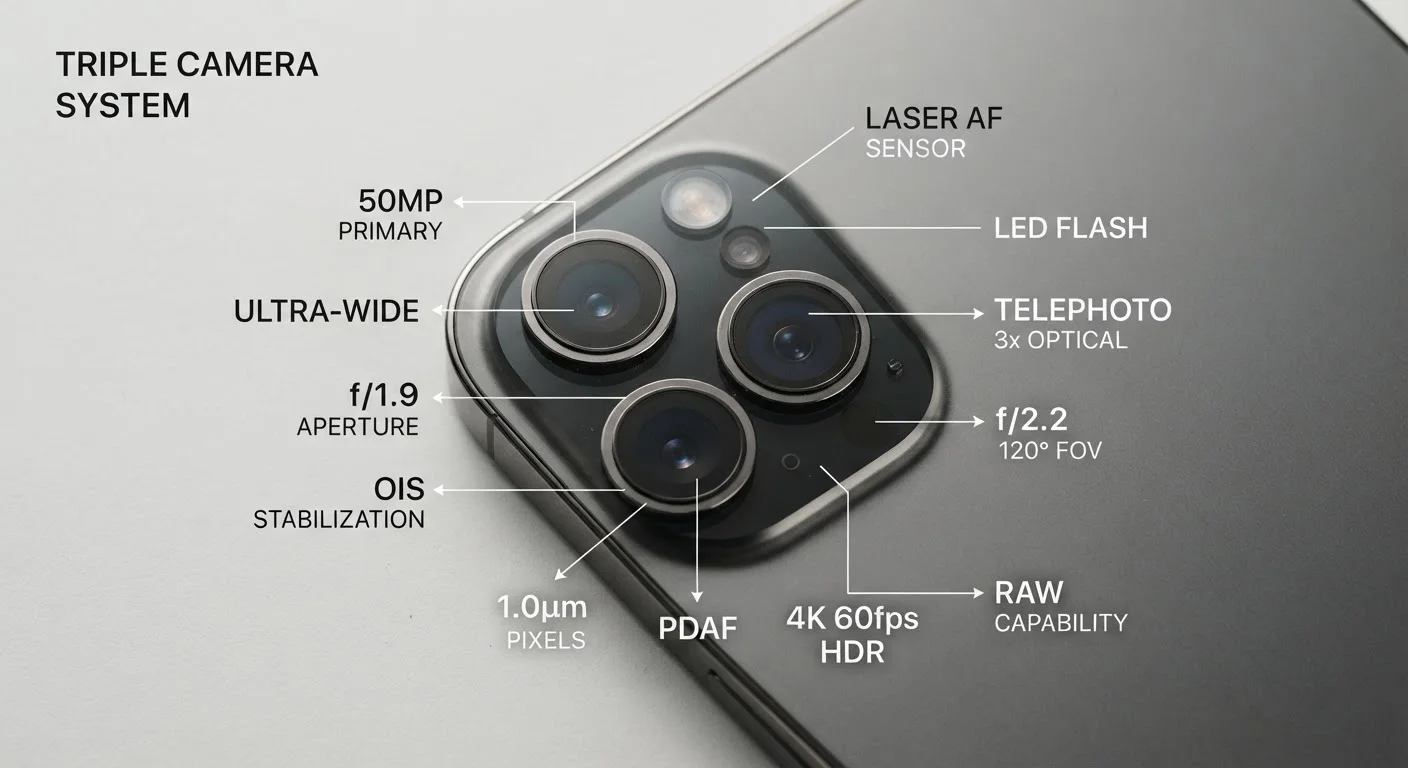
Photo credit: AdvisorHQ.net | Informative Website
In this article
Megapixels, aperture, optical zoom — these numbers are often misunderstood. Here's what camera specs genuinely reveal and what they don't.
Key Takeaways
- More megapixels don't automatically produce better-looking photos.
- Aperture numbers work inversely - a lower f-number means a wider, brighter opening.
- Digital zoom degrades image quality; optical zoom does not.
- Sensor size and image processing software matter as much as any single spec.
- Real-world photo quality depends on lighting, software, and how specs work together.
Why Camera Specs Can Mislead You
When you're trying to understand a phone's camera, the spec sheet can feel like a cheat code. Numbers like "108MP" or "f/1.8 aperture" seem to promise great photos - but those figures rarely tell the complete story. Understanding what they actually measure (and what they ignore) helps you make sense of what you're really getting.
Camera performance is the result of several factors working together: the physical sensor, the lens optics, and - increasingly - software that processes images after you tap the shutter. A single impressive number rarely captures that complexity. For a similar reality check on spec sheets in general, see our guide to laptop specs in plain English.
Myth
More megapixels always means sharper, better photos.
Fact
Megapixels measure image resolution - the number of pixels in a photo - but not image quality, color accuracy, or low-light performance.
A megapixel (MP) is simply one million pixels. A 50MP camera captures more pixel data than a 12MP camera, which can help when you crop heavily or print very large. But pixels are only one ingredient. If the individual pixels are tiny (common on sensors with very high MP counts), each one captures less light - which can actually hurt image quality in dim conditions. Image sharpness also depends on the lens optics and software processing, neither of which megapixels measure at all.
Myth
A lower aperture number means a worse, more closed-off lens.
Fact
Aperture numbers (f-stops) work inversely - a lower number like f/1.8 means the lens opening is wider, letting in more light.
Aperture describes the size of the opening in a lens that lets light through, expressed as an f-number (e.g., f/1.8, f/2.4). The math is counterintuitive: f/1.8 is a wider opening than f/2.4. A wider opening captures more light, which helps in low-light environments and creates a shallower depth of field (that blurred background effect). So when comparing two phones, the one with the smaller f-number generally has a brighter lens - not a worse one.
Myth
10x zoom is 10x zoom - it doesn't matter how the phone achieves it.
Fact
Optical zoom uses the physical lens to magnify a subject without loss; digital zoom simply crops and enlarges the image, reducing quality.
Optical zoom physically adjusts the lens elements to bring a subject closer, preserving full image resolution. Digital zoom, by contrast, just crops into the image and enlarges the remaining pixels - similar to pinching to zoom on a photo you've already taken. The result with digital zoom is a softer, grainier image. Some phones use a hybrid approach, blending optical and digital methods. When a spec sheet advertises a high zoom number, it's worth checking how much of that is optical versus digital.
Myth
The number of camera lenses directly equals better photo quality.
Fact
Multiple lenses serve different purposes - wide, ultrawide, telephoto - and don't stack to multiply overall quality.
Many modern phones include two, three, or even four rear cameras. Each lens typically serves a distinct role: an ultrawide lens for broad landscapes, a standard lens for everyday shots, and a telephoto lens for distant subjects. Having more lenses gives you more flexibility, but the quality of each individual lens still varies. A phone with three average lenses won't automatically outperform one with a single exceptional lens for a specific type of photography. What matters is the quality and relevance of each lens to how you actually take photos.
Myth
Video resolution specs tell you everything about video quality.
Fact
Video resolution (like 4K) indicates pixel count but doesn't capture stabilization, frame rate consistency, or autofocus performance during recording.
A phone that records at 4K shoots at 3840×2160 pixels per frame - that's a lot of detail. But smooth, usable video also depends on optical image stabilization (OIS), which physically reduces camera shake; frame rate (measured in frames per second, or fps), which affects how fluid motion looks; and how well the autofocus tracks moving subjects. Two phones both advertising "4K video" can produce dramatically different results once you factor in stabilization and processing. Resolution is just the starting point.
What Actually Drives Photo Quality
Two factors that rarely appear on spec sheets have an outsized impact on your photos: sensor size and computational photography.
Sensor size - the physical dimensions of the light-capturing chip - determines how much light the camera can gather. A physically larger sensor gathers more light per pixel, which directly improves low-light performance and reduces grain (called "noise" in camera terms). Manufacturers don't always advertise sensor size prominently, even though it's one of the most meaningful specs.
Computational photography is software that processes your image the instant you take it - merging multiple exposures, sharpening edges, and adjusting color. This is why two phones with similar hardware specs can produce noticeably different results. The processing pipeline is often the deciding factor.
Don't Rely on Spec Sheets Alone
Spec sheets are marketing documents as much as technical ones. Manufacturers choose which numbers to highlight, and those numbers won't always reflect your specific shooting conditions or priorities. Before drawing conclusions, look at sample images from independent reviewers who test cameras in varied, realistic environments - indoors, at night, in motion.
If you want to dig further into how phone display specs interact with visual quality, our display specs decoder is a useful companion read.
Reading Specs More Honestly
Once you understand what each number actually measures, you can start combining them to get a realistic picture. A high-megapixel count is more useful if the sensor is also large enough to support those pixels. A wide aperture matters more in low light than in bright outdoor conditions. And optical zoom preserves quality in ways digital zoom simply can't.
Rather than anchoring on a single impressive figure, look for how specs interact. A phone with moderate megapixels, a large sensor, and strong image processing software will often outperform one with a higher megapixel count alone. Just as smartphone battery performance depends on factors beyond raw capacity numbers - as we explain in our smartphone battery myths breakdown - camera quality goes well beyond any one headline spec.
12MP-50MP
Typical main camera range on modern smartphones
Despite this wide range, professional reviewers consistently note that sensor size and processing software influence real-world results more than pixel count alone.
f/1.5-f/2.8
Common aperture range across smartphone cameras
Wider apertures (lower f-numbers) are generally preferred for low-light photography; the difference between f/1.5 and f/2.8 represents roughly four times more light gathered.
The most useful thing you can do is look at sample photos taken with the phone in conditions similar to how you'd use it: indoors, in mixed light, at a distance. Real-world results cut through the spec-sheet noise faster than any number.

Author
Tech & Gadgets Editorial Team
Tech & Gadgets Editorial Team is the collective byline for our editorial team and contributor network. Articles published under this byline or an editorial pen name are researched, written, and reviewed according to our editorial standards for clarity, consistency, and independence before publication.
View all articles →