
Carry-On vs. Checked Luggage: Thinking Through the Right Choice for Your Trip
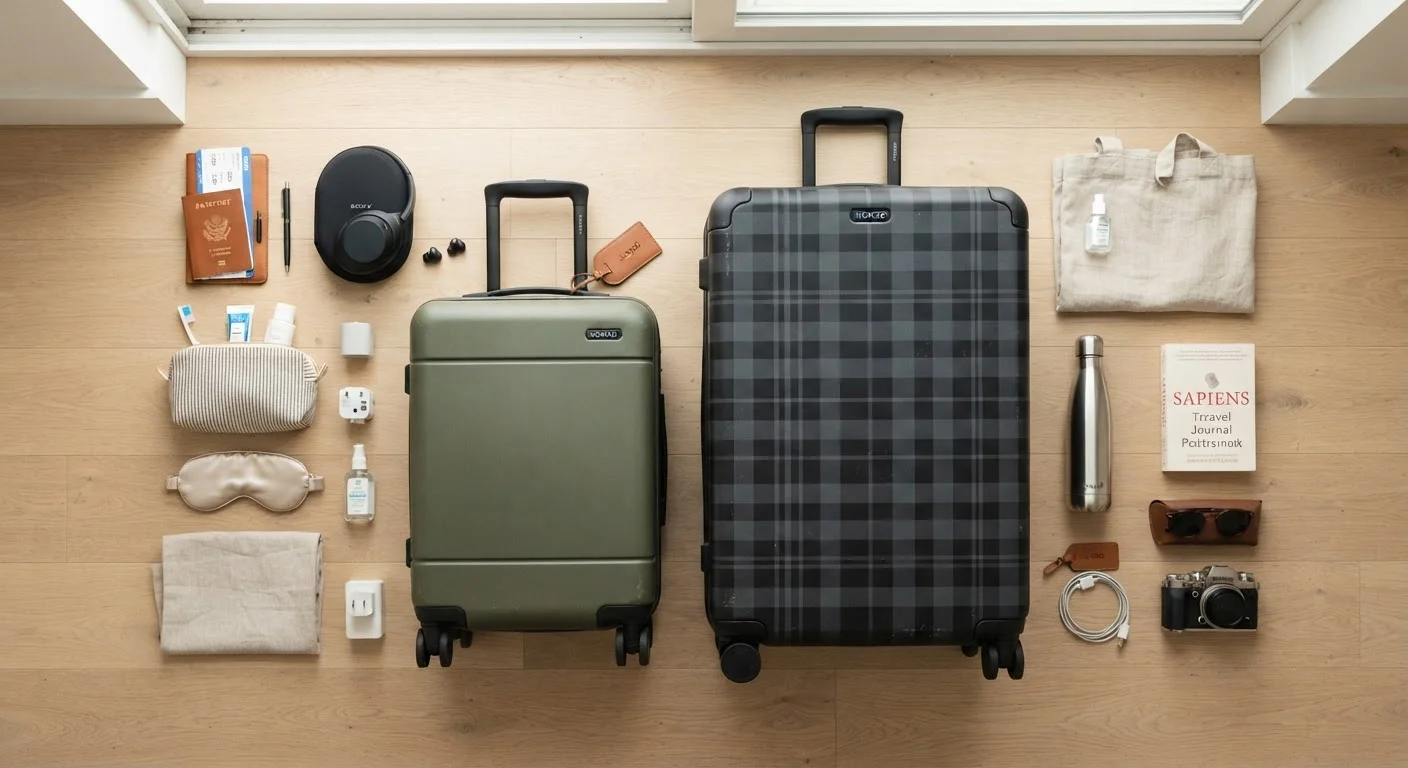
Photo credit: AdvisorHQ.net | Informative Website
In this article
Carry-on or checked bag? This side-by-side breakdown covers fees, convenience, risk, and the trip types that favor each approach.
Key Takeaways
- Carry-on bags save time and avoid checked-bag fees on most domestic U.S. airlines.
- Checked luggage gives you packing flexibility but adds cost, time, and a small risk of loss or delay.
- Trip length, destination type, and what you're packing are the three biggest factors in the decision.
- Travelers on tight connections gain a significant advantage by sticking with carry-on only.
- Certain items - liquids over 3.4 oz, sharp tools, oversized gear - must go in checked bags.
- Neither option is universally better; the right choice depends on your specific itinerary.
The Core Trade-Off: Speed and Control vs. Space and Flexibility
Every luggage decision comes down to two competing priorities: how much you want to carry versus how much you want to pack. Carry-on bags - typically limited to 22 x 14 x 9 inches on most U.S. carriers, though policies vary - keep your belongings in your hands from departure to arrival. Checked bags disappear behind the ticket counter and reappear (usually) at your destination's baggage carousel.
That gap matters more than it might seem. Traveling carry-on only means faster check-in, no baggage claim wait, and zero risk of an airline misrouting your bag. Checked luggage, on the other hand, lets you pack without the mental gymnastics of fitting everything into a cabin-legal size. Both approaches are legitimate strategies - the question is which set of trade-offs fits your trip. For a broader look at how luggage fees fit into your overall travel budget, see our guide on hidden travel costs.
| Criterion | Carry-On | Checked Luggage |
|---|---|---|
| Typical added fee | Usually none (full-service carriers) | $30-$40+ per bag, per direction |
| Packing capacity | Limited by airline size rules | Generous; up to 50 lbs typically |
| Risk of loss or delay | Very low - stays with you | Small but real risk of misdirection |
| Airport time impact | Faster; no baggage claim wait | Adds 20-45 min at arrival |
| Tight connections | No added risk | Bag may miss the connection |
| Liquids and toiletries | 3.4 oz max per container (TSA rule) | Full-size containers allowed |
| Best trip length | 1-5 days | 6+ days or gear-heavy trips |
Cost, Risk, and What the Numbers Actually Mean
Checked bag fees on U.S. domestic flights typically range from around $30 to $40 for a first bag, with second bags costing more - and those fees add up fast on a round trip or multi-leg itinerary. Some airline credit cards and elite status tiers waive these fees, but travelers without those perks pay every time. Carry-ons are included at no extra charge on most full-service carriers, though some budget airlines now charge for overhead bin access as well, so always confirm your airline's specific policy before assuming.
Risk is a separate calculation. The U.S. Department of Transportation tracks mishandled baggage reports, and while rates have improved in recent years, delays and misdirected bags still occur. A delayed checked bag on a short trip can mean arriving without essentials for days. Knowing which items should never go in a checked bag - passports, medications, irreplaceable valuables - is a baseline precaution every traveler should take, regardless of which option they choose.
2.9 per 1,000
Mishandled bags reported per 1,000 passengers
U.S. Department of Transportation Air Travel Consumer Reports track mishandled baggage rates across domestic carriers annually.
$60-$80+
Round-trip first checked bag fee on many U.S. airlines
Fees vary by carrier and fare class; some airline co-branded credit cards include a free checked bag as a cardholder benefit.
Matching Your Luggage Strategy to Your Trip Type
Trip length is the most reliable guide. A two- or three-night domestic trip almost always fits in a well-packed carry-on - and doing so rewards you with speed at both ends of your journey. Trips of ten days or longer, especially those crossing seasons or requiring formal attire, start to strain the limits of cabin bags. Destination matters too: a beach resort calls for different packing logic than a mountain adventure with rental ski gear.
If you're navigating tight airport connections, a carry-on is almost always the smarter call. When your bag is with you on the plane, it makes every connection you make. A checked bag, by contrast, has to be transferred independently - and it doesn't always keep up.
Families traveling with children often find checked bags reduce airport stress despite the added cost and wait, since managing a stroller, a car seat, and a carry-on simultaneously is genuinely difficult. Solo travelers and business flyers, meanwhile, frequently find that packing light is a skill worth developing - one that pays dividends on every trip.

Author
Travel & Trips Editorial Team
Travel & Trips Editorial Team is the collective byline for our editorial team and contributor network. Articles published under this byline or an editorial pen name are researched, written, and reviewed according to our editorial standards for clarity, consistency, and independence before publication.
View all articles →