
How Weather Changes the Rules of the Road
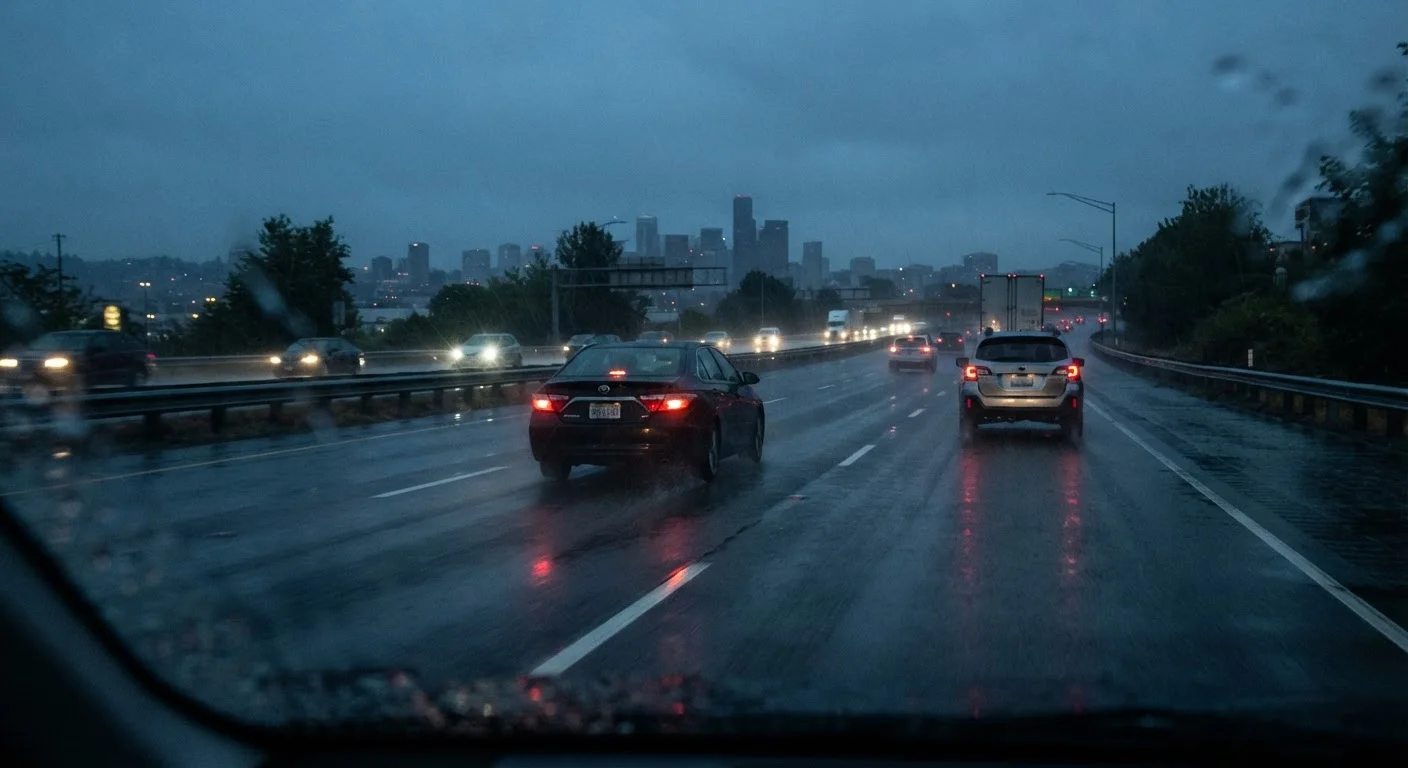
Photo credit: AdvisorHQ.net | Informative Website
In this article
Rain, snow, fog, and wind each demand different responses from drivers. A practical look at adjusting your approach to match the conditions.
Why Weather Rewrites Your Driving Playbook
Posted speed limits and standard following distances are engineered for dry, clear, daylight conditions. When weather changes, those baselines no longer apply. Rain, snow, fog, and high winds each alter vehicle physics, visibility, and stopping distances in distinct ways - and the adjustments required are not simply a matter of slowing down. They involve rethinking every element of how you operate your vehicle.
As a reference guide, this article outlines what each major weather type does to road conditions and what drivers should do differently in response. For a broader look at when posted limits diverge from genuinely safe speeds, see our companion piece on advisory versus safe speed limits.
Rain: The Most Common and Most Underestimated Hazard
Light rain is statistically one of the most dangerous weather conditions because drivers frequently underestimate it. Water mixes with oil residue on road surfaces to create a slick film, particularly during the first 15-30 minutes of rainfall. This reduces tire traction significantly before the road is ever visibly saturated.
Hydroplaning - when a tire rides on a film of water rather than making contact with the pavement - can occur at speeds as low as 35 mph on worn tires. If you feel your steering go light, ease off the accelerator gradually and avoid sudden braking or sharp steering inputs until traction returns.
- Increase following distance to at least 4-6 seconds (double the dry-road rule)
- Turn headlights on - many states legally require this when wipers are active
- Reduce speed by 10-15 mph below the posted limit in moderate rain, more in heavy rain
- Avoid cruise control; you need direct throttle control to respond to traction loss
Hydroplaning
A condition where a tire rides on a film of water rather than gripping the road surface, causing loss of steering and braking control. It can occur on tires with adequate tread but is far more likely on worn tires.
Black ice
A thin, nearly transparent layer of ice that forms on road surfaces when temperatures are at or below freezing. It is particularly hazardous because it is visually indistinguishable from wet pavement.
ABS (Anti-lock Braking System)
A safety system that prevents wheels from locking up during hard braking, allowing the driver to maintain steering control. On slippery surfaces, apply firm, steady pedal pressure rather than pumping the brakes.
Following distance
The time gap maintained between your vehicle and the one ahead. Measured in seconds, it should expand significantly in wet, icy, or low-visibility conditions to allow adequate stopping room.
Crosswind
Wind blowing perpendicular to the direction of travel. Strong crosswinds can push a vehicle out of its lane and are especially hazardous for tall or lightly loaded vehicles.
Snow and Ice: When Physics Takes Over
On packed snow, stopping distances can be three to four times longer than on dry pavement. On black ice - a nearly transparent glaze that forms when temperatures hover around freezing - that figure can climb dramatically higher. Black ice is most common on bridges, overpasses, and shaded roadways, which cool faster than surrounding lanes.
Front-wheel, rear-wheel, and all-wheel drive vehicles behave very differently on snow. All-wheel drive improves acceleration traction but does not shorten stopping distances. Drivers of AWD vehicles who assume otherwise are frequently involved in winter crashes. Anti-lock brakes (ABS) prevent wheel lockup during hard stops on slippery surfaces - apply firm, steady pressure rather than pumping the pedal.
Before winter arrives, make sure your vehicle is ready for the conditions. Our guide on seasonal vehicle preparation covers tire checks, fluid levels, and other cold-weather essentials.
Fog and Wind: Visibility and Stability Challenges
Fog reduces visibility suddenly and unevenly. Dense patches can appear even when surrounding roads are clear. Use low-beam headlights - high beams reflect off water droplets and reduce your own visibility. Many vehicles now include dedicated fog lights; these project a wide, low beam that cuts under the fog layer. Reduce speed well below what feels necessary and increase following distance to account for hidden hazards ahead.
High crosswinds affect large vehicles and high-profile vehicles - SUVs, pickups, and vans - most severely, but gusts above 40-50 mph can affect any vehicle on open stretches of highway. Grip the steering wheel firmly with both hands, reduce speed, and be especially cautious when passing large trucks, which can create sudden wind bursts as you clear their trailer.
When Roads Look Clear but Aren't
Bridges and overpasses freeze before the surrounding road surface because cold air circulates both above and below the deck, accelerating heat loss. Road surfaces also retain residual warmth from the ground beneath them. In near-freezing temperatures, treat every bridge as potentially icy even if the approach road feels fine.
Intersection behavior also changes in bad weather. Stopping distances on wet or icy roads mean you may need to brake for a yellow light that you'd normally clear. Our article on right-of-way at intersections is a useful reference for understanding when to yield even when you technically have the right of way.

Author
Cars & Driving Editorial Team
Cars & Driving Editorial Team is the collective byline for our editorial team and contributor network. Articles published under this byline or an editorial pen name are researched, written, and reviewed according to our editorial standards for clarity, consistency, and independence before publication.
View all articles →